



Every teacher has experienced that parent-teacher conference.
You know the one.
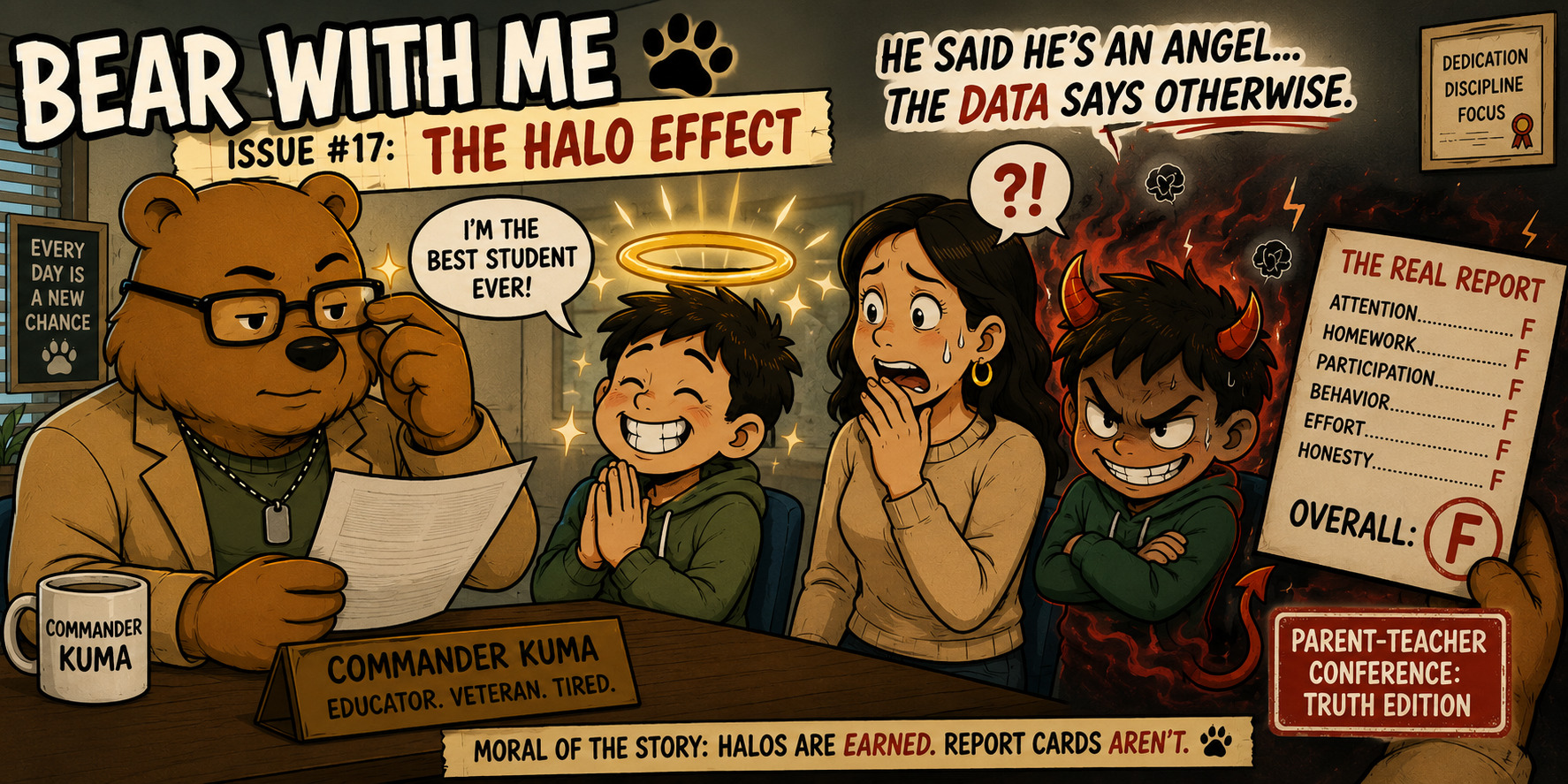
The student walks into the room with perfect posture, folded hands, and suddenly discovers the words "Yes, ma'am" and "No, sir." If there were an Academy Award for Best Behavior During a Parent-Teacher Conference, they'd already be writing the acceptance speech.
Then the conference begins.
The parent smiles proudly.
The student nods innocently.
The teacher quietly reaches for the gradebook.
It's amazing how quickly halos can disappear once attendance records, missing assignments, behavior logs, and classroom participation enter the conversation.
Now, to be fair, most kids aren't little devils. They're simply experts at adapting to their audience. Parents often see one version of their child, teachers see another, coaches see a third, and grandparents somehow get the deluxe "perfect angel" edition.
That's part of growing up.
One of the funniest parts of teaching is watching students confidently describe themselves while you're mentally replaying the events of last Tuesday.
"I always pay attention."
Really?
Because the classroom goldfish has a better attendance record in discussions.
"I never talk during class."
Interesting...
The seating chart tells a slightly different story.
The truth is, parent-teacher conferences aren't about catching students doing something wrong. They're about helping everyone get on the same page. Teachers want students to succeed just as much as parents do, and the best conferences happen when everyone leaves with a shared understanding of how to help the student move forward.
Of course, that doesn't mean we can't laugh at the journey.
Every educator has a story about the student who transformed into an angel the second Mom or Dad walked through the classroom door. Likewise, every parent has probably had that moment when they heard a story from school and thought, "Wait... my kid did what?"
That's exactly what inspired Issue #17: The Halo Effect.
Sometimes appearances can be deceiving.
Sometimes students have incredible acting skills.
And sometimes... the data tells a much more interesting story.
Until next time, keep smiling, keep learning, and remember:
Halos are easy to wear for fifteen minutes. Character is what happens the other six hours of the school day.