

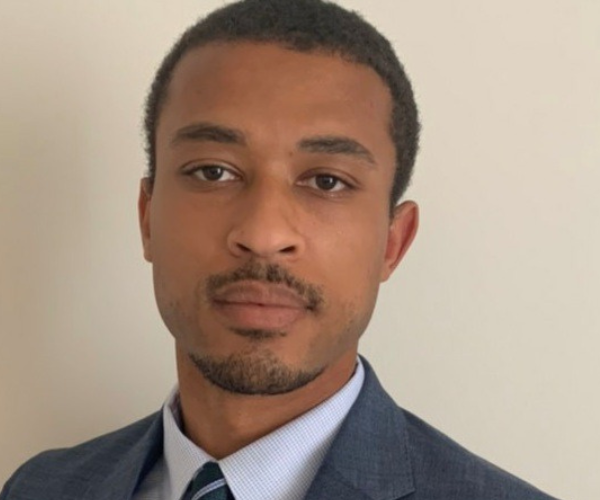


Southwest ISD Superintendent Jeanette Ball’s August resignation makes her the fifth superintendent to leave a major Bexar County school district in 2026. The pattern raises broader questions about leadership stability, declining enrollment, budget pressure, school closures, and the growing difficulty of leading public-school systems.
Editorial Note
This article examines superintendent turnover across several San Antonio-area school districts in 2026. The departures discussed below occurred under different circumstances and should not be treated as evidence of a single cause or shared pattern of misconduct.
In particular, there is no reliable evidence reviewed for this article establishing that Southwest ISD Superintendent Jeanette Ball resigned because of misconduct. She publicly said she wanted to pursue something different. Other superintendent transitions discussed below include retirement, board leadership changes, and district-specific controversies. This article is provided for general educational and informational purposes.
Southwest ISD Becomes the Latest District to Change Leaders
Less than three weeks before students are scheduled to return to class, Southwest Independent School District is changing leaders.
The district’s Board of Trustees unanimously accepted Superintendent Jeanette Ball’s resignation on August 5. Ball had nearly a year remaining on a contract scheduled to run through June 30, 2027 and was earning just over $270,000 annually. Deputy Superintendent Brandon Crisp was appointed acting superintendent as Southwest ISD prepares for classes to begin August 24.
Ball said she wanted to “do something different.” The available reporting does not establish misconduct or disciplinary action as the reason for her departure.
What makes the resignation noteworthy is not simply that one superintendent stepped down. Ball became the latest in a series of leadership transitions across Bexar County. North East ISD, Northside ISD, San Antonio ISD, Judson ISD, and now Southwest ISD have all experienced superintendent departures or succession processes during 2026.
The circumstances differ considerably. The common denominator is not scandal.
It is turnover.
Not All Five Departures Mean the Same Thing
Lumping all five leadership changes together would be misleading.
North East ISD moved through an unexpected transition before ultimately selecting Anthony Jarrett as superintendent. Northside ISD Superintendent John Craft stepped down after roughly three years leading the district and moved toward a consulting role while trustees began planning for permanent leadership.
San Antonio ISD Superintendent Jaime Aquino announced his retirement after a long career in education. His departure comes as SAISD continues navigating declining enrollment, budget pressure, campus consolidation, and academic accountability concerns.
Judson ISD represents a more contentious situation. The district has faced financial problems, leadership conflict, investigations, staffing reductions, and school closures.
Southwest ISD’s situation is different again. Ball publicly described her resignation as a decision to pursue something else.
Those distinctions matter. Five departures do not prove five leadership failures.
What they do show is how frequently major districts in one metropolitan area are having to rethink who leads them.
The Superintendent Job Has Become Harder to Sustain
Superintendents are expected to operate like chief executives while remaining accountable to elected boards, state agencies, teachers, employees, families, taxpayers, community organizations, and political constituencies.
They may oversee thousands of employees and hundreds of millions of dollars while also being held responsible for academic performance, transportation, facilities, special education, school safety, labor issues, staffing, technology, legal compliance, and communication.
Many of those responsibilities collide.
A superintendent may be told to improve salaries while reducing spending. A district may need to close schools while families demand neighborhood campuses remain open. Leaders may be expected to improve academic outcomes while enrollment and revenue fall.
Those are not problems with obvious solutions.
They are tradeoffs.
The superintendent is often the person expected to defend whichever imperfect option the district ultimately chooses.
Declining Enrollment, Budget Pressure, and School Closures Are Connected
One of the biggest pressures across San Antonio-area districts is declining enrollment.
The region has seen substantial movement among traditional public schools, charter schools, private options, and rapidly changing population patterns. More than 45 public schools in the San Antonio area have closed since 2014, with declining enrollment playing a major role in many consolidation decisions.
Northside ISD, for example, has seen enrollment fall substantially from its pandemic-era levels. San Antonio ISD has already closed numerous campuses as it adjusts to a smaller student population. Judson ISD has also approved school closures and significant staffing reductions while addressing financial problems.
Enrollment matters because public-school finances are closely tied to students.
When enrollment falls, revenue can decline faster than costs.
Buildings still require maintenance. Buses still need drivers. Schools still need principals, counselors, special-education services, technology, utilities, custodial staff, and security even when fewer students occupy the system.
Eventually, leaders face uncomfortable choices.
Districts may eliminate positions, delay construction, redraw attendance boundaries, consolidate campuses, seek additional revenue, or spend down reserves.
Each option affects real people.
That is where a financial problem can quickly become a leadership problem.
To administrators, closing an underused campus may be necessary for long-term sustainability. To families, the same school may represent decades of neighborhood history and relationships.
Superintendents are expected to reconcile both realities.
Sometimes there is no decision that avoids significant opposition.
Boards and Superintendents Can Stabilize—or Destabilize—a District
Superintendents do not lead districts alone.
School boards hire them, evaluate them, approve budgets, establish policy, and ultimately determine whether the superintendent remains in the position.
That relationship works best when roles are clear.
Boards govern. Superintendents administer.
Trustees should ask hard questions, demand information, challenge poor decisions, and hold the superintendent accountable. But boards can create instability when individual members begin treating governance as day-to-day management.
The superintendent can create similar problems by withholding information, resisting legitimate oversight, or failing to communicate clearly with trustees.
Once trust between a board and superintendent deteriorates, nearly every major decision becomes harder.
Judson ISD provides a particularly visible example of how governance conflict, financial pressure, and leadership instability can reinforce one another.
That does not mean every superintendent transition in Bexar County resulted from board conflict.
It does show why the board-superintendent relationship can determine whether difficult periods become manageable transitions or prolonged crises.
Constant Leadership Turnover Has Organizational Costs
Changing leaders is not always harmful.
A new superintendent may bring expertise the district needs, rebuild damaged relationships, improve performance, or correct ineffective practices.
But repeated turnover carries a cost.
Every new leader needs time to understand the district, build relationships, evaluate senior staff, examine finances, learn community expectations, and decide which existing initiatives should continue.
Employees may begin wondering whether programs launched under one superintendent will survive the next.
Principals may become hesitant to plan several years ahead. Central-office staff may repeatedly adjust priorities. Families may hear new strategic language while wondering whether the direction will change again after the next board election.
Leadership turnover therefore affects more than the superintendent’s office.
It can create uncertainty throughout the organization.
Interim Leadership Can Protect Continuity
Southwest ISD’s decision to appoint Deputy Superintendent Brandon Crisp as acting superintendent gives the district something important during the transition: familiarity.
Crisp already knows the organization.
That can reduce disruption during a particularly sensitive part of the school calendar. Classes begin August 24, and the opening of a school year involves staffing, transportation, schedules, facilities, student services, enrollment, safety planning, and family communication.
An internal acting superintendent does not have to spend the first several weeks learning basic district operations.
Interim leadership can therefore provide valuable stability.
The tradeoff is uncertainty about how long the arrangement will last and whether major decisions should be made before the board determines its permanent leadership strategy.
That is why succession planning matters.
Districts should not wait until a superintendent resigns to begin thinking about who can maintain continuity.
Superintendent Searches Should Match the District’s Actual Problems
When boards begin searching for a new superintendent, there is often pressure to find the most impressive résumé available.
That may not produce the best fit.
A leader who succeeded in a rapidly growing suburban district may not be the right person for a system facing shrinking enrollment and campus closures.
A superintendent known for academic turnaround may have less experience navigating major financial restructuring.
A strong communicator may still struggle with a divided board.
The better question is not simply, “Who is the best superintendent candidate?”
It is, “Who is best suited for the problems this district actually has?”
For many San Antonio-area districts, those problems now include enrollment decline, financial restructuring, community opposition to campus closures, state accountability pressure, and complicated relationships between boards and administration.
Those conditions require more than charisma.
They require judgment.
Stability Is Valuable, but It Is Not the Only Goal
Leadership stability should not become an excuse for keeping the wrong superintendent.
Boards have a responsibility to intervene when leadership problems become serious enough.
Financial mismanagement, legal violations, ethical failures, persistent academic problems, toxic workplace conditions, or a complete breakdown in board confidence may justify changing leadership.
The lesson from high turnover is therefore not that superintendents should stay indefinitely.
It is that boards should understand the cost of both decisions.
Replacing a superintendent can be expensive and disruptive.
Keeping an ineffective leader can be much more expensive.
Good governance requires distinguishing ordinary leadership conflict from problems serious enough to justify a transition.
Ball’s Departure Creates an Immediate Test for Southwest ISD
For Southwest ISD, the first challenge is simply opening school successfully.
Ball’s August 5 resignation leaves only a short period before students return.
Crisp’s experience inside the district should help maintain operational continuity, but trustees will eventually have to decide whether to keep him in the role longer term or conduct a broader superintendent search.
How that process is handled matters.
A rushed search can produce another leadership mismatch.
An excessively long transition can create uncertainty.
A divided board can make even a strong candidate reluctant to accept the job.
Southwest ISD therefore has an opportunity to treat this transition as more than filling a vacancy.
It can clarify what the district expects from its next leader and what support that person will realistically receive.
The Larger Question May Be Whether the Job Has Become Too Fragile
Five superintendent transitions in one metropolitan area do not prove that public-school leadership is in crisis.
But they are enough to justify looking at the job itself.
Large-district superintendents are expected to understand curriculum, law, budgeting, construction, transportation, labor relations, special education, communications, politics, technology, security, and community relations.
A state policy change can force major program adjustments.
A board election can alter the superintendent’s governing majority.
A few thousand fewer students can turn manageable finances into a structural deficit.
A school closure can create years of community anger.
Every major decision can become public instantly.
The remarkable part may not be that superintendents leave.
It may be how difficult it has become to build long-term leadership stability in the first place.
What School Boards Can Learn
The San Antonio-area turnover offers lessons that extend far beyond Texas.
Boards should define expectations before hiring a superintendent, agree on how performance will be evaluated, and clearly distinguish governance from daily administration.
They should also be realistic about what one person can accomplish.
A superintendent cannot preserve every campus, eliminate every deficit, raise every salary, improve every academic measure, avoid every staffing reduction, and satisfy every constituency at the same time.
Leadership should be held accountable for decisions within its control.
It should not be evaluated against promises that no administrator could realistically fulfill.
Boards also need succession plans. Strong deputy-superintendent structures, capable senior teams, and clear transition procedures make unexpected departures far less disruptive.
Stability is not created simply by keeping the same superintendent.
It is created by building an organization capable of functioning when leadership changes.
Key Takeaways
Southwest ISD Superintendent Jeanette Ball resigned August 5, 2026, less than three weeks before the district’s first day of school. The board accepted her resignation and appointed Deputy Superintendent Brandon Crisp as acting superintendent. Ball publicly said she wanted to pursue something different, and the information reviewed for this article does not establish misconduct as the reason for her departure.
Ball’s resignation follows superintendent transitions involving North East ISD, Northside ISD, San Antonio ISD, and Judson ISD, making Southwest the fifth major Bexar County district experiencing leadership change in 2026.
The circumstances differ substantially among the districts. They should not be treated as evidence of one shared scandal or management failure.
What the districts do share is a difficult operating environment shaped by declining enrollment, budget pressure, campus consolidation, state accountability requirements, board politics, and growing community expectations.
Superintendent stability matters, but stability alone is not enough. Districts need leaders suited to their specific challenges and governing boards capable of providing accountability without turning governance into daily management.
FAQ
Why did Southwest ISD Superintendent Jeanette Ball resign?
Ball publicly said she wanted to pursue something different. The information reviewed for this article does not establish misconduct or disciplinary action as the reason for her resignation.
Who is leading Southwest ISD now?
Deputy Superintendent Brandon Crisp was appointed acting superintendent following Ball’s departure.
How many major Bexar County districts have experienced superintendent turnover in 2026?
Southwest ISD follows leadership transitions involving North East ISD, Northside ISD, San Antonio ISD, and Judson ISD.
Did all five superintendents leave because of controversy?
No. Their circumstances differ. Some departures involve retirement or voluntary transitions, while others occurred amid more contentious governance or district problems.
Why does superintendent turnover matter to students?
Repeated leadership changes can affect budgets, staffing, campus plans, academic programs, long-term initiatives, communication, and the overall direction of a district.
Final Thoughts
Jeanette Ball’s resignation may ultimately be remembered as a straightforward leadership transition.
There is no reliable evidence reviewed for this article that her departure resulted from misconduct, and it would be inappropriate to imply otherwise.
The larger story is what surrounds it.
When five major districts in one metropolitan area experience superintendent transitions within the same year, it becomes reasonable to ask whether the position itself has become increasingly difficult to sustain.
Superintendents are being asked to manage shrinking enrollment, difficult budgets, campus closures, political pressure, state accountability requirements, employee expectations, and divided communities—often simultaneously.
Some will retire. Some will pursue new opportunities. Some will lose board support. Some may make mistakes serious enough to justify removal.
And some may simply decide that the demands of the job are no longer worth the cost.
School boards cannot eliminate those pressures.
They can make leadership more sustainable by maintaining clear governance boundaries, setting realistic expectations, planning for succession, communicating honestly with their communities, and hiring leaders whose experience matches the problems their districts actually face.
A superintendent should be accountable.
But accountability and instability are not the same thing.
School systems need leaders who can make difficult decisions—and governing boards capable of giving good leaders enough stability to make them.
Support New To Education
New To Education publishes independent educational reporting and analysis covering school leadership, education law, governance, student rights, public policy, administrator accountability, and the challenges affecting school systems.
Support New To Education by sharing our reporting and helping more educators, families, students, and community members understand the decisions shaping public education.
Related Articles
Judson ISD Investigation Alleges Toxic Leadership, Financial Mismanagement and Reporting Failures
Sources
San Antonio Express-News — North East ISD Trustees Hire Anthony Jarrett as Superintendent
San Antonio Express-News — Northside ISD Superintendent John Craft Steps Down
San Antonio Express-News — SAISD Superintendent Jaime Aquino Announces Retirement
San Antonio Express-News — Judson ISD Cuts 536 Positions While Addressing Budget Shortfall
San Antonio Express-News — San Antonio Public-School Enrollment Decline and Campus Closures