




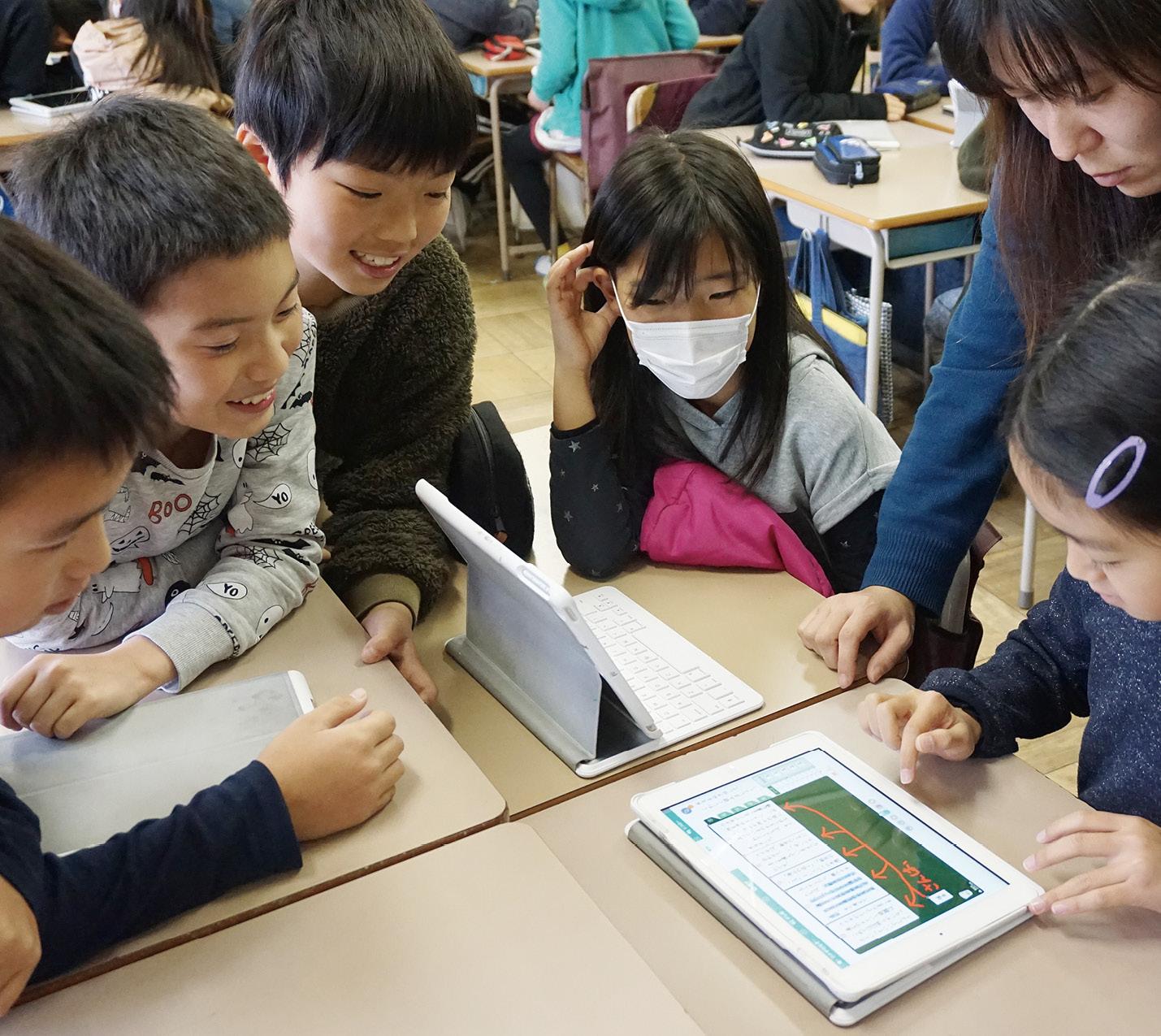

Japan has taken a formal step toward changing what counts as a school textbook.
In June 2026, the Ministry of Education, Culture, Sports, Science and Technology posted a revised school-law package that allows officially recognized textbooks to include digital formats, not just paper. The change may sound technical, but it is politically significant: it moves digital textbooks from a limited supplemental role into the country’s core textbook system.
The immediate effect will be limited. The law is scheduled to take effect on April 1, 2027, but MEXT’s own planning materials show that the practical transition will stretch across several school years. In documents discussed on June 18, 2026, the ministry said it is working toward elementary-school use of the new digital-including textbooks from fiscal 2030.
That gap between legal approval and classroom reality is the real story. Japan has made the policy decision. Now it has to decide how the system will work.
What changed
Under the law posted by MEXT on June 8, 2026, the definition of school textbooks will no longer be limited to paper. The ministry’s summary says digital-format textbooks will be recognized within the textbook system and will also be covered by the rules for free provision in compulsory education.
That matters because Japan’s textbook system is tightly structured. Official textbooks go through review, adoption, and distribution rules, and those rules shape what schools can actually use at scale. By changing the legal framework, the government is not just allowing more screens in classrooms. It is redesigning the rules around what a textbook is.
The same ministry summary also says the reform includes related copyright measures, reflecting a practical reality: once textbooks include digital components such as audio, video, and other electronic material, the state needs a clearer legal framework for how those materials are published and delivered.
Who is involved
The main actor is MEXT, which drafted and is now implementing the reform. But several other parts of the education system are involved.
The Diet handled the legislation. MEXT’s June 18 implementation meeting specifically listed “results of Diet deliberations” as part of the agenda, showing that lawmakers’ questions are feeding directly into the next stage.
Also central are textbook publishers, local boards of education, and schools, because they will have to work under the new rules for publishing, selecting, and using textbooks. MEXT’s June 18 materials make clear that the ministry is still developing guidance for all three groups.
The schedule is already mapped out. MEXT says it wants ministerial guidance by fall 2026, further standard-setting by the end of the fiscal year, and then later review, publication, and adoption stages leading toward classroom use.
Why this is a political education story
This is more than a classroom-technology update. It is an education-governance decision about state standards, public funding, and the balance between modernization and caution.
Japan is not simply replacing paper with tablets. The government is trying to build a system that preserves the public role of approved textbooks while adding digital capabilities. That creates policy choices about what kinds of digital content belong inside a textbook, how much video or audio is appropriate, whether outside links should be limited, and how to preserve fairness across schools with different technical capacity.
MEXT’s June 18 implementation documents show those choices are still open. The panel is scheduled to discuss health impacts, child development, international comparisons, writing skills, and the division of labor between paper and digital formats through the summer.
In other words, the political question has shifted from “Should Japan allow digital textbooks?” to “Who decides what good digital textbook use looks like?”
What the evidence says so far
MEXT is not starting from zero. Its latest evidence report, published in May 2026 from a fiscal 2025 study, offers a snapshot of current use in schools already working with digital textbooks.
According to the report, teacher use has steadily increased over four years, and about 70% of teachers reported using digital textbooks in at least one in four lessons. About 66% said digital textbooks had improved instruction.
The report points to a few areas where teachers see benefits: visually confirming lesson content, comparing information, marking up diagrams or text, and supporting some problem-solving or inquiry tasks. It also suggests that students who use digital textbooks more frequently are more likely to report that they understand lessons and engage actively.
But the same report argues against a simple “paper out, screens in” narrative. Teachers still said paper textbooks are useful for reviewing handwritten traces of learning, for some longer reading tasks, and for certain study routines. That aligns with MEXT’s current implementation approach, which is about defining effective use cases rather than mandating one format for every situation.
Who is affected
The most immediate impact will fall on elementary and lower-secondary schools, which are the first focus of the rollout timeline.
Teachers will face the largest operational shift. They will need training, classroom routines, and technical reliability, not just devices. MEXT’s evidence report suggests training matters: teachers who had received digital-textbook training reported higher usage levels.
Students and families are also affected, especially around equity and health. If digital textbooks become part of the official system, the state has to ensure that access does not depend too heavily on local capacity, household support, or school-by-school workarounds.
Publishers, meanwhile, will have to adapt to a model in which content, functionality, and standards are all more complex than in the paper-only era.
What to watch next
Several things remain unsettled.
First, MEXT still has to produce the ministerial guidance expected by fall 2026. That should clarify how publishers and schools are supposed to handle adoption and use.
Second, the ministry is still debating health, development, and writing-related concerns. Those are not side issues. They could shape how much of a school day is expected to rely on digital materials.
Third, the long runway to fiscal 2030 for elementary-school use suggests that national approval does not eliminate implementation risk. Technical standards, publisher readiness, and school capacity could all slow or reshape the transition.
The verified facts are clear: Japan has changed the law, set an effective date of April 1, 2027, and begun a formal implementation process. The harder question, still unresolved, is whether the country can turn legal reform into a classroom model that is both modern and workable.
That is where the next phase of education politics will be fought.
Sources
- MEXT, “学校教育法等の一部を改正する法律” (law page, posted June 2026): https://www.mext.go.jp/b_menu/houan/kakutei/detail/mext_00004.html
- MEXT, “学校教育法等の一部を改正する法律(概要)” PDF: https://www.mext.go.jp/content/20260610-mxt_hourei-000050384-1.pdf
- MEXT, “デジタルな形態を含む教科書の発行・採択等の指針に関する検討会議(第2回)配布資料” (June 18, 2026): https://www.mext.go.jp/b_menu/shingi/mext_02361.html
- MEXT, “制度整備の全体像について” PDF (June 18, 2026): https://www.mext.go.jp/content/20260617-mxt_kyokasyo01-000050583_2.pdf
- MEXT, “当面の審議事項&スケジュール(案)” PDF (June 18, 2026): https://www.mext.go.jp/content/20260617-mxt_kyokasyo01-000050583_3.pdf
- MEXT, “令和7年度 学習者用デジタル教科書の効果・影響等に関する実証研究事業”: https://www.mext.go.jp/a_menu/shotou/kyoukasho/digital/mext_03528.html
- MEXT, evidence report PDF on effects and impacts of digital textbooks: https://www.mext.go.jp/content/20260518-mxt-kyokasyo-000049761_1.pdf




