

Editorial Note
This article is intended for educational and informational purposes. Wonder Meets 2026 was organized by Wonderfy, a private Japanese education company that develops the Think!Think! learning application and WonderBox STEAM program.
New To Education is not affiliated with Wonderfy, Think!Think!, WonderBox, or the National Museum of Emerging Science and Innovation. References to these organizations and products are not endorsements.
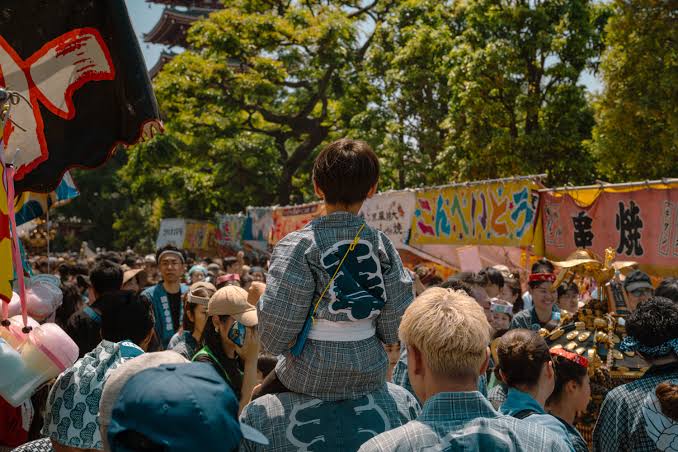
Approximately 2,500 children and parents gathered at Tokyo’s National Museum of Emerging Science and Innovation on July 11, 2026, for an education event built around critical thinking, problem-solving, mathematics, and collaborative learning.
Wonder Meets 2026 brought together around 1,220 children ranging from the final year of kindergarten through sixth grade. The event combined the established Think!Think! Cup competition with a new collection of interactive activities called the Wonder Party.
Children solved spatial, logical, numerical, and trial-and-error problems individually. They also worked with other participants, exchanged ideas with parents, and joined cooperative challenges in which the goal was not simply to defeat another player but to solve a problem together.
The event offers a useful example of how educational technology can move beyond passive screen use. Digital tools became the starting point for face-to-face competition, conversation, teamwork, and shared learning.
Wonder Meets Expanded Beyond a Traditional Competition
Wonderfy had organized the Think!Think! Cup since 2019 as a competition connected to its critical-thinking application.
For 2026, the company renamed and expanded the larger event as Wonder Meets. The theme of “meets” was intended to represent children encountering new problems, ideas, people, goals, and ways of thinking.
The Think!Think! Cup remained an important part of the day, but organizers also introduced the Wonder Party, a more interactive program designed for younger children and their families.
That change matters educationally.
Competitions can motivate students and give them a goal toward which they can work. However, an event based entirely on rankings can leave some children believing that success belongs only to the highest-scoring participants.
By adding cooperative and family activities, Wonder Meets presented thinking as something children can enjoy in several ways. They could compete, experiment, discuss, cooperate, make mistakes, and try again.
That broader approach may help more children see themselves as capable problem-solvers.
Children Competed in Five Areas of Thinking
The Think!Think! Cup included students from first through sixth grade.
Participants were divided into four divisions: first grade, second grade, third grade, and a combined fourth-through-sixth-grade division. The problems came from five areas used within the Think!Think! application: spatial recognition, plane recognition, trial and error, logic, and numerical processing.
These abilities are connected to more than mathematics scores.
Spatial reasoning can help children understand shapes, maps, diagrams, engineering designs, and how objects relate to one another. Logic helps students organize information and determine whether a conclusion follows from the evidence available.
Trial-and-error tasks teach another important lesson: an incorrect attempt does not need to end the learning process.
Children can examine what happened, change their strategy, and try again. That habit becomes valuable in mathematics, science, writing, programming, art, and everyday decision-making.
Numerical processing supports the ability to identify patterns and work with quantities, while plane-recognition activities strengthen understanding of two-dimensional forms and visual relationships.
Together, these areas encourage students to think about how they reach an answer rather than only whether the final answer is correct.
The Event Connected Digital Practice With a Real Community
Think!Think! is primarily a digital learning application, but Wonder Meets transformed that individual experience into a large in-person gathering.
Children who normally completed activities at home were able to see that thousands of other students shared an interest in puzzles, mathematics, and problem-solving.
That sense of community can be valuable.
Educational applications are often criticized for increasing children’s screen time or isolating learners. Those concerns should be taken seriously, particularly when technology replaces physical activity, conversation, creative play, or human instruction.
However, digital learning does not always need to remain isolated.
When used intentionally, an application can prepare students for an in-person discussion, competition, experiment, or collaborative task. The technology becomes one component of a larger learning experience rather than the entire experience.
Wonder Meets demonstrated this blended approach. Students used skills practiced through an application, but the July 11 event also required them to perform under pressure, observe others, communicate, celebrate, recover from disappointment, and cooperate.
Those social and emotional experiences cannot be fully recreated by a screen.
International Participants Added a Global Dimension
Six children who had earned high placements in a Think!Think! competition in Cambodia traveled to Japan and participated alongside Japanese students.
The Cambodian participants joined the same problem-solving activities even though they came from a different linguistic and cultural environment.
This highlights one potential strength of visual and mathematical learning.
Many educational subjects depend heavily on language proficiency. A student may understand a scientific or mathematical concept but struggle to demonstrate that understanding when the instructions are written in an unfamiliar language.
Visual puzzles and spatial challenges can sometimes reduce that barrier.
They do not eliminate the importance of language, but they can provide another way for children to communicate ability, creativity, and reasoning.
The international participation also showed children that an interest in solving problems can create connections across national borders.
For Japan, which is working to expand global education and prepare students for more internationally connected workplaces, experiences like this may help children view learning as something shared rather than limited to one school or country.
Cooperation Became Part of the Challenge
One of the new activities was a cooperative “boss battle” in which participants worked toward a shared goal.
Children who had previously competed against one another were asked to become teammates and solve a larger challenge together. Organizers reported that the venue erupted in celebration when the group completed the task.
This shift from competition to cooperation reflects an important educational reality.
Schools often assess students individually, but many adult problems are solved in teams. Engineers, teachers, researchers, healthcare professionals, designers, and business leaders must combine different areas of knowledge.
A student may be strong at identifying patterns but less comfortable explaining an idea. Another may communicate clearly but need help finding the initial solution.
Collaborative problem-solving allows those abilities to support one another.
It also teaches children how to listen, disagree respectfully, adjust a plan, share credit, and continue working when the first idea fails.
These skills are difficult to measure through a traditional examination, but they are central to education and employment.
Parents Were Included in the Learning Experience
The new Wonder Party included opportunities for parents and children to think together.
Activities included a team-based problem-solving match, a short mathematics lesson, and a group puzzle adventure. The program was designed for children from the final year of kindergarten through third grade.
Parental involvement can support learning when it encourages curiosity rather than pressure.
A parent does not need to immediately provide the answer to be helpful. Asking questions such as “What have you tried?” or “What pattern do you notice?” can help a child explain their reasoning.
This approach communicates that thinking is valuable even before the correct solution appears.
Shared problem-solving can also help parents understand how their children respond to challenge.
Some children begin quickly and learn through experimentation. Others prefer to observe, organize information, and move carefully. Neither approach is automatically better.
When parents see those differences directly, they may be better able to support learning at home without expecting every child to solve problems in exactly the same way.
The Event Reflected Japan’s Growing Interest in STEAM Education
Wonderfy also operates WonderBox, a home-learning program combining digital and physical activities in science, technology, engineering, art, and mathematics.
These subjects are commonly grouped under the term STEAM.
Japan has placed increasing attention on digital literacy, programming, data science, creativity, and problem-solving as it prepares students for an economy shaped by automation and artificial intelligence.
Traditional academic knowledge remains important. Students still need foundational mathematics, language, science, and social studies.
The challenge is helping them use that knowledge in unfamiliar situations.
A student may memorize a formula but struggle to decide when to apply it. Another may understand a mathematical procedure but find it difficult to explain why it works.
Critical-thinking activities can help bridge that gap by asking students to interpret, test, compare, and revise.
Wonder Meets did not represent a national government policy, but it reflected a broader educational direction in Japan: preparing children not only to recall information but also to work with it.
Educational Games Need More Than Entertainment
Games can increase motivation, but enjoyment alone does not guarantee meaningful learning.
A well-designed educational game should connect the activity to a clear skill, provide an appropriate level of difficulty, offer useful feedback, and encourage students to think rather than guess repeatedly.
It should also avoid manipulating children through excessive rewards, advertisements, unnecessary purchases, or pressure to remain online.
The strongest educational games make the thinking itself satisfying.
A child should feel motivated not only because points, trophies, or digital items are available, but also because discovering the solution feels rewarding.
Wonder Meets attempted to bring that internal motivation into a public setting. Children were recognized for achievement, but the event also celebrated concentration, persistence, cooperation, and the willingness to attempt difficult problems.
That distinction matters.
A learner who believes intelligence means always answering correctly may avoid difficult work. A learner who views intelligence as something developed through effort and strategy may be more willing to continue.
Competition Can Motivate, but Adults Must Protect Perspective
The competition included awards for the highest-performing children in each division.
Some children celebrated, while others reportedly cried after narrowly missing an award. The audience responded by applauding the efforts of all participants.
Disappointment is not necessarily harmful.
Learning how to lose, recover, and try again can be part of healthy development. Problems arise when adults treat a child’s ranking as a measure of personal worth.
A competition should remain one learning experience, not a permanent label identifying who is intelligent and who is not.
Children develop at different rates and may have different strengths. A student who does not perform well under time pressure may still be deeply creative or capable of sustained reasoning.
Parents and educators can help children reflect on what they learned, what strategy worked, and what they would change next time.
The useful question after a competition is not only, “What place did you earn?”
It is also, “What did you discover about how you think?”
Technology Should Support, Not Replace, Teachers
Applications can offer repeated practice, immediate feedback, and access outside school hours.
They cannot fully replace a teacher who knows the student, observes confusion, adjusts an explanation, builds trust, and connects learning to the wider curriculum.
Technology is most valuable when it supports those human relationships.
A teacher might use a puzzle to begin a lesson, encourage several strategies, or help students discuss why one approach was more efficient than another.
Parents can use an application as a shared activity rather than handing over a device without involvement.
Schools should also consider accessibility.
Not every family has the same devices, internet connection, available time, or ability to pay for private learning programs. Educational technology should not become another way for students with greater resources to move further ahead.
Japan’s broader education system will need to balance innovation with equal access.
What Schools Can Learn From Wonder Meets
Schools do not need to organize a national event to use the principles demonstrated on July 11.
Teachers can introduce short visual puzzles, open-ended mathematics tasks, team challenges, and activities with more than one possible solution.
Students can be asked to explain their method before being told whether the answer is correct.
Classrooms can also alternate between individual and group problem-solving. Individual work helps students develop concentration and independence. Group work allows them to hear different strategies and practice communication.
Families can support the same habits at home through puzzles, construction activities, strategy games, cooking, budgeting, map reading, or ordinary discussions about how to solve a problem.
The essential practice is giving children time to think.
Adults often step in too quickly because watching a child struggle feels uncomfortable. Yet a manageable amount of struggle can be where some of the most important learning occurs.
Key Takeaways
Wonder Meets 2026 was held at the National Museum of Emerging Science and Innovation in Tokyo on July 11, 2026.
Approximately 1,220 children participated, while total attendance reached around 2,500 when parents and other accompanying adults were included.
The event combined the Think!Think! Cup critical-thinking competition with a new interactive program called the Wonder Party.
Children practiced spatial recognition, plane recognition, logic, numerical processing, and trial-and-error problem-solving.
Six high-performing children from a Cambodian competition traveled to Japan to participate.
Activities included both individual competition and cooperative challenges, demonstrating that critical thinking can involve independent concentration as well as teamwork.
The event showed how digital educational tools can connect with face-to-face learning, family participation, and international exchange.
Educational technology is most effective when it supports curiosity and human interaction rather than replacing teachers, parents, or real-world experiences.
FAQ
What happened in Japanese education on July 11, 2026?
Wonderfy held Wonder Meets 2026 at Tokyo’s National Museum of Emerging Science and Innovation. The event brought together approximately 2,500 children and parents for critical-thinking competitions, mathematics activities, and collaborative challenges.
How many children attended the event?
Approximately 1,220 children participated. Total attendance, including parents, reached around 2,500.
What is the Think!Think! Cup?
It is a competition connected to the Think!Think! educational application. Elementary students solve problems involving logic, spatial reasoning, numerical processing, visual recognition, and trial and error.
What was new in 2026?
The larger event was renamed Wonder Meets, and organizers introduced the Wonder Party, which included collaborative, family-oriented, and interactive activities.
Were only Japanese children involved?
No. Six children who had earned high placements in a Cambodian Think!Think! competition traveled to Japan to participate.
What is STEAM education?
STEAM refers to science, technology, engineering, art, and mathematics. The approach often emphasizes creativity, experimentation, design, and applying knowledge to practical problems.
Does critical-thinking practice improve school grades?
It may support skills used across subjects, but no single application, event, or puzzle program guarantees higher grades. Academic development depends on instruction, practice, motivation, support, health, and many other factors.
Should children use educational applications every day?
That decision depends on the child, application, time involved, and broader routine. Digital learning should be balanced with physical activity, sleep, conversation, creative play, reading, and offline experiences.
Can schools create similar activities without using an application?
Yes. Teachers can use puzzles, manipulatives, construction tasks, strategy games, open-ended questions, experiments, and team challenges without requiring a particular digital platform.
Final Thoughts
Wonder Meets 2026 showed that serious thinking does not need to feel joyless.
Children concentrated, competed, collaborated, made mistakes, celebrated solutions, and connected with other learners who enjoyed the same challenges.
That combination may be one of the most important lessons for education.
Schools need high expectations, but they also need curiosity. Students need foundational knowledge, but they also need opportunities to use it. Technology can support learning, but children still benefit from looking up from a screen and sharing ideas with another person.
Japan’s education system is preparing students for a future shaped by artificial intelligence, automation, and rapid technological change.
The most valuable preparation may not be teaching children to memorize every answer.
It may be helping them develop the confidence and patience to confront a problem when the answer is not immediately available.
Related Articles
Japan’s 2026 Generative AI Pilot Schools Could Shape the Future of Classroom Learning
Japan’s New Digital Textbook Law Opens a Long Transition for Schools
Sources
Wonderfy — Wonder Meets 2026 Brings Approximately 2,500 Children and Parents to Miraikan
Wonder Meets 2026 — Official Event Website
Think!Think! — Official Educational Application Website
National Museum of Emerging Science and Innovation — Official Website