


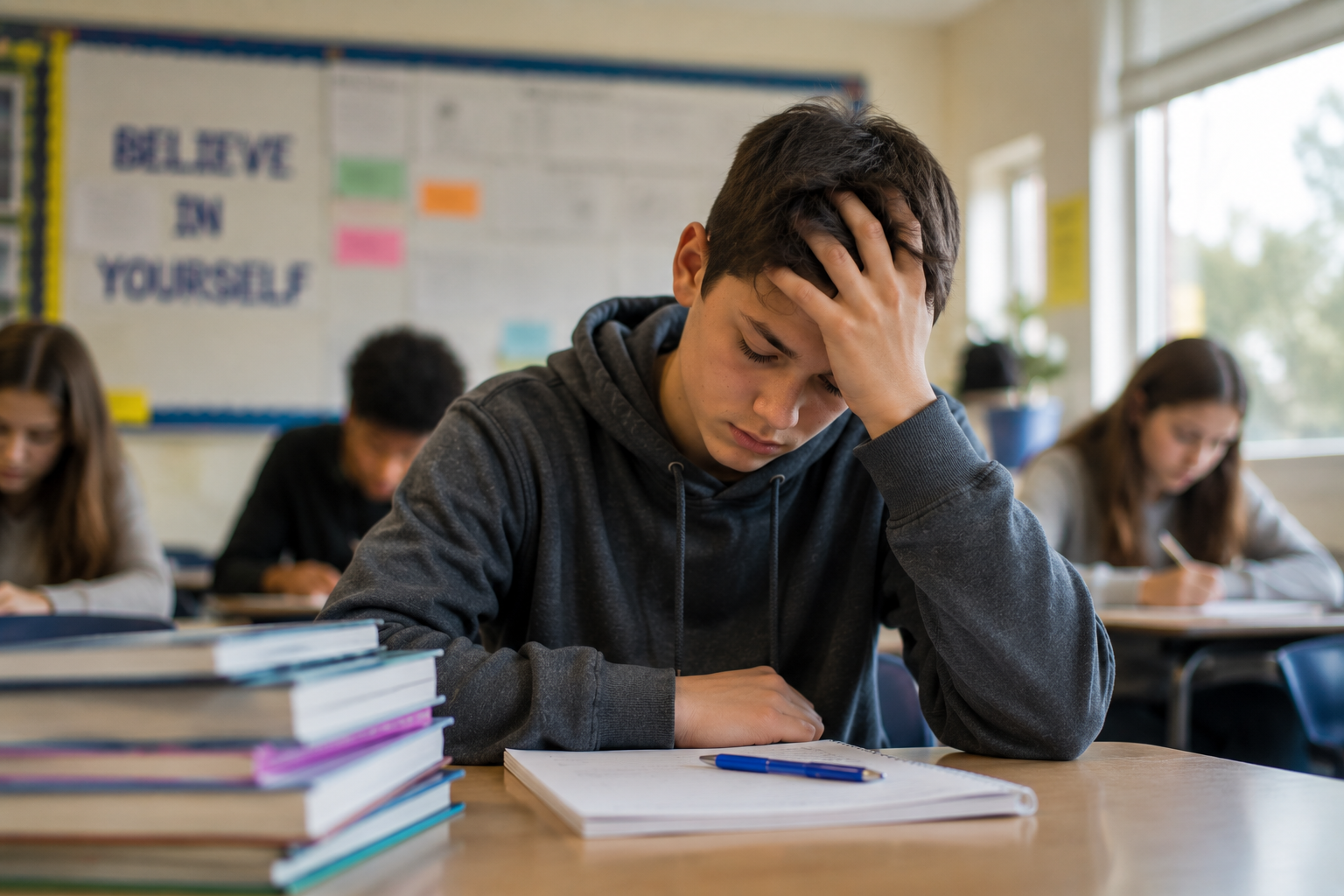

There’s usually a moment when it starts.
A student who used to participate becomes quiet.
Assignments stop getting turned in.
Grades slowly begin slipping.
The student who once seemed interested suddenly looks completely disconnected from the classroom.
And eventually people begin saying things like:
“They’re lazy.”
“They just don’t care anymore.”
“They’re not trying.”
But honestly, it’s rarely that simple.
Most students do not suddenly wake up one day and decide to stop caring about school. In many cases, what actually happens is much slower and much quieter.
Somewhere along the way, they stop believing their effort matters.
Students Usually Don’t Give Up Overnight
A lot of struggling students are carrying frustration that has built up over time.
Maybe they fell behind in one subject and never fully caught up. Maybe they started comparing themselves to other students. Maybe they kept trying and still felt like they were failing anyway.
After enough disappointing grades, corrections, or moments of embarrassment, some students begin protecting themselves emotionally by acting like they do not care.
Because pretending not to care can feel safer than trying your hardest and still struggling.
That’s something many people forget.

Today’s Students Are Carrying More Than We Realize
Students today are growing up in a very different environment than previous generations.
Social media creates constant comparison.
Attention spans are being pulled in every direction.
Many students feel pressure to succeed academically while also trying to manage friendships, family expectations, mental health, and uncertainty about the future.
For some students, school no longer feels motivating. It feels exhausting.
And when students feel overwhelmed long enough, disengagement often follows.
Feeling Invisible Changes Everything
One of the biggest reasons students stop trying is because they begin feeling invisible.
Students remember how adults make them feel.
A student who constantly feels ignored, judged, embarrassed, or labeled as “the bad kid” may slowly disconnect from school altogether. Not necessarily because they lack intelligence, but because they stop feeling like they belong in the environment.
That emotional side of education matters more than many people realize.
Sometimes a student is not asking for easier work. Sometimes they just want to feel understood.
Small Wins Matter More Than People Think
Confidence in school is fragile.
Sometimes a single encouraging conversation can change a student’s attitude completely. Sometimes improving one grade, finally understanding one lesson, or having one teacher believe in them can slowly rebuild motivation again.
Students need opportunities to feel capable.
That is one reason why individualized learning, tutoring, mentorship, and positive relationships can make such a major difference. Not every student learns the same way, and not every student responds to the same environment.

Education Should Still Feel Human
At its core, education is supposed to help students grow not just academically, but personally.
Of course accountability matters. Effort matters too. But many struggling students do not need constant reminders that they are failing. They already know.
Sometimes they need support.
Sometimes they need patience.
Sometimes they need structure.
And sometimes they simply need someone to notice they are struggling before they completely shut down.
Because behind many “unmotivated” students is often a student who quietly lost confidence somewhere along the way.
And in many cases, helping them start trying again begins with helping them feel seen again.