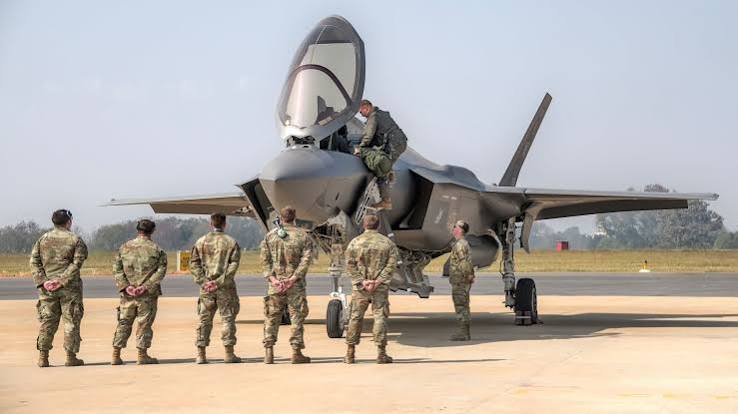


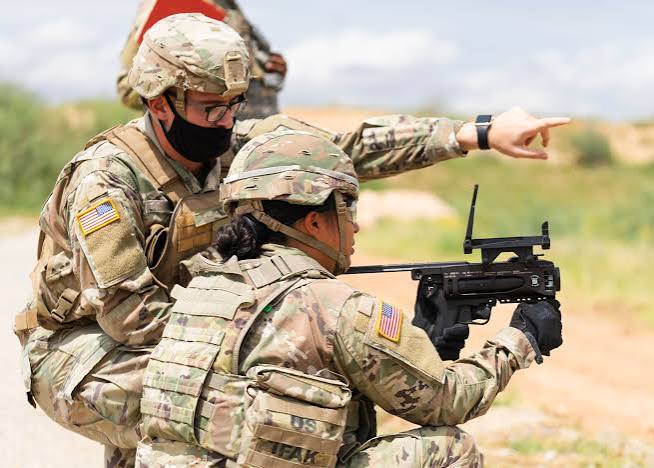

Military leaders, defense executives, university presidents, investors, and workforce experts met at the U.S. Army War College on July 15, 2026, to discuss artificial intelligence, manufacturing, national security, and the future defense workforce.
Editorial Note
This article discusses military policy, defense businesses, political leaders, artificial intelligence, national security, and relationships between universities and the defense industry. It is intended for educational and informational purposes.
New To Education does not endorse any politician, military policy, weapons manufacturer, investor, university, government official, or defense contractor discussed in this article. Participation in the summit does not establish that every proposal, technology, investment, or policy discussed will be adopted or succeed.
The future of national defense may depend as much on classrooms, laboratories, factories, and private investment as it does on military installations.
That connection was on display on July 15, 2026, when senior military officials, defense-company executives, investors, university presidents, technology leaders, and labor representatives gathered at the U.S. Army War College in Carlisle, Pennsylvania.
The second day of the Pennsylvania Defense and Innovation Summit focused on the changing character of warfare, artificial intelligence, critical minerals, manufacturing capacity, defense investment, and the rebuilding of America’s defense industrial base.
The event was hosted by U.S. Senator Dave McCormick and held over two days, with July 14 designated as Industry Day and July 15 as Summit Day.
The location was significant. The U.S. Army War College is not an ordinary conference center. It is a graduate-level military education institution responsible for developing senior military officers and national-security professionals.
Holding the summit there connected professional military education with the business, technology, and workforce systems responsible for producing the equipment and knowledge the military may need in future conflicts.
What Happened on July 15, 2026?
The July 15 program opened with remarks from Senator McCormick and Major General Trevor Bredenkamp, president and commanding general of Army University.
The first panel examined lessons from modern battlefields and the changing character of war. Participants included Army Secretary Dan Driscoll, Saronic co-founder and CEO Dino Mavrookas, Northrop Grumman Chair and CEO Kathy Warden, and TWG Global Co-Chairman Thomas Tull.
Later discussions addressed Pennsylvania’s defense-manufacturing history, the relationship between foreign policy and American prosperity, critical minerals, industrial capacity, artificial intelligence, and the rebuilding of the defense industrial base.
Speakers included senior representatives from Lockheed Martin, General Dynamics, Palantir Technologies, BAE Systems, Arm, Hanwha Defense USA, Blackstone, JPMorganChase, the U.S. Small Business Administration, and organized labor.
University leaders also had visible roles. Penn State President Neeli Bendapudi moderated a discussion involving defense manufacturing, while Carnegie Mellon University President Farnam Jahanian moderated a conversation with the director of the Central Intelligence Agency.
The agenda demonstrated that national defense is increasingly being treated as a shared challenge involving government, industry, finance, labor, research, and education.
Why the U.S. Army War College Was an Important Location
The U.S. Army War College educates senior military and civilian leaders in strategy, national security, leadership, and the employment of military power.
Its academic mission includes helping experienced professionals understand complex problems that extend beyond battlefield tactics.
Modern defense planning requires knowledge of economics, diplomacy, technology, logistics, industrial capacity, politics, ethics, and international relationships.
A conflict may be influenced by the number of weapons available, but it may also depend on whether replacement parts can be manufactured, whether software can be updated securely, whether supply chains remain operational, and whether leaders understand the long-term consequences of their decisions.
The Army War College is therefore an appropriate setting for conversations connecting military strategy with business and education.
The summit also shows how military education is evolving.
Senior officers must increasingly understand private technology companies, artificial intelligence, advanced manufacturing, investment decisions, and commercial innovation. Business leaders, in turn, must understand military requirements, procurement rules, national-security risks, and operational realities.
The relationship works in both directions.
Modern Warfare Is Creating New Educational Demands
The summit’s opening panel focused on the changing character of war.
Recent conflicts have demonstrated the importance of drones, artificial intelligence, electronic warfare, cyber operations, satellite communications, autonomous systems, and rapidly adapted commercial technology.
These developments create new educational demands for the military.
Service members may need stronger technical skills. Officers may need to understand how emerging systems influence strategy. Acquisition professionals may need to evaluate products developed by companies that did not traditionally work with the Department of Defense.
Technical knowledge alone is not enough.
Military professionals must also understand the legal, ethical, and strategic implications of new technology.
An autonomous system may operate faster than a human, but leaders must decide when and how it should be used. Artificial intelligence may process large amounts of information, but it can also produce errors, reflect flawed data, or create new security risks.
Military education will need to help leaders question technology rather than simply admire it.
Artificial Intelligence Was a Central Theme
One of the July 15 panels was titled “War and the Machine: How AI Is Redefining National Security.”
The discussion included technology investors, artificial-intelligence company leaders, the secretary of the Air Force, and Palantir’s head of defense.
Artificial intelligence could influence intelligence analysis, logistics, maintenance, cybersecurity, surveillance, training, planning, and battlefield decision-making.
It may help military organizations identify patterns more quickly or predict when equipment is likely to fail.
However, AI also creates serious concerns.
A system may recommend action without explaining its reasoning clearly. Adversaries may attempt to manipulate data, deceive sensors, or attack the software. Military personnel may place too much trust in automated recommendations because a system appears technologically advanced.
Schools and military institutions will therefore need to teach more than how to operate AI tools.
Students must learn data literacy, cybersecurity, critical thinking, system limitations, and ethical judgment.
The most dangerous operator may not be someone who knows too little about AI. It may be someone who knows enough to use it but not enough to recognize when it is wrong.
Universities Are Becoming More Important to National Defense
University leaders did not attend the summit only as observers.
Their participation reflected the growing role higher education plays in national security.
Universities educate engineers, cybersecurity specialists, data scientists, policy analysts, researchers, linguists, medical professionals, and business leaders.
They also conduct research that may contribute to communications, materials, energy systems, robotics, biotechnology, and artificial intelligence.
Carnegie Mellon University, Penn State, the University of Pittsburgh, and Temple University were represented through leadership or moderating roles across the two-day event.
This created an opportunity for universities to connect educational programs with emerging workforce needs.
A college may respond by developing new courses in autonomous systems, industrial cybersecurity, semiconductor engineering, supply-chain management, or advanced manufacturing.
Universities may also expand internships and cooperative programs with defense employers.
These relationships can create opportunities for students, but they also require careful oversight.
Universities should remain places where military policy and technology can be questioned openly. Research partnerships should include clear rules concerning academic independence, publication, classified information, conflicts of interest, and the treatment of students.
Workforce Development Began Before Summit Day
The summit’s first day included a session titled “Workforce Development: Keeping Pace.”
That discussion involved leaders from industry, government, the National Defense Industrial Association, and Temple University.
It highlighted a central problem facing the defense industry: technology and military needs may be changing faster than the workforce can be trained.
Defense companies need engineers and software developers, but they also need welders, machinists, electricians, technicians, construction workers, logistics specialists, and quality-control professionals.
Many of these jobs do not require the same educational pathway.
Some may require graduate degrees. Others may be reached through apprenticeships, industry credentials, technical colleges, or employer-supported training.
A healthy defense workforce will need both advanced researchers and skilled tradespeople.
The summit’s emphasis on workforce development suggests that educational policy cannot focus only on four-year university degrees.
Schools must help students understand a wider range of careers and the training required to enter them.
The Defense Industry Needs Skilled Trades
The July 15 panel on reindustrialization included leaders from Anduril Industries, BAE Systems, Arm, and North America’s Building Trades Unions.
This combination was notable.
A modern defense system may include advanced computer chips and artificial intelligence, but someone must still construct facilities, install electrical systems, machine parts, weld structures, maintain equipment, and move materials.
The idea of reindustrialization therefore depends on both technology and labor.
America cannot rebuild manufacturing capacity through software alone.
High schools, community colleges, apprenticeship programs, unions, and employers may all play roles in preparing the future workforce.
Students should not be told that skilled trades are fallback options for people who cannot succeed academically.
Advanced manufacturing can require mathematics, precision, technical literacy, problem-solving, and continuous training.
The future defense workforce may include people working with robotics and computer-controlled equipment alongside traditional tools.
Education systems must reflect that reality.
Critical Minerals Have Become an Education and Business Issue
Another summit panel focused on critical minerals and manufacturing capacity.
Modern military systems depend on materials used in electronics, batteries, sensors, aircraft, communications equipment, and advanced weapons.
When these materials come from limited suppliers or politically unstable regions, national security can become vulnerable to supply interruptions.
The issue creates demand for geologists, mining engineers, chemists, environmental scientists, supply-chain specialists, and manufacturing professionals.
It also creates difficult policy questions.
Expanding domestic mining and processing may strengthen supply-chain security, but it can also affect local communities, water, wildlife, and Indigenous lands.
Education must prepare people to understand both the strategic and environmental sides of the debate.
Students entering these fields will need to solve problems that do not have simple answers.
A secure supply chain must also be responsible, sustainable, and economically practical.
Small Businesses Could Gain New Opportunities
Defense contracting is often associated with large corporations such as Northrop Grumman, Lockheed Martin, General Dynamics, and BAE Systems.
The summit also emphasized opportunities for smaller Pennsylvania companies.
Industry Day included a trade show and individual meetings intended to connect businesses with government and defense-sector leaders.
Small companies may offer specialized software, manufacturing, cybersecurity, engineering, logistics, maintenance, training, or materials.
They can sometimes develop products more quickly than major corporations because they have fewer organizational layers.
However, entering the defense market can be difficult.
Businesses must understand complex contracting requirements, cybersecurity standards, security clearances, accounting rules, and lengthy procurement processes.
Educational programs for entrepreneurs could help smaller businesses navigate those requirements.
Business schools, community colleges, veteran organizations, and government agencies may all help founders understand how to become responsible defense suppliers.
Veterans May Be Well Positioned for Defense Entrepreneurship
Veterans often understand military needs from direct experience.
They may recognize problems involving equipment, logistics, training, communication, housing, healthcare, or family support that are not obvious to outside companies.
That experience can become the foundation of a business.
Veteran entrepreneurs may develop technologies, consulting services, training programs, construction companies, or support systems connected to national defense.
However, military knowledge does not automatically provide business knowledge.
Veterans may still need assistance with financing, marketing, contracting, accounting, intellectual property, and commercial growth.
Events connecting military leaders with businesses can be useful when they create meaningful pathways rather than serving only as networking showcases.
Veterans should be able to leave with information they can act upon.
Defense Partnerships Could Create Jobs in Pennsylvania
Pennsylvania has a long industrial and manufacturing history.
The summit’s organizers presented the state as a potential center for future defense production and investment.
Its universities, transportation networks, skilled workforce, energy resources, military installations, manufacturers, and research institutions could support that goal.
New investment could create jobs and strengthen communities that have experienced industrial decline.
However, announcements should be evaluated carefully.
The number of jobs actually created may differ from early projections. New facilities may require skills that local workers do not yet possess. Tax incentives and public investments should be examined to determine whether communities receive long-term benefits.
Workforce programs should begin before positions become difficult to fill.
Schools and colleges need enough information to design programs around realistic employer demand rather than temporary political enthusiasm.
Universities Must Protect Their Independence
Partnerships between higher education and the defense industry can provide research funding, internships, modern equipment, and employment opportunities.
They can also create tensions.
A university may become financially dependent on a company or government agency. Faculty members may face restrictions on publishing research. Students may not fully understand whether their work will support military applications.
Institutions should establish clear ethical standards.
Students should know who funds a project and what restrictions apply. Researchers should have transparent procedures for reviewing conflicts of interest. Universities should protect space for criticism and debate.
National security can benefit from independent academic thinking.
A university that becomes afraid to question its sponsors may lose part of its educational value.
Defense Education Should Include Ethics
A summit focused on technology and manufacturing can easily make progress sound purely technical.
Defense decisions are also moral decisions.
Students and military professionals should study the laws of armed conflict, civilian protection, human rights, accountability, and the consequences of automated decision-making.
Business leaders should consider how products may be used, sold, modified, or transferred.
Engineers should understand that technical design choices can influence human life.
Ethics should not be added at the end of a program as a symbolic requirement.
It should be integrated into technology, business, military, and policy education from the beginning.
The more powerful the technology becomes, the more important responsible judgment becomes.
The Summit Shows That Education Is Part of National Security
The July 15 event demonstrated that national security does not begin only when a conflict starts.
It begins years earlier.
It begins when students choose career pathways, when schools teach technical skills, when universities conduct research, when apprentices learn trades, and when businesses decide whether to enter advanced manufacturing.
A nation cannot quickly create experienced engineers or skilled technicians during an emergency.
Those capabilities must be developed over time.
Education is therefore part of defense readiness.
This does not mean every school should become focused on the military.
It means policymakers should recognize that workforce preparation, scientific literacy, critical thinking, manufacturing knowledge, and ethical leadership can have national consequences.
Key Takeaways
The Pennsylvania Defense and Innovation Summit took place at the U.S. Army War College on July 14 and 15, 2026. The July 15 program brought military leaders, defense executives, investors, university presidents, technology companies, government officials, and labor representatives together to discuss artificial intelligence, manufacturing, critical minerals, national security, and the future defense workforce.
The summit showed that military readiness increasingly depends on education, technical training, research, private industry, and skilled labor. Universities may play a growing role in preparing engineers, cybersecurity specialists, researchers, and policy professionals, while community colleges, apprenticeships, and trade programs will be essential for developing technicians, welders, machinists, electricians, and manufacturing workers.
These partnerships can create jobs and new educational pathways, but they also require transparency, ethical safeguards, academic independence, and realistic expectations about how many projects and investments will actually move forward.
FAQ
What happened at the U.S. Army War College on July 15, 2026?
The second day of the Pennsylvania Defense and Innovation Summit brought military, government, business, investment, university, and labor leaders together to discuss defense technology, manufacturing, artificial intelligence, critical minerals, and workforce development.
Who hosted the summit?
U.S. Senator Dave McCormick hosted the two-day event at the U.S. Army War College in Carlisle, Pennsylvania.
Why was the Army War College involved?
The Army War College educates senior military and national-security leaders. Its mission makes it a relevant setting for discussions connecting military strategy with industry, technology, and education.
What educational institutions participated?
Leaders from Penn State, Carnegie Mellon University, the University of Pittsburgh, and Temple University appeared in the summit agenda.
What types of careers could grow from defense investment?
Potential fields include engineering, cybersecurity, artificial intelligence, robotics, logistics, manufacturing, construction, skilled trades, supply-chain management, and policy analysis.
Were small businesses included?
Yes. The first day included a trade show and individual meetings for Pennsylvania companies seeking connections within the defense industry.
Are university-defense partnerships controversial?
They can be. Supporters point to research funding, jobs, technological progress, and national security. Critics raise concerns involving academic independence, classified research, military influence, conflicts of interest, and ethical responsibility.
Does participation mean every proposed investment will happen?
No. Announcements and discussions may not all lead to completed projects, contracts, hiring, or long-term investment.
Final Thoughts
The July 15 summit at the U.S. Army War College revealed how closely military readiness is now connected to education and business.
The United States may need more advanced aircraft, ships, autonomous systems, communications networks, and cyber defenses.
It will also need people capable of designing, building, maintaining, questioning, and responsibly using those systems.
That workforce cannot be created overnight.
It must be developed through schools, universities, apprenticeships, military education, private training, and workplace experience.
The summit created opportunities for leaders from these sectors to speak with one another.
The harder work comes next.
Universities must decide how to participate without surrendering their independence. Businesses must turn ideas into reliable products. Government leaders must ensure that public investment produces real value. Schools must help students understand both the opportunities and responsibilities connected to national-security careers.
The future of defense will not be shaped only inside the Pentagon.
It will also be shaped in laboratories, classrooms, factories, union training centers, startups, community colleges, and graduate military institutions.
That makes education not merely connected to national security.
It makes education one of its foundations.
Related Articles
U.S. Military Cyber Apprenticeship Program Shows Education Is Moving Toward Skills-Based Careers
https://www.newtoed.com/view-blog/us-military-cyber-apprenticeship-program-shows-education-is-moving-toward-skills-based-careers-6a4db12b4885a
U.S. Air Force Turns to Commercial Technology for the Next Generation of Uncrewed Aircraft
https://www.newtoed.com/view-blog/us-air-force-turns-to-commercial-technology-for-the-next-generation-of-uncrewed-aircraft-6a50a83041494
Sources
U.S. Senator Dave McCormick — Pennsylvania Defense and Innovation Summit
U.S. Senator Dave McCormick — 2026 Summit Announcement
2026 Pennsylvania Defense and Innovation Summit — Official Run of Show
U.S. Army War College — Official Website
U.S. Army War College Press — Research and Educational Mission