

Artificial intelligence is no longer something people only talk about in the tech world. It is now showing up in classrooms, lesson plans, tutoring sessions, grading systems, and even the homework students complete at home. Over the last year especially, AI has moved from being a “future possibility” to something students and teachers are actively interacting with almost every day.
The biggest challenge may not be whether AI enters education. It already has. The real question is whether schools can realistically adapt quickly enough to keep up with the speed of the technology itself.
In many ways, education systems were built for a slower world. Curriculum updates can take years. School policies often require long approval processes. Teacher training programs move carefully and intentionally. AI, on the other hand, evolves almost monthly. A tool students used six months ago may already look outdated today.
That gap between technological growth and educational adaptation is becoming harder to ignore.

Students Are Already Using AI Daily
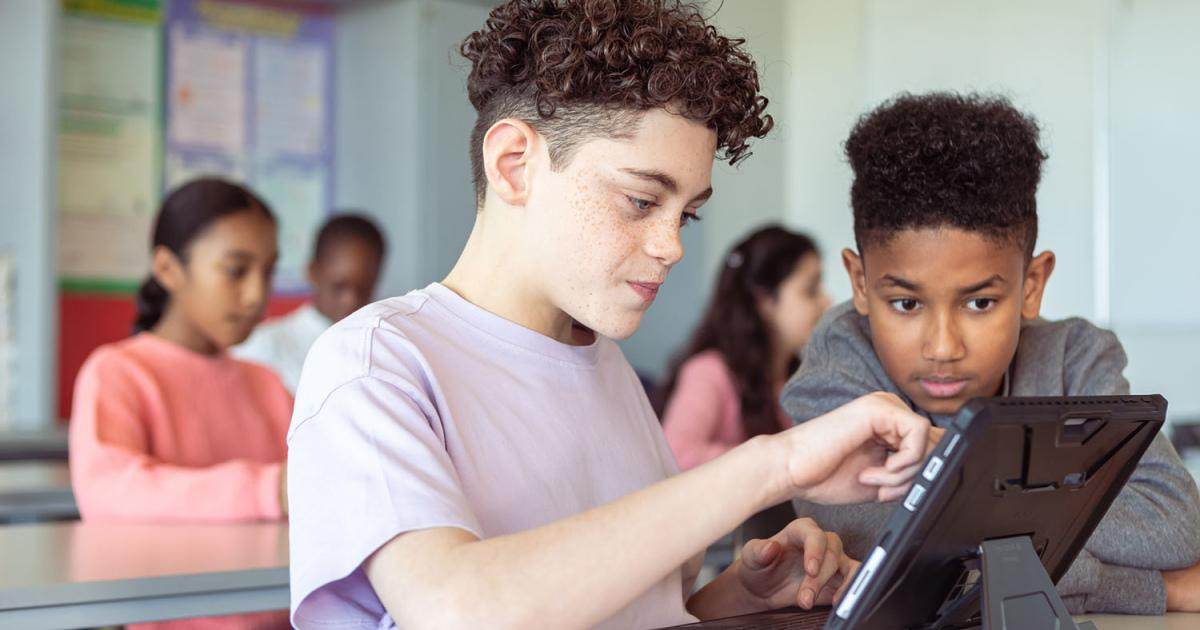
For many students, AI has quietly become part of their normal routine. Some use it to help brainstorm essay ideas. Others use it for math explanations, language practice, study guides, coding help, or organizing assignments.
Whether schools fully support it or not, the reality is that many students have already integrated AI into their learning habits.
This creates a difficult situation for educators. Some teachers see AI as a useful support tool that can personalize learning and increase engagement. Others worry that students may become overly dependent on it or misuse it academically.
Both concerns are understandable.
At the same time, completely avoiding AI conversations in education may no longer be realistic. Students are growing up in a world where AI tools are becoming increasingly common in workplaces, businesses, healthcare, communication, and everyday life.

The Classroom May Start Looking Very Different
One reason AI feels disruptive is because it touches almost every part of education at once.
AI tutoring systems can already provide near-instant feedback. Translation tools can support multilingual learners. Some platforms can generate quizzes, lesson summaries, practice questions, and even individualized learning pathways in seconds.
This does not necessarily mean teachers become less important. If anything, it may push teachers into even more human-centered roles.
Empathy, mentorship, classroom leadership, emotional support, motivation, and relationship-building are still things technology struggles to genuinely replicate. A student may receive information from AI, but many still need encouragement, structure, and real human guidance from teachers and mentors.
The role of educators may evolve rather than disappear.

Schools Often Move Slower Than Technology
One of the biggest issues is speed.
Technology companies can update systems globally overnight. School districts often require months or years to implement major changes. Budget limitations, training requirements, policy concerns, and infrastructure gaps all slow the process.
Meanwhile, students continue adapting independently.
In some schools, teachers are already experimenting with AI-assisted learning responsibly. In others, educators are still trying to determine what policies should even look like.
This creates uneven learning environments where access and understanding vary widely depending on location, funding, and staff familiarity with technology.
According to multiple education and technology reports released over the last year, AI adoption among students has increased significantly, particularly among secondary and university-level learners. Some surveys suggest a large percentage of students have already used generative AI tools for academic support in some form, even when schools have not officially integrated them into classrooms.
That alone shows how quickly this shift is happening.

There Are Real Concerns Too
The conversation around AI in education is not only positive.
There are legitimate concerns involving academic honesty, misinformation, privacy, overreliance on automation, and unequal access to technology. Some educators worry students may lose critical thinking skills if AI begins doing too much of the intellectual work for them.
Others question whether schools are prepared to teach students how to use AI responsibly and ethically.
These concerns matter and should not be ignored.
At the same time, many past technological shifts in education were also met with uncertainty. Calculators, online learning platforms, internet research, and even laptops in classrooms once faced heavy skepticism. Over time, schools gradually learned how to integrate those tools while still maintaining educational standards.
AI may follow a similar path, although likely at a much faster pace.
The Future May Depend on Balance
The future of education may not be about replacing teachers with AI or rejecting technology entirely. More likely, schools will need to find balance.
Students still need human connection. They still need structure, discipline, encouragement, collaboration, and mentorship. But they also need preparation for a world increasingly influenced by artificial intelligence.
The schools that adapt successfully may be the ones that learn how to combine both.
Instead of asking whether AI belongs in education, the more important question may now be:
How do we teach students to use it responsibly while still preserving the human side of learning?
Because whether schools are fully ready or not, AI is already changing education and it may continue changing it faster than many systems can comfortably adapt.