

Key Takeaways
- Boston Dynamics continues advancing its next-generation electric Atlas humanoid robot, now integrating Google's Gemini Robotics AI to make robots more capable of understanding their surroundings and performing useful physical tasks.
- The collaboration represents one of the biggest recent steps toward general-purpose humanoid robots that can assist in manufacturing, logistics, and industrial environments.
- Industry experts believe AI-powered robots could eventually work alongside humans, handling repetitive or physically demanding tasks while allowing people to focus on more complex work.
Humanoid Robots Are Becoming Smarter
For decades, humanoid robots largely belonged to science fiction.
They could walk, wave, or perform carefully programmed demonstrations, but they struggled with unpredictable real-world environments.
That is beginning to change.
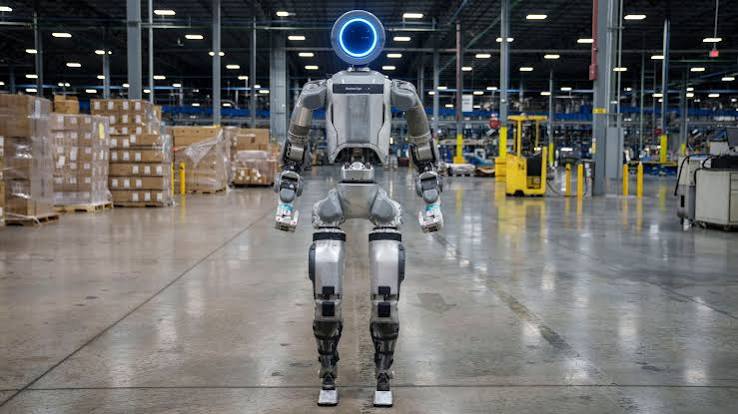
Boston Dynamics, widely recognized for developing some of the world's most advanced robots, is now combining its Atlas humanoid robot with Google's Gemini Robotics artificial intelligence, allowing the robot to better understand objects, interpret its surroundings, and carry out increasingly complex physical tasks.
Rather than simply following pre-programmed movements, Atlas is moving toward a future where it can make informed decisions based on what it sees.
Why Artificial Intelligence Changes Everything
Building a robot that can move is difficult.
Building one that can think while moving is far more challenging.
Traditional industrial robots work well because they repeat the exact same task thousands of times in carefully controlled environments.
Humanoid robots are different.
They need to recognize objects, avoid obstacles, understand changing environments, and decide what action to take next.
That is where AI systems like Gemini Robotics become important.
Instead of programming every movement manually, engineers can train robots to interpret situations and respond more naturally, making them significantly more adaptable.
From Factories to Everyday Work
The first applications are expected to appear in manufacturing and logistics.
Imagine a robot that can:
- Move heavy equipment
- Sort warehouse inventory
- Load production lines
- Handle repetitive assembly work
- Assist with dangerous industrial tasks
Unlike traditional factory robots that stay inside safety cages, future humanoid robots may be able to work in spaces designed for people because they share similar size, reach, and mobility.
That flexibility could reduce the need to redesign entire workplaces around machines.
Helping Workers, Not Replacing Them
One concern surrounding robotics is job displacement.
While automation will undoubtedly change some occupations, many experts believe humanoid robots will first address labor shortages rather than replace entire workforces.
Many industries continue struggling to fill physically demanding positions.
Manufacturing plants, warehouses, hospitals, and logistics companies often report shortages of qualified workers.
Humanoid robots may eventually help perform repetitive, hazardous, or physically exhausting tasks while allowing human employees to focus on supervision, decision-making, customer service, and creative problem-solving.
The future may be one of collaboration rather than competition.
The Race Is Accelerating
Boston Dynamics is not the only company pursuing advanced humanoid robots.
Companies such as Tesla, Figure AI, Agility Robotics, and several Chinese and Japanese firms are investing billions of dollars into humanoid robotics research.
What makes the latest Atlas developments noteworthy is the combination of world-class robotics with one of the world's most advanced artificial intelligence systems.
As AI continues improving, robots are expected to become increasingly capable of learning new skills instead of requiring engineers to program every movement individually.
That shift could dramatically speed up deployment across many industries.
Looking Ahead
The integration of Google Gemini Robotics with Boston Dynamics' Atlas robot represents more than a technological upgrade.
It signals a broader shift toward machines that can both move and reason.
Although fully autonomous humanoid assistants are still years away from widespread adoption, the pace of development is accelerating rapidly.
For businesses, this technology could improve productivity and workplace safety.
For workers, it may create new opportunities to collaborate with intelligent machines rather than simply operate them.
One thing is becoming increasingly clear:
The future of robotics will not depend solely on stronger motors or better hardware.
It will depend on artificial intelligence that allows robots to understand the world around them.
Editorial Note
This article is intended for educational and informational purposes only. It summarizes recent developments in robotics and artificial intelligence based on publicly available information. Product capabilities and commercial deployment timelines may change as research and development continue.
Related Articles
Interested in learning more? Continue exploring these articles from New To Education:
Takeda Invests Up to $600 Million in AI-Powered Drug Discovery
https://newtoeducation.com/view-blog/takeda-invests-up-to-600-million-in-ai-powered-drug-discovery-6a428c7e3d5a1
Growing Careers in 2026: Why AI Consultants Are Becoming One of the Hottest Jobs in the Workforce
https://newtoeducation.com/view-blog/growing-careers-in-2026-why-ai-consultants-are-becoming-one-of-the-hottest-jobs-in-the-workforce
Meta Stock Jumps as Investors React to Possible AI Cloud Business
https://newtoeducation.com/view-blog/meta-stock-jumps-as-investors-react-to-possible-ai-cloud-business-6a42643b3b4a0
China's Education System Reaches 286 Million Students as Universities Expand AI Programs
https://newtoeducation.com/view-blog/chinas-education-system-reaches-286-million-students-as-universities-expand-ai-programs-6a445e81c7f2e
Enjoyed This Article?
Subscribe to the New To Education newsletter for more articles covering artificial intelligence, robotics, technology, innovation, business, and the future of work. We explore the breakthroughs shaping tomorrow's industries and explain what they mean for professionals, educators, and lifelong learners.
Sources
- The Robot Report – Robotics News and Industry Analysis https://www.therobotreport.com/robotics-news/
- Associated Press / CES 2026 coverage of Boston Dynamics Atlas