




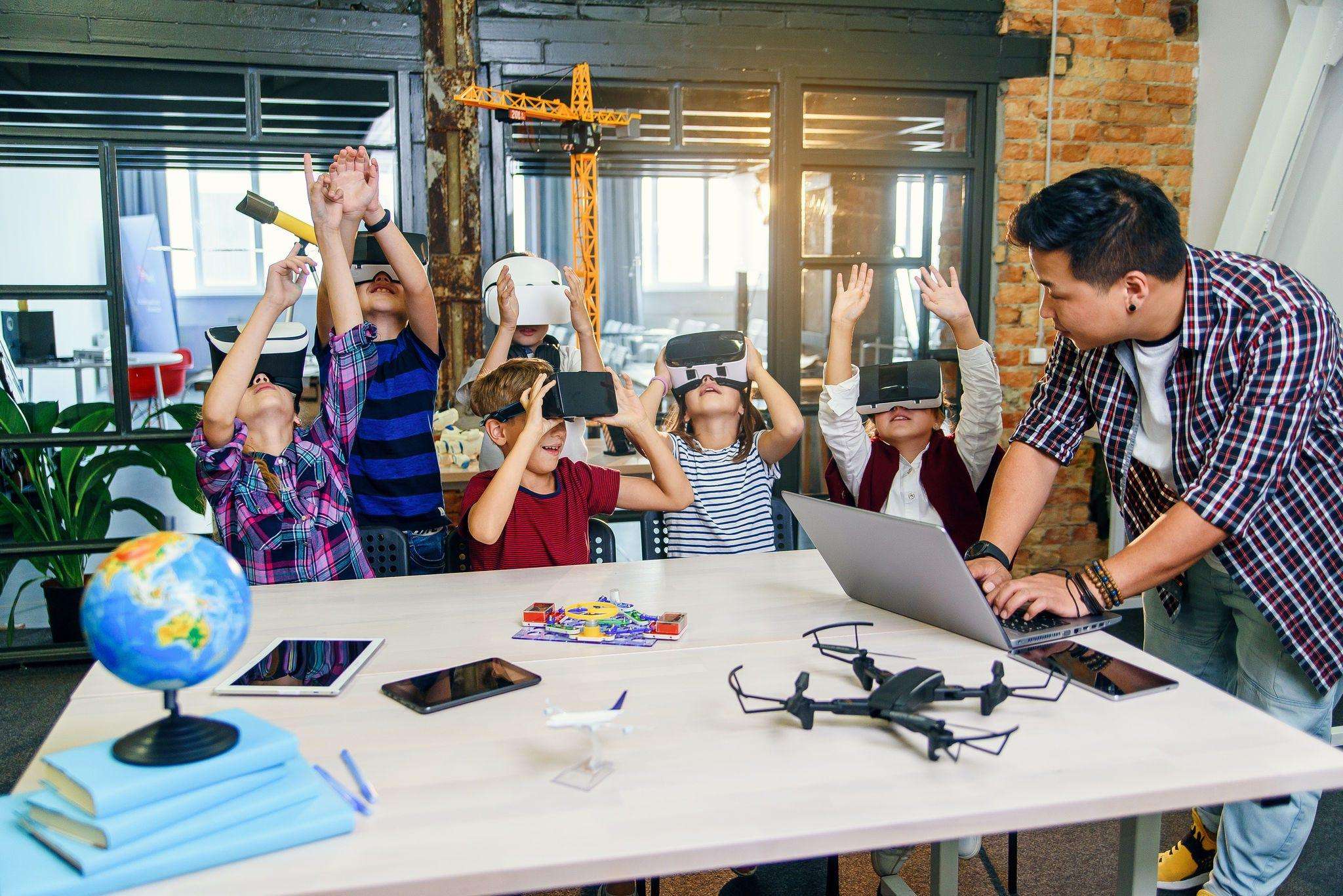

Last year, I watched students use artificial intelligence to solve problems that would have taken me hours when I was their age. Some were using AI to receive feedback on their writing, others were exploring topics independently, and many were learning in ways that simply did not exist when I was growing up. Around the same time, I found myself reading about educational reforms and governance discussions that could take months or even years to fully implement.
That contrast stood out to me.
Students are adapting to a rapidly changing world at an incredible pace. Technology continues to reshape how people learn, communicate, and work. Yet many educational systems are still trying to determine how best to respond to those changes. It raises an important question that educators, parents, and policymakers increasingly find themselves asking: can large educational systems move fast enough to prepare students for the future they are actually going to inherit?
Recent discussions in California brought that question back into the spotlight. While the debate itself is taking place in one state, the broader issues being discussed are relevant to schools and communities throughout the United States.
What's Happening in California?
California's public education system serves more than five million students, making it one of the largest educational systems in the country. Because of its size, even small policy changes can have significant consequences for schools, educators, and families.
Recently, state leaders have been discussing changes to educational governance and leadership structures. Supporters argue that clearer lines of authority and accountability could help educational leaders respond more effectively to challenges facing schools. Others worry that concentrating decision-making power too heavily at the state level could reduce local influence and community input.
Regardless of where someone falls on the debate, the conversation highlights a challenge that extends far beyond California. Large educational systems often face pressure from multiple directions at once. They must balance state requirements, local needs, budget realities, student achievement goals, workforce demands, and rapidly changing technology. Finding a structure that allows schools to remain both accountable and adaptable is not easy.
What makes California particularly interesting is that many of the issues being discussed there are the same issues being discussed elsewhere. Questions about accountability, responsiveness, innovation, and local control are becoming increasingly common as educational systems try to prepare students for a changing world.

A Different World Than Before
One reason these conversations feel so urgent is because the world students are entering looks dramatically different from the one many adults grew up in.
A generation ago, students primarily learned through textbooks, classroom instruction, and library research. Today, information is available almost instantly. Students can watch educational videos, participate in online courses, communicate with people across the globe, and access artificial intelligence tools capable of providing feedback and assistance in seconds.
At the same time, workplaces are evolving rapidly. Entire industries have emerged over the last two decades, while others have been transformed by technology. Many students entering school today may eventually work in careers that do not yet exist. The pace of change can be difficult to predict, which makes preparing students for the future significantly more challenging than simply teaching them information.
The reality is that education is no longer just about helping students master academic content. It is also about helping them develop the ability to learn, adapt, and grow throughout their lives.

Why Large Systems Move Slowly
It is easy to criticize educational systems for moving slowly. In many cases, educators themselves become frustrated by how long change can take.
However, there are legitimate reasons for that pace.
When a classroom teacher wants to try a new strategy, they can often implement it immediately. A principal may be able to launch a new initiative within a semester. A statewide educational system is an entirely different matter. Decisions affect millions of students, thousands of schools, and countless educators and families. Policies must be reviewed, budgets must be approved, stakeholders must be consulted, and potential consequences must be carefully considered.
That level of caution is understandable. Education affects children's lives, and poorly implemented reforms can have lasting consequences.
At the same time, caution can sometimes become an obstacle. When systems become too slow to respond, they risk falling behind the realities students are experiencing every day. The challenge is finding the balance between stability and responsiveness. Schools need consistency, but they also need the ability to evolve when circumstances demand it.

Accountability Matters
One of the central themes behind governance discussions is accountability.
When educational outcomes improve, who deserves credit? When outcomes decline, who is responsible? When schools need additional support, who has the authority to act?
These questions become increasingly complicated as educational systems grow larger and more complex. Families generally are not concerned with organizational charts or leadership structures. What they care about is whether students are learning, whether schools are safe, and whether young people are being prepared for successful futures.
Clear accountability does not guarantee success, but it can help ensure that leaders, educators, and policymakers understand their responsibilities and have the authority necessary to address challenges when they arise.
Ultimately, educational governance should serve students rather than bureaucracy.

Listening to the People Closest to Students
Throughout my career, I have found that some of the most valuable educational insights come from the people working closest to students.
Teachers see challenges unfold in real time. Students experience policies directly. Parents understand the needs of their children and communities in ways that data alone cannot always capture.
That does not mean every suggestion should become policy. Educational leadership requires balancing many competing priorities. However, effective systems find ways to incorporate the perspectives of those closest to the classroom while still maintaining broader strategic goals.
Some of the best educational improvements often begin with simple conversations. A teacher identifies a problem. A student shares an experience. A parent raises a concern. Over time, those conversations can influence larger discussions about how schools operate and how students are supported.
Listening may not solve every challenge, but ignoring those voices rarely leads to meaningful progress.

What Students Actually Need
When I talk with students, very few of them mention governance structures, state boards, or policy proposals. Instead, they talk about their future. They ask questions about college, careers, technology, financial stability, and what opportunities might be available to them after graduation.
Whether students ultimately pursue higher education, military service, entrepreneurship, public service, or skilled trades, many of the skills they need remain remarkably consistent. Communication, critical thinking, problem-solving, adaptability, resilience, and collaboration continue to be among the most valuable qualities employers and communities look for.
These skills matter because they help people navigate uncertainty. They help individuals learn new information, solve unfamiliar problems, and adapt to changing circumstances throughout their lives.
As educational leaders discuss governance and reform, I believe those student needs should remain at the center of every conversation. The purpose of educational systems is not simply to manage schools. It is to help young people develop the knowledge, skills, and confidence necessary to succeed.
Signs of Progress
Despite the challenges, there are plenty of reasons to be optimistic.
Across California and throughout the United States, schools are experimenting with innovative approaches to learning. Career academies, STEM programs, dual-enrollment opportunities, project-based learning initiatives, internships, industry certifications, and partnerships with local businesses are becoming increasingly common.
Educators are also finding creative ways to integrate technology into instruction while maintaining meaningful human connections with students. Schools are exploring new approaches to career readiness, workforce development, and personalized learning.
These examples remind us that innovation is already happening.
The challenge is not whether good ideas exist. The challenge is how educational systems can identify successful innovations and scale them effectively so that more students benefit from them.
Large systems are capable of change. The question is whether they can spread effective change quickly enough to keep pace with a rapidly evolving world.
Looking Ahead
The conversations taking place in California are ultimately about much more than governance structures or leadership authority. They reflect a broader question facing educational systems across the country.
Can schools continue evolving fast enough to prepare students for a future that is changing more quickly than ever before?
I do not believe the answer is simply more funding, more technology, or more regulation. Those things can certainly help, but none of them solve the underlying challenge on their own.
The answer is likely balance.
Balance between innovation and stability. Balance between local input and statewide leadership. Balance between preserving what works and improving what no longer serves students effectively.
The goal is not to build schools that move fast simply for the sake of moving fast. The goal is to build educational systems that can continue learning, adapting, and improving just as we ask our students to do every day.
That challenge will not be solved overnight. But as technology, society, and the workforce continue to evolve, it may become one of the most important educational conversations of our time.

Discussion Question
Do you think large educational systems need to move faster, or is careful decision-making more important than speed? How can schools balance innovation and stability while still meeting the needs of today's students?




