





Editorial Note
Minority-Owned Business Spotlight is a recurring New To Education series highlighting businesses with publicly reported minority, immigrant, veteran, women, or historically underrepresented founder stories. This article is intended for educational and informational purposes only. Inclusion in this series does not constitute an endorsement, sponsorship, paid promotion, certification claim, or recommendation of any company, product, or service. Business details may change over time, so readers should consult official company sources for the most current information.
Some businesses are more than storefronts. They become part of a neighborhood’s memory.
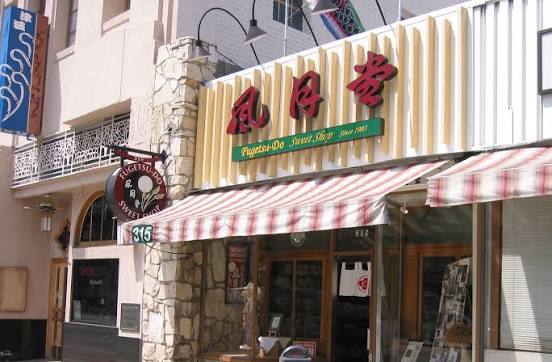
Fugetsu-Do Confectionery, located in Little Tokyo in Los Angeles, California, is one of those businesses. Founded in 1903, Fugetsu-Do has served generations of customers with traditional Japanese sweets, including mochi and manju. The company describes itself as a family-owned and operated confectionery store, and its official history notes that the shop has remained part of Little Tokyo for more than a century.
For this Minority-Owned Business Spotlight, Fugetsu-Do offers a meaningful example of Japanese American entrepreneurship, cultural preservation, family legacy, and small business resilience.
A Japanese American Family Business in Little Tokyo
Fugetsu-Do has been part of Los Angeles’ Little Tokyo community since 1903. The shop specializes in Japanese treats, especially mochi and manju, which are traditional sweets often connected to holidays, family gatherings, community events, and cultural celebrations.
Today, Fugetsu-Do is operated by Brian Kito, a third-generation owner and master manju confectioner. That detail matters because family businesses often carry knowledge that cannot be learned only from a manual. Recipes, techniques, customer relationships, and cultural meaning are passed down through years of practice and responsibility.
In Fugetsu-Do’s case, the business is not only preserving a product. It is preserving a living connection between Japanese culture, Japanese American history, and the Los Angeles community.
Why Fugetsu-Do Fits a Minority-Owned Business Spotlight
Fugetsu-Do fits this series because it shows how a minority-owned or minority-founded business can become a cultural anchor.
Many businesses are judged only by size, revenue, or expansion. But some businesses matter because they keep a community’s story alive. Fugetsu-Do has survived through enormous changes in Los Angeles, including neighborhood shifts, changing food trends, economic challenges, and the long history of Japanese American life in California.
A business like this reminds readers that entrepreneurship is not always about rapid scaling. Sometimes success means staying rooted. Sometimes it means continuing to serve a community across generations.
That kind of endurance deserves recognition.
Food as Cultural Education
Food can teach history in a way textbooks sometimes cannot.
Mochi and manju are more than sweets. They are connected to seasonal traditions, family celebrations, New Year’s gatherings, festivals, and memories passed from one generation to the next. For many Japanese American families, shops like Fugetsu-Do help preserve cultural practices that might otherwise become harder to maintain.
This is why small cultural food businesses are important. They help people experience heritage through taste, smell, texture, and tradition. A child eating mochi with family is not only eating dessert. They may also be learning about where their family comes from, what their elders value, and how traditions continue in a new country.
For New To Education readers, this is an important reminder: learning does not only happen in classrooms. It also happens in families, neighborhoods, small businesses, and cultural spaces.
The Power of Staying Local
In a business world that often celebrates national expansion, Fugetsu-Do shows the power of staying local.
The shop’s identity is deeply tied to Little Tokyo. That matters because historic ethnic neighborhoods are not only tourist destinations. They are living communities shaped by immigration, resilience, family businesses, religious institutions, restaurants, markets, cultural centers, and generations of local memory.
When a long-standing business continues operating in a place like Little Tokyo, it helps keep the neighborhood’s identity visible. Customers are not only buying sweets. They are participating in a community tradition.
This is a powerful lesson for entrepreneurs. Growth does not always mean opening hundreds of locations. Sometimes growth means deepening trust, protecting quality, and becoming part of people’s lives.
Tradition and Innovation Can Work Together
Fugetsu-Do is known for traditional Japanese confections, but the business has also become known for contemporary creations such as peanut butter mochi, chocolate mochi, and colorful dango. This balance between tradition and innovation is one reason the shop remains relevant.
That balance is not easy. A business rooted in heritage must respect its history while still welcoming new customers and changing tastes. If it changes too much, it may lose what made it special. If it refuses to adapt at all, it may struggle to reach new generations.
Fugetsu-Do shows that tradition and creativity can support each other. A business can honor its past while still finding new ways to connect with people.
What Entrepreneurs Can Learn From Fugetsu-Do
Fugetsu-Do offers several lessons for entrepreneurs.
First, identity matters. Businesses that know who they are can build stronger customer loyalty.
Second, quality creates trust. A company that serves customers for more than a century must offer consistency, care, and pride in its work.
Third, cultural knowledge can be a business strength. Heritage is not a limitation. It can be the foundation of a meaningful brand.
Finally, longevity requires adaptation. Even businesses built on tradition must keep learning, improving, and finding ways to connect with new customers.
Why Japanese American Businesses Deserve Visibility
Japanese American businesses have played an important role in California’s history, especially in communities such as Little Tokyo, Sawtelle, Gardena, Torrance, San Francisco Japantown, and other areas shaped by Japanese immigration and Japanese American life.
These businesses have often faced serious challenges, including discrimination, economic pressure, redevelopment, and the lasting impact of World War II incarceration on Japanese American families and communities.
Spotlighting businesses like Fugetsu-Do helps preserve more than a business story. It helps preserve community history.
Representation in business matters because it shows future entrepreneurs that their culture, family story, and community roots can be strengths. A business does not need to erase its identity to succeed. Sometimes identity is the reason it matters.
Why This Story Matters
Fugetsu-Do matters because it shows how a small family business can become part of a city’s cultural fabric.
The shop’s story is about sweets, but it is also about family, immigration, neighborhood history, cultural pride, and resilience. It reminds us that minority-owned businesses should not only be noticed when they are new or trending. Some deserve attention because they have quietly served communities for generations.
For New To Education readers, Fugetsu-Do is also a lesson in leadership and legacy. Building something meaningful is difficult. Keeping it alive across generations is even harder.
Key Takeaways
Fugetsu-Do Confectionery is a Japanese American family-owned business located in Los Angeles’ Little Tokyo. Founded in 1903, the shop specializes in traditional Japanese sweets such as mochi and manju while also offering more modern creations.
Its story highlights cultural preservation, family entrepreneurship, community identity, and long-term business resilience. For students, families, and entrepreneurs, Fugetsu-Do shows that a small business can educate, preserve culture, and strengthen a community simply by staying true to its purpose.
FAQ
Is Fugetsu-Do Japanese American-owned?
Fugetsu-Do is publicly described as a family-owned and operated confectionery in Little Tokyo, Los Angeles. Its current owner, Brian Kito, is the third-generation owner connected to the family business.
Where is Fugetsu-Do located?
Fugetsu-Do is located in Little Tokyo in Los Angeles, California.
When was Fugetsu-Do founded?
Fugetsu-Do was founded in 1903.
What does Fugetsu-Do sell?
Fugetsu-Do sells Japanese sweets, especially mochi and manju. The shop is also known for both traditional and contemporary confections.
Why is Fugetsu-Do a good Minority-Owned Business Spotlight?
Fugetsu-Do is a strong spotlight because it represents Japanese American family entrepreneurship, cultural preservation, Los Angeles history, and more than a century of community service.
Related Articles
10 Ways New To Education Can Help Your Business Grow
New To Education: Helping Learners, Families, and Businesses Grow in a Changing World
Sources
Fugetsu-Do Confectionery — Official Website
Discover Los Angeles — Fugetsu-Do: The Story of an LA Icon
California Japantowns — Little Tokyo
Japanese American National Museum — Little Tokyo Historical Context




