




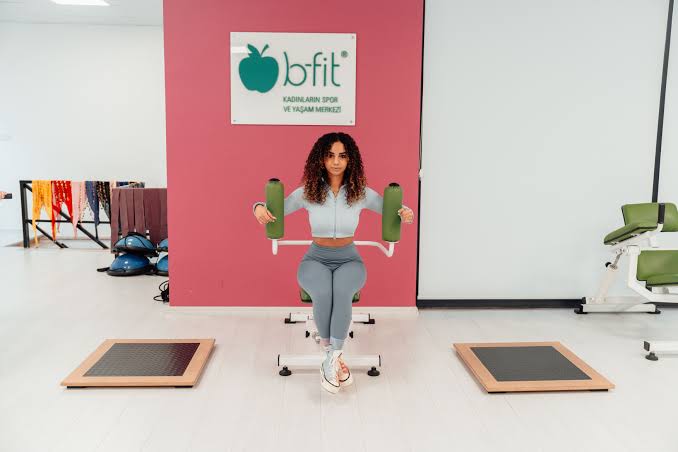

A new four-year study suggests that one structured resistance-training session per week may improve strength, leg power, and body composition in older men, while adding aerobic exercise appears necessary for improving cardiorespiratory fitness.
Editorial Note
This article discusses exercise, aging, cardiovascular fitness, body composition, and resistance training. It is intended for educational and informational purposes and does not provide individualized medical, rehabilitation, or fitness advice.
The featured study involved a small group of older men who selected their preferred exercise program rather than being randomly assigned. The results should not be interpreted as proving that one weekly workout is ideal for every person or that additional activity provides no further benefit.
People who have been inactive, are recovering from an injury, or have cardiovascular, neurological, metabolic, joint, or other medical conditions should consult an appropriate healthcare or fitness professional before beginning a new exercise program.
Many people assume that improving fitness requires exercising almost every day.
New research suggests the situation may be more encouraging—especially for older adults who find frequent gym sessions unrealistic.
A four-year study published in the July 2026 issue of The American Journal of Medicine followed 49 previously untrained men between the ages of 60 and 82. Participants completed one supervised exercise session each week lasting approximately 50 to 60 minutes.
Some participants performed resistance training followed by aerobic exercise. Others performed resistance training without an aerobic component.
After four years, both groups had improved upper- and lower-body strength, increased leg power, and reduced body fat. The group combining strength and aerobic exercise also improved its cardiorespiratory fitness, while the resistance-only group experienced a decline in that area.
The results do not mean people should exercise only once a week.
They do suggest that a realistic routine performed consistently for years may produce far more value than an ambitious program that lasts only a few weeks.
What the Researchers Studied
The researchers wanted to examine what happened when older men who had not previously exercised regularly followed a long-term, once-weekly training program.
The study included 49 men between the ages of 60 and 82.
Participants chose between two programs rather than being randomly assigned.
The combined group included 25 men with an average age of approximately 66. They performed seated chest presses, seated pulldowns, and leg presses at roughly 60% to 70% of their one-repetition maximum. They then completed about 30 minutes of aerobic exercise at approximately 70% to 90% of their maximum heart rate.
The resistance-only group included 24 men with an average age of approximately 65. They performed a combination of multi-joint and single-joint resistance exercises but did not complete the aerobic portion.
Each weekly session lasted approximately 50 to 60 minutes.
The study is unusual because it followed participants for four years.
Many exercise studies last only several weeks or months, which may reveal short-term improvements but not whether people can maintain benefits over a longer period.
Both Groups Became Stronger
The men in both groups significantly improved their chest-press and leg-press strength.
The researchers did not find a meaningful difference in strength gains between the combined-training group and the resistance-only group.
This suggests that the resistance portion of the program was sufficient to improve upper- and lower-body strength, even though participants trained only once each week.
That finding is encouraging because strength is closely connected to everyday function.
Getting out of a chair, climbing stairs, carrying groceries, lifting objects, and recovering from a loss of balance all require muscular strength.
Older adults do not need to become competitive weightlifters to benefit.
Even moderate improvements may make daily tasks easier and help people maintain independence.
Leg Power Also Improved
Both groups improved leg power over the four-year period.
Strength and power are related, but they are not identical.
Strength describes how much force a person can produce. Power also includes how quickly that force can be produced.
That difference matters during everyday situations.
A person may need to stand quickly, step over an obstacle, regain balance, or move fast enough to avoid a fall.
Leg power often declines with age, and that decline can affect mobility even when someone retains a reasonable amount of muscle strength.
The study suggests that a consistent resistance-training routine can support both strength and power in older men.
Body Fat Decreased in Both Groups
The researchers also found that body fat decreased significantly in both exercise groups.
The reduction was similar whether participants completed resistance training alone or combined it with aerobic exercise.
This is another reminder that exercise should not be judged only by changes on the scale.
A person’s body weight may remain relatively stable while body composition changes.
Resistance training can help maintain or increase lean tissue while supporting reductions in body fat.
That can improve physical function and metabolic health even when the person does not experience dramatic weight loss.
People often abandon exercise because the number on the scale does not change quickly.
The more useful question may be whether the person is becoming stronger, moving better, carrying less body fat, sleeping better, or completing daily activities more comfortably.
Aerobic Exercise Was Still Necessary for Cardiorespiratory Fitness
The most important difference between the groups involved maximal oxygen uptake, commonly called VO2 max.
VO2 max is a measure of how effectively the body can take in, transport, and use oxygen during exercise.
It is often used as an indicator of cardiorespiratory fitness.
The group that combined resistance training with approximately 30 minutes of aerobic exercise improved its relative VO2 max.
The resistance-only group experienced a decline over the four years.
This shows why strength training and cardio should not be treated as rivals.
Resistance training improved strength and power.
Aerobic exercise provided an additional benefit for heart and lung fitness.
A person can become stronger without fully protecting cardiorespiratory capacity.
For more complete fitness, both forms of training appear valuable.
One Weekly Session Was Enough to Produce Change
The headline finding is not that one workout per week is superior to exercising more often.
The study did not compare one weekly session with two, three, or four sessions.
It showed that one supervised and consistently performed session was enough to produce measurable improvements over several years.
That distinction is important.
Fitness advice often becomes unrealistic.
People are told to complete multiple strength sessions, several cardio workouts, mobility routines, daily step goals, stretching, meal preparation, recovery sessions, and perfect sleep.
Those recommendations may be reasonable individually, but together they can feel overwhelming.
A person who believes the ideal routine is impossible may do nothing.
This research suggests that even a modest starting point may produce meaningful benefits when people maintain it.
Consistency May Matter More Than Perfection
The participants continued their programs for four years.
That long-term consistency may be more important than the once-weekly schedule itself.
A person who trains four times per week for one month and then stops may gain less over time than someone who trains once or twice each week for several years.
Fitness improvements accumulate through repeated exposure.
The body responds to regular challenges, recovery, and gradual adaptation.
The most effective routine is not necessarily the most impressive routine on paper.
It is the one a person can perform safely and maintain.
This does not mean intensity, exercise selection, and progression do not matter.
It means those details have limited value when the routine is too demanding to continue.
The Workouts Were Structured and Supervised
The participants were not simply visiting the gym once a week and exercising without direction.
They followed structured programs involving specific exercises, controlled resistance levels, and supervised sessions.
The resistance exercises were performed at approximately 60% to 70% of one-repetition maximum, which represents a moderate training load rather than extremely light movement.
This makes the quality of the session important.
A carefully designed workout can challenge several major muscle groups within a limited amount of time.
Exercises such as chest presses, pulldowns, leg presses, rows, squats, hinges, and carries can train multiple areas efficiently.
A once-weekly routine that is too easy, inconsistent, or poorly structured may not produce the same results.
Frequency is only one part of an exercise program.
Effort, progression, technique, recovery, and exercise selection also matter.
More Exercise May Still Produce Greater Benefits
The study should not be interpreted as evidence that people gain nothing from exercising more than once each week.
Public-health guidelines generally encourage adults to complete aerobic activity throughout the week and perform muscle-strengthening activity on at least two days.
Those recommendations are based on a much larger body of evidence than this single study.
A person who can safely complete additional activity may gain more endurance, strength, mobility, energy expenditure, and health protection.
The practical lesson is not to reduce every program to one weekly session.
It is to recognize that doing less than the ideal amount can still be worthwhile.
Exercise is not an all-or-nothing decision.
The Study Focused Only on Older Men
One of the clearest limitations is that all participants were men between 60 and 82 years old.
The findings cannot automatically be applied to women, younger adults, highly trained athletes, or people with different medical conditions.
The participants were also previously untrained.
Beginners often make noticeable progress from relatively small amounts of resistance training because the exercise stimulus is new.
A highly trained athlete would probably need greater volume, frequency, and specialization to continue improving.
Recent researchers have also warned that much resistance-training evidence may not apply directly to highly trained athletes because many studies use beginners or recreationally active participants.
The present study is most relevant to older men beginning exercise rather than experienced lifters attempting to maximize performance.
Participants Chose Their Programs
The men selected whether they wanted to join the combined or resistance-only group.
That means the study was not a randomized controlled trial.
People who chose the aerobic component may have differed from those who selected resistance training alone.
They may have had different interests, health goals, motivation, or baseline fitness.
Those differences could influence results.
The relatively small sample of 49 participants also limits how confidently the findings can be generalized.
The study nevertheless provides useful long-term evidence because maintaining an exercise intervention for four years is difficult and uncommon in research.
What This Means for Beginners
For someone who currently does no structured exercise, the study carries a hopeful message.
Beginning with one well-designed weekly session may be better than waiting until life becomes calm enough for a perfect routine.
A beginner session could focus on the major movement patterns.
That may include pushing, pulling, squatting or sitting and standing, hip hinging, carrying, and core stability.
The weight should be challenging enough to require effort while still allowing safe technique.
The routine can then expand gradually.
A person might begin with one strength session and several short walks. Later, the person could add another resistance session, longer aerobic activity, balance work, or mobility training.
Starting small is not the same as lacking ambition.
It can be a strategy for creating consistency.
Strength and Cardio Should Work Together
The clearest practical message from the study is that strength and cardio provide different benefits.
Resistance training improved muscle strength, leg power, and body composition.
The aerobic component was needed to improve cardiorespiratory fitness.
A balanced routine should therefore include both.
For someone with limited time, one session could combine them.
The person might complete 20 to 30 minutes of resistance training followed by walking, cycling, rowing, swimming, or another form of aerobic activity.
Another option would be to perform one structured strength session and add short walks throughout the week.
The exact plan should match the person’s ability, health, preferences, and schedule.
Walking Alone May Not Fully Protect Strength
Walking is valuable.
It supports cardiovascular health, mobility, mood, and daily energy expenditure.
It is also accessible to many people.
However, walking does not place the same demand on the muscles as progressive resistance training.
A person may walk regularly while still losing upper-body strength, leg strength, or power with age.
That does not make walking ineffective.
It means walking and resistance training solve different problems.
A complete healthy-aging plan should challenge the cardiovascular system while also asking the muscles to produce force against resistance.
Exercise Intensity Should Match the Person
The study’s resistance exercises were performed at moderate loads.
That does not mean every older adult should immediately train at the same percentage.
A person with no experience may first need to learn technique using lighter resistance.
Someone with joint pain, balance problems, cardiovascular disease, or a recent injury may need a modified program.
Intensity can be created through machines, free weights, resistance bands, bodyweight exercises, water exercise, or other methods.
The best tool is the one that allows the person to train safely and progress gradually.
Pain should not be treated as proof that a workout is effective.
Sharp pain, chest discomfort, dizziness, unusual breathlessness, or neurological symptoms should not be ignored.
Fitness Is About Preserving Ability
Fitness culture often focuses on appearance.
For older adults, one of the most important outcomes is preserving the ability to live independently.
Strength supports carrying, lifting, standing, and climbing.
Power supports quick reactions and balance recovery.
Aerobic fitness supports walking distance, energy, and the ability to complete daily activities without excessive fatigue.
Body composition also matters, but it should not overshadow function.
The most meaningful fitness goal may be remaining capable of doing the things a person values.
That can include traveling, playing with grandchildren, gardening, working, participating in sports, or simply moving through daily life with confidence.
Key Takeaways
A four-year study followed 49 previously untrained men between the ages of 60 and 82 who completed one supervised exercise session each week.
Both the resistance-only group and the combined resistance-and-aerobic group improved chest-press strength, leg-press strength, leg power, and body composition.
Only the combined group improved cardiorespiratory fitness. The resistance-only group experienced a decline in relative maximal oxygen uptake.
The study suggests that one structured weekly workout can produce meaningful long-term improvements, particularly for older beginners.
It does not prove that one session per week is ideal or equal to higher training frequencies.
The strongest practical lesson is that a modest routine maintained consistently may be more valuable than a complicated routine that cannot be sustained.
For complete fitness, resistance training and aerobic exercise should generally be used together.
FAQ
Can one workout per week really improve strength?
In this four-year study, older men completing one structured resistance-training session per week significantly improved upper- and lower-body strength.
Does this mean one workout per week is enough for everyone?
No. The study involved a small group of previously untrained older men. Individual needs and goals differ, and many people may benefit from exercising more frequently.
Did resistance training improve cardiovascular fitness?
Resistance training alone improved strength and power but did not prevent a decline in cardiorespiratory fitness. The group that added aerobic exercise improved its relative VO2 max.
How long were the workouts?
Each weekly session lasted approximately 50 to 60 minutes.
What resistance exercises did participants perform?
The combined group used exercises including seated chest presses, seated pulldowns, and leg presses. The resistance-only group performed multi-joint and single-joint resistance exercises.
Did the participants lose body fat?
Both groups experienced significant reductions in body fat over the four-year study.
Were women included?
No. All participants were men, so additional research is needed to determine how closely the findings apply to women.
Should beginners start with heavy weights?
Not necessarily. Beginners should first learn safe technique and use resistance appropriate to their experience, health, and physical ability.
Final Thoughts
The latest fitness research offers a refreshing response to the idea that exercise must dominate a person’s schedule to be worthwhile.
One weekly workout is not a magical formula.
It is also not meaningless.
For the older men in this study, one structured and supervised session per week produced stronger muscles, greater leg power, and lower body fat over four years.
Adding aerobic exercise created an additional benefit by improving cardiorespiratory fitness.
The study reinforces a simple lesson: strength and cardio support different parts of health, and consistency gives both time to work.
People should not use the research as an excuse to avoid movement during the rest of the week.
They can use it as permission to begin with something manageable.
A realistic plan completed for years can outperform an extreme plan abandoned after several weeks.
Fitness does not require perfection.
It requires enough challenge to create change and enough realism to keep going.
Related Articles
New Fitness Research Shows How Exercise May Help Aging Muscles Stay Stronger
https://www.newtoed.com/view-blog/new-fitness-research-shows-how-exercise-may-help-aging-muscles-stay-stronger-6a4f59bbb3961
Fitness Is More Than Weight Loss: Why Strength, Balance, and Mobility Matter
https://www.newtoed.com/view-blog/fitness-is-more-than-weight-loss-why-strength-balance-and-mobility-matter-6a559c68ccfa2
Sources
Lancaster University — Study Publication and Research Summary
University of Salford Repository — Full Study Manuscript
Sheffield Hallam University — Systematic Review of Resistance Training in Older Adults




