





Editorial Note
This article is intended for educational and informational purposes only. It is not medical advice and should not be used to diagnose or rule out a pulmonary embolism.
A pulmonary embolism can be life-threatening. Anyone experiencing sudden shortness of breath, chest pain, coughing up blood, fainting, or other concerning symptoms should seek urgent medical care. Decisions about blood tests, imaging, and treatment should be made by qualified healthcare professionals.
People with cancer often undergo a long list of medical tests, scans, treatments, and hospital visits. Each one may be necessary, but the process can also be physically and emotionally exhausting.
A new study published in JAMA on July 12, 2026, suggests that doctors may be able to safely reduce one type of imaging for some patients with active cancer who are being evaluated for a possible blood clot in the lungs.
The randomized clinical trial found that a diagnostic approach known as the YEARS algorithm was as safe as sending every patient directly for computed tomographic pulmonary angiography, commonly called CTPA. By using symptoms, clinical judgment, and a blood test called D-dimer, doctors were able to avoid CTPA scans in 22% of patients assigned to the YEARS strategy.
That may sound like a technical change, but for patients it could mean fewer scans, less radiation exposure, less contrast dye, and potentially shorter emergency-department visits.
Why Blood Clots Are a Serious Concern for Cancer Patients
Cancer increases the risk of venous thromboembolism, a term that includes deep vein thrombosis and pulmonary embolism.
A deep vein thrombosis usually forms in a large vein, often in the leg. If part of that clot breaks away and travels to the lungs, it can cause a pulmonary embolism.
Symptoms may include sudden shortness of breath, chest pain, rapid heartbeat, fainting, coughing, or coughing up blood. Unfortunately, those symptoms can also overlap with cancer itself, infection, anemia, medication side effects, or other health conditions.
That makes diagnosis difficult.
Doctors must take possible pulmonary embolism seriously because missing one can be dangerous. At the same time, sending every patient for a CT scan can expose many people to a test they may not need.
The study notes that people with newly diagnosed cancer face a substantially higher risk of venous thromboembolism than the general population. Blood clots in cancer patients are also associated with poorer quality of life and higher mortality.
What Is a CT Pulmonary Angiogram?
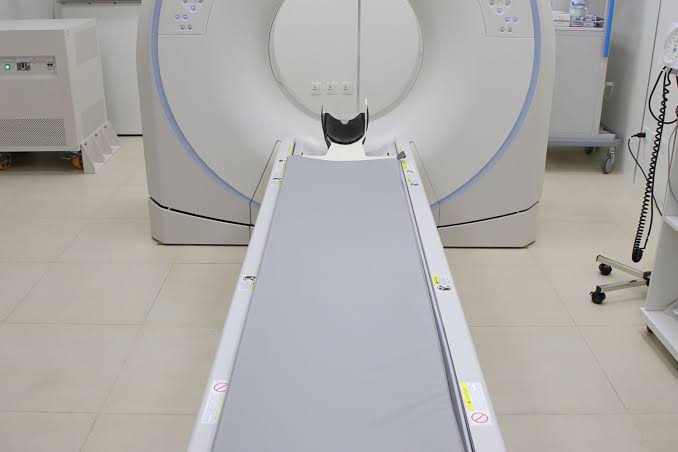
CT pulmonary angiography is considered the standard imaging test for diagnosing a pulmonary embolism.
The scan uses computed tomography and an injected contrast agent to create detailed images of the blood vessels in the lungs. Doctors can then look for signs that a clot is blocking blood flow.
The test is valuable and can be lifesaving. However, it also has disadvantages.
Patients are exposed to radiation. Contrast dye may be unsuitable for some people, particularly those with certain kidney problems or allergies. Imaging can also extend the amount of time patients spend in emergency or hospital settings.
For someone already undergoing cancer treatment, avoiding an unnecessary scan can reduce an additional layer of stress and medical burden.
The goal is not to avoid CT imaging when it is needed. It is to identify patients whose risk is low enough that doctors can safely rule out a pulmonary embolism using other information.
How the YEARS Algorithm Works
The YEARS algorithm combines three clinical questions with a D-dimer blood test.
Doctors assess whether the patient has signs of deep vein thrombosis, whether the patient is coughing up blood, and whether pulmonary embolism appears to be the most likely explanation for the symptoms.
The D-dimer test looks for a substance released when blood clots are being broken down in the body.
If a patient has none of the three YEARS findings, the algorithm uses a higher D-dimer threshold before recommending a CT scan. If one or more findings are present, a lower threshold is used.
Patients whose D-dimer level falls below the appropriate threshold may be able to avoid CT imaging. Those above the threshold still receive the scan.
This approach has already been studied in broader patient populations. The challenge has been determining whether it is dependable enough for people with active cancer, who have a higher underlying risk of blood clots and may have elevated D-dimer levels for other reasons.
Because of that uncertainty, existing practice often sends cancer patients directly for CTPA rather than relying on a decision rule.
What the Researchers Studied
The Hydra study enrolled 698 adults with active cancer and suspected pulmonary embolism.
Participants were recruited from emergency departments, outpatient clinics, and hospital units across 21 hospitals in the Netherlands, Italy, Switzerland, Belgium, France, and Spain. The trial ran from August 2019 through August 2025.
The patients were randomly assigned to one of two groups.
In the first group, 352 patients were evaluated using the YEARS algorithm. They received CT scans only when the clinical findings and D-dimer level indicated that imaging was necessary.
In the second group, 346 patients were sent directly for CT pulmonary angiography.
The median participant age was 65, and approximately 60% were women. Nearly half of the patients had cancer that had spread to distant parts of the body. Lung, genitourinary, breast, blood, and gastrointestinal cancers were among the most common diagnoses represented.
Researchers followed patients for 90 days after pulmonary embolism had initially been ruled out. They looked for later blood clots or deaths that might have been related to a missed pulmonary embolism.
What the Study Found
The YEARS approach was found to be noninferior to the CT-only strategy. In plain language, it performed at least well enough to meet the study’s prespecified safety standard.
Among patients whose pulmonary embolism was initially ruled out, the primary outcome occurred in 1.8% of patients in the YEARS group and 5.5% in the CT-only group.
The trial was not designed to prove that YEARS was superior, and the difference should not be interpreted as evidence that the algorithm prevents blood clots. The important point is that the YEARS strategy did not produce an unacceptably higher rate of missed events.
Most importantly, 77 of the 352 patients assigned to the YEARS group were managed without undergoing CTPA.
That means approximately one in five patients in that group avoided the scan while remaining within the trial’s safety limits.
Why Avoiding an Unnecessary Scan Matters
Medical testing is often discussed as though more testing is always safer.
Sometimes it is. Sometimes it creates burdens without improving the outcome.
Every test should ideally answer an important clinical question and provide enough benefit to justify its risks, cost, and inconvenience.
For cancer patients, reducing unnecessary imaging may matter for several reasons. It can limit radiation exposure, avoid contrast-related concerns, reduce time in the hospital, and lessen the stress of waiting for another scan result.
It may also help healthcare systems use imaging equipment more efficiently.
None of this means doctors should become reluctant to order CT scans. When a pulmonary embolism is likely, imaging remains essential.
The study is instead about making testing more precise.
A good diagnostic system should be aggressive enough to find dangerous conditions but selective enough to avoid testing every person in exactly the same way.
This Does Not Mean Patients Should Diagnose Themselves
The YEARS algorithm is a clinical tool, not an online checklist for patients.
One of its components requires a doctor to decide whether pulmonary embolism is the most likely diagnosis. That judgment depends on medical history, examination, vital signs, cancer type, treatment, medications, and other possible explanations for the symptoms.
D-dimer results also require context.
Cancer, infection, surgery, inflammation, age, and other conditions can affect D-dimer levels. A positive result does not automatically mean a person has a clot, and a patient should not use an isolated laboratory value to decide whether emergency care is necessary.
Anyone with symptoms concerning for pulmonary embolism should seek medical attention rather than attempting to apply the algorithm at home.
The Study Has Important Limitations
The findings are promising, but they do not settle every question.
The trial included patients from European hospitals and may not perfectly reflect healthcare systems or patient populations elsewhere.
People who were unstable, already receiving full-dose anticoagulation, unable to undergo CTPA, or expected to live fewer than three months were excluded. The results may not apply to those groups.
The researchers also stopped recruitment after an interim analysis showed that the noninferiority goal had been met. The final number of participants was smaller than the study originally planned.
In addition, the diagnostic failure rate in the CTPA-only group was higher than many readers might expect. The authors discussed possible pulmonary-embolism-related deaths and the difficulty of determining causes of death in seriously ill patients with cancer.
These details matter because noninferiority trials can be complicated. The result supports using the YEARS strategy in appropriate patients, but it does not mean the algorithm is flawless or suitable in every situation.
What Could Change in Clinical Care
Current guidelines have generally been cautious about recommending decision algorithms such as YEARS for active cancer patients because earlier evidence was limited.
This randomized trial provides stronger evidence than previous retrospective or subgroup analyses.
If future guidelines incorporate the findings, some emergency departments and cancer centers may begin using the YEARS algorithm more routinely for stable patients with active cancer and suspected pulmonary embolism.
That could lead to fewer automatic CT scans.
However, medical practice does not usually change because of one study alone. Professional societies will likely examine the methods, patient population, event definitions, and safety outcomes before revising recommendations.
Hospitals may also need training and clear procedures to ensure that the algorithm is applied correctly.
What Patients Can Take From the Research
The most useful takeaway is not that CT scans are bad.
It is that medical care is becoming more focused on giving the right test to the right patient at the right time.
Patients can ask their healthcare team why a test is being recommended, what the scan is looking for, whether alternatives exist, and what risks would come from delaying or avoiding it.
Those questions are reasonable, but urgent symptoms should never be ignored while waiting to research options.
For people undergoing cancer treatment, sudden breathing difficulty or chest pain deserves prompt attention. A clot cannot be safely confirmed or excluded based only on how the symptoms feel.
Key Takeaways
A randomized clinical trial published in JAMA on July 12, 2026, evaluated 698 patients with active cancer and suspected pulmonary embolism.
The YEARS algorithm combined three clinical findings with D-dimer blood testing to decide who required CT pulmonary angiography.
The strategy met the study’s safety standard when compared with sending every patient directly for a CT scan.
Using YEARS allowed 22% of patients in that group to avoid CT pulmonary angiography.
The findings may eventually reduce unnecessary radiation, contrast exposure, and time spent in emergency care.
The algorithm must be used by trained medical professionals and should not be treated as a self-diagnosis tool.
FAQ
What is a pulmonary embolism?
A pulmonary embolism occurs when a blood clot, often originating in the leg, travels to the lungs and blocks blood flow. It can be life-threatening.
Why are people with cancer at greater risk?
Cancer itself, surgery, reduced mobility, inflammation, and some cancer treatments can increase the likelihood of blood clots.
What is the YEARS algorithm?
It is a clinical decision tool that combines symptoms, a physician’s assessment, and a D-dimer blood test to determine whether CT imaging is necessary.
Did the study prove CT scans are unnecessary?
No. Most patients in the YEARS group still underwent CT imaging. The study found that selected patients could safely avoid a scan when the algorithm indicated a low enough risk.
Can patients use YEARS at home?
No. The algorithm depends on clinical assessment and laboratory testing and should be applied by qualified healthcare professionals.
What symptoms require urgent medical attention?
Sudden shortness of breath, chest pain, fainting, coughing up blood, unexplained rapid heartbeat, or severe weakness should be evaluated urgently, especially in someone with cancer or other clotting risks.
Final Thoughts
Cancer patients already carry a heavy medical burden.
When a dangerous blood clot is suspected, doctors must act quickly, but that does not mean every patient automatically needs the same test.
The July 12 study suggests that a structured clinical approach may help doctors safely identify some patients who can avoid CT pulmonary angiography.
That is the kind of progress that may not sound dramatic at first. It is not a new drug or a cure. It is a better way of deciding who needs a scan.
For patients, though, fewer unnecessary tests can still be meaningful.
The best medical care is not always the care that does the most. Sometimes it is the care that knows when doing less is just as safe.
Support New To Education
If you found this article useful, consider supporting New To Education through the donation option below.
Your contribution helps us continue publishing independent educational reporting, explaining new research in accessible language, and creating practical resources for students, educators, families, and lifelong learners.
Thank you for reading and supporting our work.
Related Articles
New Research Suggests Faster Biological Aging May Help Explain Rising Cancer Rates in Younger Adults
https://newtoeducation.com/view-blog/new-research-suggests-faster-biological-aging-may-help-explain-rising-cancer-rates-in-younger-adults-6a4afb30f2d92
Mayo Clinic Develops AI Tool That May Detect Pancreatic Cancer Years Earlier
https://newtoeducation.com/view-blog/mayo-clinic-develops-ai-tool-that-may-detect-pancreatic-cancer-years-earlier-6a45f35c6bbd8
Sources
JAMA — YEARS Algorithm for Diagnosis of Suspected Pulmonary Embolism in Patients With Cancer




