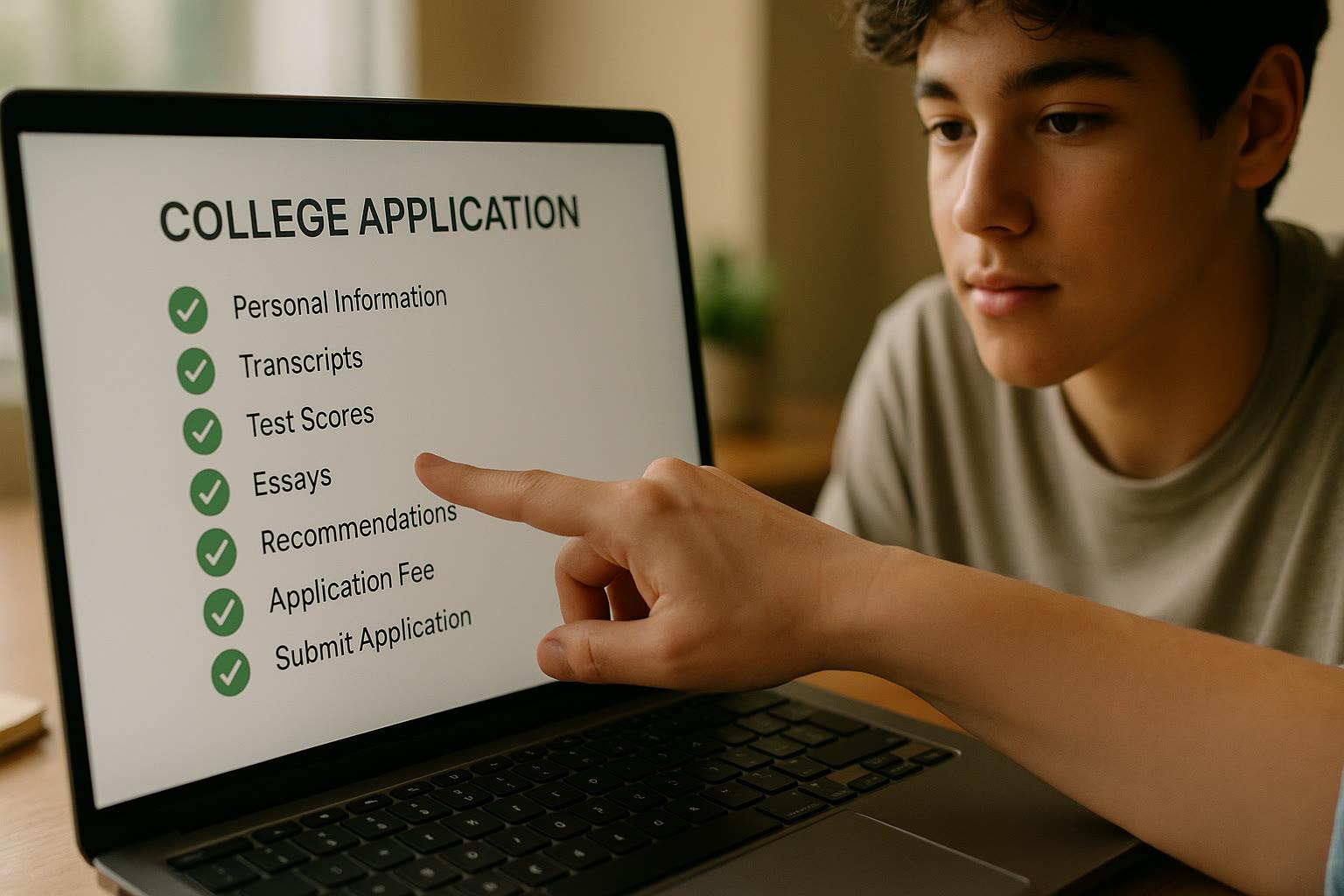



For years, American schools have acted as if students eventually need to answer a binary question: Are you going to college, or are you going into a career path?
That framing sounds practical, but it is increasingly unhelpful.
In reality, students need both kinds of readiness. They need to know how to research colleges, compare costs, and organize applications. They also need to understand labor-market options, credentials, apprenticeships, work-based learning, and what different careers actually demand. These are not rival systems. They are pieces of the same decision-making skill.
Schools should stop treating college planning and career planning as separate tracks that compete for student identity. They should build one clearer, earlier, more practical readiness system that helps students understand multiple postsecondary paths at once.
The official tools already point in this direction
This is not a radical idea. In some ways, the major planning organizations are already ahead of many schools.
College Board’s BigFuture does not tell students to choose one worldview. Its front door says “College and Career Planning Starts Here.” That wording matters. It reflects the real planning task students face: not simply choosing a school, but preparing for life after high school with a better understanding of options.
The site’s structure supports that broader mindset. It includes career exploration, college search, scholarships, quizzes, and planning guidance in one ecosystem. That is a better model than asking students to think about college in one office, work in another office, and finances somewhere else.
Common App points in a similar direction, though from the admissions side. Its first-year guidance emphasizes early account creation, account rollover, adding colleges, understanding requirements, and staying organized over time. In other words, successful college planning is not a one-month sprint in senior year. It works best when students start earlier and build habits of preparation.
The same logic should apply beyond admissions.
Apprenticeships are not a backup plan
One reason schools keep college and career readiness separate is cultural. College planning is often treated as the “serious” pathway, while career preparation is treated as something for students who are undecided, struggling, or opting out.
That is outdated.
Apprenticeship.gov defines Registered Apprenticeship as a pathway where learners gain paid work experience, receive classroom instruction, get progressive wage increases, and earn a portable, nationally recognized credential. That is not a second-class route. It is a structured, skill-building pathway with clear labor-market value.
The problem is not that students lack pathways. The problem is that many students are introduced to them unevenly. Some get detailed college counseling but almost no exposure to apprenticeship or credential options. Others are directed toward work pathways without strong support for college applications, transfer possibilities, or future stackable credentials.
Both patterns reduce opportunity.
The “either/or” model pushes planning too late
The false split also delays the most important work.
If schools implicitly teach that college planning belongs to one type of student and career planning belongs to another, many teenagers postpone exploration until the pressure becomes immediate. By that point, choices feel narrower than they really are.
A better system would normalize broad planning much earlier.
Students should be exploring careers and education pathways in middle school and early high school, not because they need to lock in a future at 14, but because they need time to test assumptions. They should see how majors connect to work, how credentials connect to wages, how apprenticeships function, how transfer works, what application calendars look like, and how cost changes the decision.
That kind of planning does not reduce freedom. It increases it.
Data literacy matters here too
The BLS “Education Pays” page is useful partly because of what it includes and partly because of what it does not. It shows the familiar relationship between educational attainment, earnings, and unemployment. But it also explicitly notes that its categories do not account for apprenticeships and other on-the-job training that also influence outcomes.
That should be a warning against simplistic counseling.
If a school only repeats “more education means more earnings,” students may hear a narrow message: more schooling is always the one respectable answer. But the actual picture is more nuanced. Postsecondary value can come through degrees, certificates, apprenticeships, employer-supported training, and combinations of those over time.
That does not weaken the case for college. It strengthens the case for honest advising.
What schools should do instead
Schools do not need a complete redesign to improve this. They need a more integrated operating model.
That could include:
- One advising sequence that covers both college and career planning every year.
- Career exploration tools alongside college search tools, not after them.
- Real explanation of apprenticeship and credential pathways, not one-off mentions.
- Postsecondary planning checklists that include applications, aid, resumes, interviews, and work-based experiences.
- Family communication that explains options without labeling some students as “college kids” and others as “career kids.”
This is especially important for first-generation families, students from under-resourced schools, and students who are academically capable but unsure how to connect schoolwork to adult life. Too often, those students are offered either vague encouragement or narrow sorting.
They deserve better planning than that.
Counterpoint
There is a real concern here: if schools start career planning earlier, they could accidentally track students too early or steer them into limited options based on adult assumptions.
That risk is real. But it is an argument for better design, not for avoiding the work.
Early planning should widen exposure, not narrow it. Students should encounter more options, more advising, and more chances to revise their plans. The goal is not to decide a child’s future in ninth grade. The goal is to prevent senior-year panic and underinformed choices.
Practical Takeaway
Schools should build a unified postsecondary readiness model with one message: every student needs to understand education, work, cost, and opportunity together.
A practical version could be simple:
- By grade 9: every student completes career-interest exploration.
- By grade 10: every student learns how degrees, certificates, and apprenticeships differ.
- By grade 11: every student builds both a college list or program list and a work-based pathway option.
- By grade 12: every student completes at least one concrete postsecondary application process, whether academic, technical, or apprenticeship-based.
That is not lowering standards. It is finally making readiness more honest.