

A lot of first-time visitors plan Nara as “the deer stop” between bigger Kansai destinations. That usually leads to rushed mornings, overtired kids, and adults trying to squeeze in every famous site before lunch.
A better plan is to let Nara be what it does best: a soft, walkable, history-rich day with room to pause.
If you are staying in Osaka or Kyoto, Nara is one of the easiest family day trips in Japan. Tōdai-ji’s official access guidance puts Kintetsu Nara about 40 minutes from Osaka-Namba and about 50 minutes from Kyoto. Once you arrive, the most important sights are close enough that you can build the day around short walks, temple breaks, and snack stops instead of constant transit.
Why Nara works especially well with children
Nara gives families three things that many famous sightseeing days do not: space, visual payoff, and flexibility.
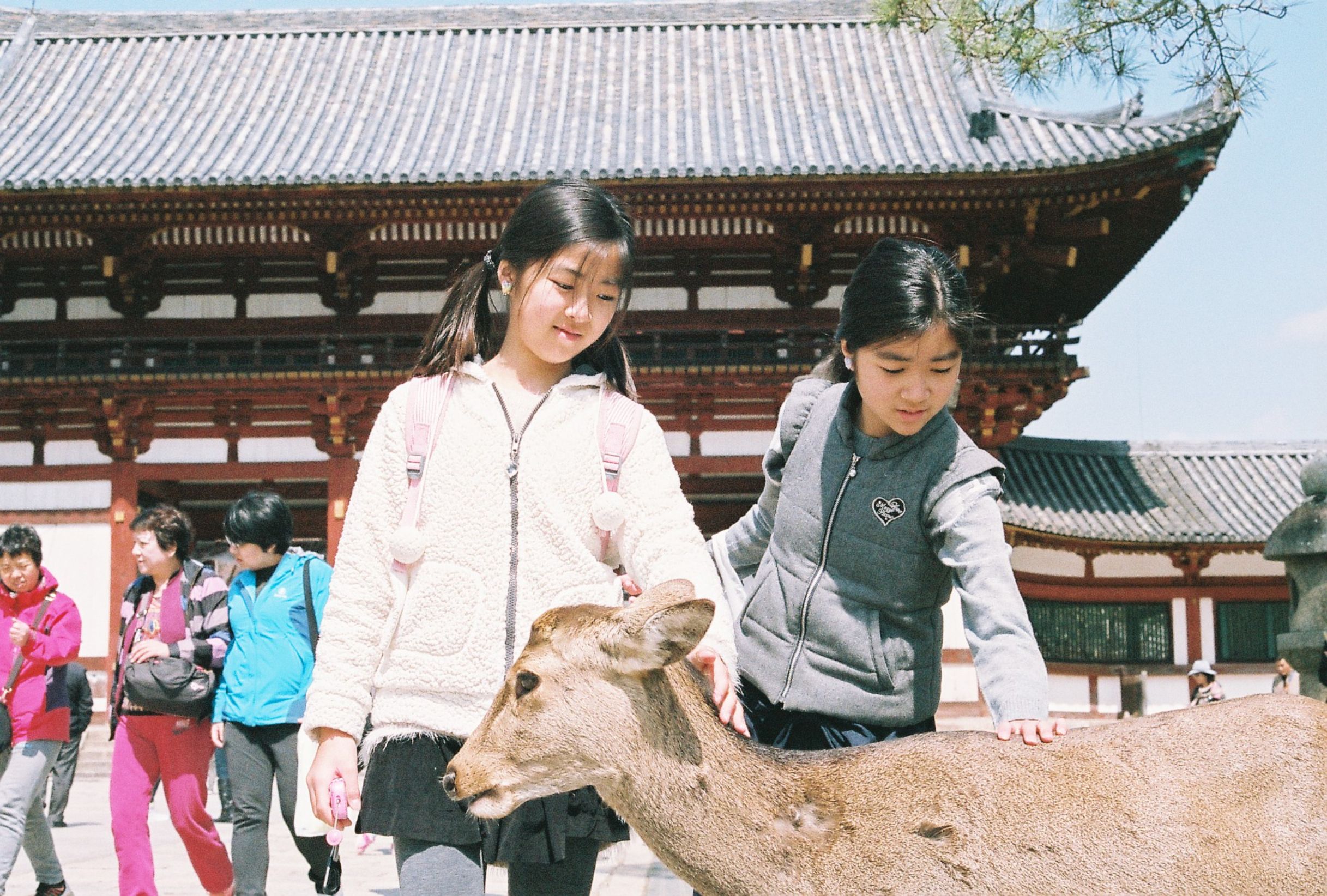
Space matters. Nara Park and the surrounding historic area are broad and green, so children are not trapped in dense crowds the entire day. Visual payoff matters too. Even kids who are too young to care about dynastic history usually respond to giant temple gates, lantern-lined approaches, deer crossing the paths, and the sheer scale of the Great Buddha Hall.
The real advantage, though, is flexibility. You can keep the day simple:
arrive early, do one anchor sight in the morning, slow down in the shade at midday, then decide whether your group still has energy for a museum, shrine, or garden.
That structure is much more realistic than trying to “complete Nara.”
The smartest route for a first visit
For most families, Kintetsu Nara Station is the easiest base. From there, you can walk into the park area or take a short bus ride if the weather is hot or you are traveling with a stroller.
Tōdai-ji is the strongest first stop. It opens early, and in late June the Great Buddha Hall is operating on its April-to-October schedule of 7:30-17:30. Going early helps in two ways: you get cooler temperatures, and you see the hall before the approach becomes more crowded.
This is where Nara stops feeling abstract. The scale of the temple is dramatic even for travelers who are not especially interested in religion or architecture. For children, it is the sort of place that feels instantly memorable.
From Tōdai-ji, you can let the middle of the day breathe. Walk slowly, stop for drinks, and avoid turning every deer encounter into a photo mission.
The deer etiquette that actually matters in 2026
Nara’s deer are famous, but this is the part of the day where families most often create stress for themselves and the animals.
Tōdai-ji’s official notice updated on May 15, 2026 says the first fawn of the year was born on May 3 and warns visitors not to approach mother deer and fawns. The site also reminds visitors to take all rubbish back with them and not to feed the deer human food.
That is the right mindset for the whole park: admiration without crowding.
If your children want to feed deer crackers, supervise closely and keep expectations calm. If the deer become pushy, the correct move is not to laugh and escalate the scene. Step back. Put the crackers away. Reset. Nara is much more enjoyable when the family treats the animals as wild residents, not performers.
A useful rule for kids is simple: hands to yourself, food only if an adult says yes, and no chasing deer for photos.
A realistic midday plan
By late morning, many families hit the wall not because Nara is difficult, but because they have walked too much in the sun without a break. This is the best time to choose one of two paths.
If your group still wants outdoor time, head toward Kasuga Taisha. Its general worship hours are 6:30-17:30 from March to October, and the walk there is one of the most atmospheric parts of Nara: trees, lanterns, and a quieter pace than the busiest deer zones. If you want to enter the main sanctuary area for special worship, that runs 9:00-16:00 and costs ¥700.
If your group needs a quieter reset, the Nara National Museum is the better move. Its permanent collection is open 9:30-17:00, last entry 30 minutes before closing, with adult admission at ¥700 and free entry for visitors 18 and under. That makes it one of the best-value family culture stops in the area, especially if the weather turns hot or wet.
One optional add-on, not three
The easiest way to ruin a good Nara day is to keep adding “quick stops.”
Choose one afternoon add-on.
For nature and a softer pace, the Man’yo Botanical Garden at Kasuga Taisha is a good choice. It is open 9:00-16:30 with last admission at 16:00, and from June to March it is closed on Tuesdays unless that day is a public holiday. This is a particularly good option if someone in your group wants a calmer, less monumental experience after Tōdai-ji.
For a cultural backup later in the summer, Kasuga Taisha’s museum has announced a special exhibition running from July 18, 2026 to September 25, 2026. If you are planning a July, August, or September visit, that gives you a reliable indoor option without leaving the shrine area.
The pace that works best
A successful family day in Nara is usually built like this:
Arrive early. Do Tōdai-ji first. Keep the deer interaction gentle. Take a real lunch break. Choose either Kasuga Taisha or the museum as your second anchor. Leave before everyone becomes tired and irritable.
That may sound obvious, but it is exactly what many travelers skip. They treat Nara as a side trip that should be “efficient,” when it is much better as a day that stays a little underplanned.
That is also the more respectful way to travel here. Nara is not only a place of famous animals and photogenic paths. It is a living cultural landscape where temples, shrine precincts, museum collections, and protected wildlife all overlap. When you move through it more quietly, the city gives more back.
Practical Tips or Checklist
- Start from Kintetsu Nara Station if possible.
- Aim for an early arrival, especially in summer.
- Do Tōdai-ji first while temperatures are lower.
- Carry water, hats, and a small towel in warm weather.
- Keep lunch flexible instead of locking in a tight reservation.
- Treat deer as wild animals, not petting-zoo animals.
- Do not approach mother deer or fawns.
- Do not feed deer sweets or other human food.
- Take your rubbish with you.
- Pick only one afternoon add-on: Kasuga Taisha, Nara National Museum, or Man’yo Botanical Garden.
- Check Monday closures if you are relying on the museum.
- Download a current Nara Park walking map before you go.
Sources
- Tōdai-ji: Opening Hours / Admission Fees
- Tōdai-ji: Access
- Tōdai-ji: May 15, 2026 fawn-season notice
- Kasuga Taisha: About the Shrine
- Kasuga Taisha: General Information
- Kasuga Taisha: Summer 2026 museum exhibition notice
- Kasuga Taisha: Man’yo Botanical Garden
- Nara National Museum: Museum Hours & Admission Fees
- Nara National Museum: Location & Transportation
- Nara Prefecture: Nara Park map page, updated February 27, 2026