



Many budgets fail for a boring reason: they only plan for monthly life.
Rent or mortgage shows up. Utilities show up. Groceries show up. Then something less frequent lands on top of them: school supplies, a car repair, an annual insurance premium, holiday travel, a pet exam, or a broken appliance you probably should have expected someday.
That is where a sinking fund helps.
A sinking fund is a simple savings bucket for an expense you expect, even if you do not know the exact day it will arrive. It is one of the most useful budgeting tools because it closes the gap between “I know this will happen eventually” and “I have money ready when it does.”
What a sinking fund is, and what it is not
A sinking fund is for planned but irregular expenses.
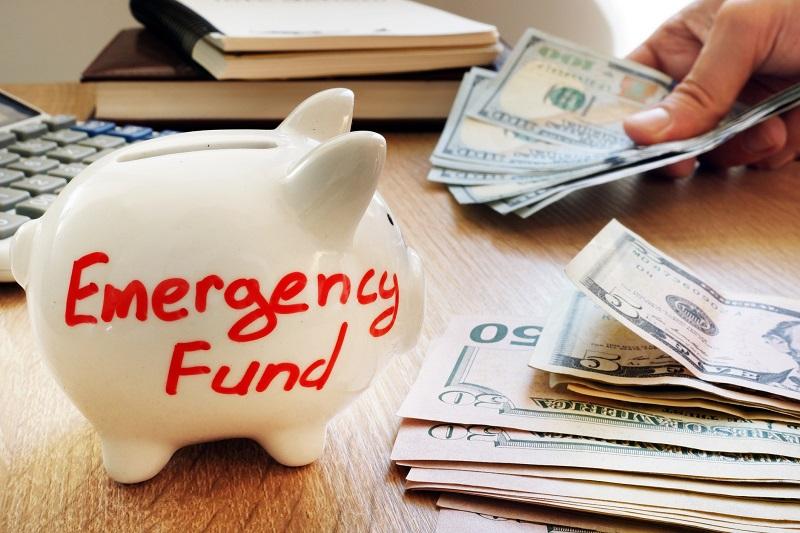
An emergency fund is for unplanned or truly urgent expenses.
That difference matters. If your transmission fails without warning, that may be an emergency-fund problem. If you know your tires are getting worn, your kid will need back-to-school supplies, or your annual membership renewal is coming, those are sinking-fund problems.
When people skip sinking funds, they often end up doing one of three things:
- Putting predictable costs on a credit card
- Pulling money from their emergency savings
- Pretending the expense was a surprise when it really was not
None of those is ideal. A sinking fund gives expected expenses their own lane.
What the current numbers say
A few current data points help explain why this matters.
The U.S. Bureau of Labor Statistics reported that average annual expenditures for consumer units reached $78,535 in 2024, up from $77,158 in 2023. In the same release, the education category averaged $1,569, or 2.0% of total spending. That does not mean every household spends that amount, but it does show that irregular and seasonal costs are real parts of household budgets, not side issues.
Separately, the FDIC’s national rates for March 16, 2026 showed the national average savings account rate at 0.39% and the average 12-month CD rate at 1.52%.
Here is the practical takeaway from those facts: household costs are still large enough that “miscellaneous” is not a real plan, and average savings rates are low enough that waiting for the perfect setup can waste time. For short-term savings goals, organization often matters more than squeezing out every last fraction of a percent.
That last point is general guidance, not a rule. Some people will benefit from a higher-yield savings setup. But the habit matters first.
Why sinking funds work so well
Sinking funds work because they change the math and the psychology.
The math is easy. If you expect a $600 expense in six months, you do not need $600 today. You need $100 a month.
The psychology matters just as much. A future bill feels less threatening when you can see money already set aside for it. That reduces the urge to borrow, panic, or give up on budgeting entirely.
This approach also helps protect your emergency fund. A lot of people think they have “constant emergencies” when they actually have a steady stream of neglected irregular expenses.
Common sinking fund categories
You do not need ten accounts on day one. Start with the expenses that hit your budget hardest or most often.
Common examples include:
- Car maintenance and repairs
- Auto registration or inspection
- Annual insurance premiums
- Back-to-school costs
- Holiday gifts and travel
- Home maintenance
- Pet care
- Medical copays or deductibles
- Clothing replacement
- Subscription renewals or annual fees
A good test is this: if an expense is likely to happen and would stress your budget if it arrived next month, it probably deserves a sinking fund.
How to set one up
The process can be very simple.
First, list a few irregular expenses you expect over the next 6 to 12 months.
Second, estimate how much each one may cost. You do not need perfect precision. A useful estimate is better than no plan.
Third, divide the amount by the number of months until you need the money.
Example:
- Car tires: $800 needed in 8 months
- School supplies and fees: $300 needed in 3 months
- Holiday gifts: $600 needed in 6 months
Monthly targets:
- Tires: $100
- School costs: $100
- Holidays: $100
Total monthly sinking-fund contribution: $300
That number tells you something important. If you cannot comfortably set aside the full amount, the answer is not failure. The answer is prioritization. You may need to reduce the goal, stretch the timeline, cut a lower-priority category, or start with just one fund.
Where to keep the money
For most short-term sinking funds, the best home is usually a plain cash savings setup that is easy to access and hard to confuse with everyday spending.
That might be:
- One savings account with clearly labeled sub-buckets
- Separate savings accounts for bigger goals
- A spreadsheet or budgeting app that tracks categories manually
- Even envelopes, if cash helps you stay disciplined
The main goal is separation. If the money sits in your checking account, it is easy to accidentally spend it twice.
This is where current savings-rate data can help keep expectations realistic. The FDIC’s March 2026 national averages show that many standard savings accounts still pay very little. So yes, shopping for a better account can be worthwhile. But for a short-term sinking fund, clarity, accessibility, and low friction usually matter more than chasing a tiny difference in yield.
That is general educational guidance, not individualized banking advice.
Mistakes to avoid
The biggest mistake is creating vague categories. “Stuff I forgot” is not a system. “Car repairs,” “school costs,” and “annual bills” are better.
The second mistake is underfunding known expenses because the number feels unpleasant. If holiday spending is usually $700, budgeting $150 will not make the problem smaller. It only delays it.
The third mistake is raiding the fund for unrelated spending. If you use the holiday fund for takeout in September, do not tell yourself the system failed. The category was just not protected.
Start smaller than you think
You do not need a perfect budget overhaul this weekend.
Start with one sinking fund. Pick the expense that most often knocks you off track. Fund it automatically. Watch what happens the next time that bill shows up.
A sinking fund will not solve every money problem. But it can solve one very common one: expected costs that arrive as if they were emergencies.
That alone can make a budget feel calmer, more honest, and much easier to stick to.
If your monthly plan keeps getting blown up by “random” expenses, try building one sinking fund this week. The goal is not perfection. The goal is fewer financial surprises that were never really surprises in the first place.
Action Checklist
- List 3 to 5 irregular expenses you expect in the next year.
- Estimate the cost of each one as realistically as you can.
- Divide each cost by the number of months until you need it.
- Choose one place to track the money: separate account, subaccount, app, spreadsheet, or envelopes.
- Automate at least one recurring transfer this week.
- Review your sinking funds once a month and adjust when estimates change.
- Keep emergency savings separate from sinking-fund money.
Sources