

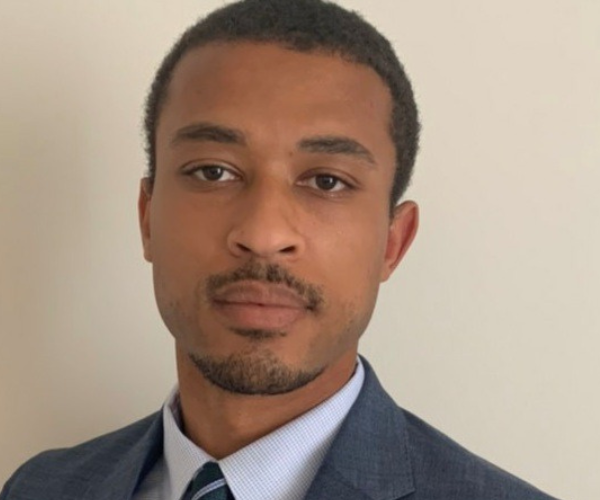


UT Austin’s denial of tenure to border-technology scholar Iván Chaar López has raised concerns about academic freedom, political influence, faculty review, and due process.
Editorial Note
This article is provided for educational and informational purposes and does not constitute legal advice.
The University of Texas at Austin has not publicly stated that Iván Chaar López was denied tenure because of his research, political views, race, ethnicity, or academic field. Concerns about political influence and academic freedom have been raised by Chaar López, faculty members, professional organizations, and other critics of the decision.
A tenure denial is not automatically unlawful or evidence of political retaliation. Universities generally retain authority to evaluate tenure applications through multiple levels of review. The dispute in this case centers on the absence of a publicly disclosed explanation after Chaar López reportedly received strong support from departmental, college, and external reviewers.
The University of Texas at Austin is facing growing criticism over its decision to deny tenure to Iván Chaar López, an American studies professor whose research examines border surveillance, technology, race, immigration, and information systems.
Chaar López reportedly received unanimous support from seven senior scholars in his department, favorable reviews from eight outside experts, support from the College of Liberal Arts promotion committee, and approval from the college’s interim dean.
His application was nevertheless rejected by a presidential promotion-and-tenure committee in February. His appeal was denied in May, and university officials have not publicly provided a detailed explanation for the decision.
The UT Austin chapter of the American Association of University Professors has called for the decision to be reversed. The organization argues that the case raises concerns about academic freedom, procedural fairness, transparency, and whether politically controversial scholarship is being evaluated differently from other academic work.
UT Austin has defended its process, saying tenure decisions are reviewed carefully and are not automatically approved simply because earlier evaluators supported a candidate.
The dispute now extends beyond one professor. It raises a larger question about whether traditional faculty-review systems still carry meaningful weight when senior administrators can reject a strongly supported tenure case without publicly explaining why.
Who Is Iván Chaar López?
Iván Chaar López is an assistant professor in UT Austin’s Department of American Studies.
His academic work combines digital studies, ethnic studies, Latino studies, science and technology studies, borderlands history, computing, information infrastructure, and racial formation.
A significant portion of his research examines the history of surveillance and information technology along the United States–Mexico border. His work considers how governments have used computing, artificial intelligence, sensors, data systems, and other technologies to manage migration and border enforcement.
Chaar López joined UT Austin in 2020. He has said that his research focus was an important reason the university hired him and that he previously received institutional fellowships, funding, and positive reviews for his academic work.
He has also maintained that earlier evaluations did not identify serious weaknesses that suggested his tenure application was likely to fail.
How the Tenure Review Unfolded
Tenure reviews ordinarily involve several stages.
A candidate’s scholarship, teaching, professional service, publication record, research impact, and future potential may be reviewed by departmental faculty, outside experts, college-level committees, deans, senior university administrators, and governing boards.
UT Austin describes its promotion-and-tenure system as a multilevel process intended to provide an independent and objective assessment of each candidate. The university states that recommendations at each stage reflect professional judgment, with the president ultimately making the final recommendation.
According to the UT Austin AAUP chapter, Chaar López received unanimous support from seven senior faculty members in American studies and favorable assessments from eight external scholars.
His application was also supported by the College of Liberal Arts Promotion and Tenure Committee and interim dean David Sosa.
The application reportedly reached the university-level presidential committee before being denied in February.
Chaar López appealed the decision, but President Jim Davis denied the appeal in May. A May 14 letter reportedly informed him that the university’s decision was final without providing a detailed reason.
Why the Lack of an Explanation Matters
Universities are not necessarily required to approve every tenure application supported by faculty reviewers.
Senior administrators may identify concerns involving the quality, significance, consistency, or future direction of a candidate’s work. They may also apply institution-wide standards that differ from the conclusions reached by a department or college.
The central concern in this case is that the university has not publicly explained what weakness outweighed the extensive support Chaar López received.
Without an explanation, faculty members cannot determine whether the administration applied legitimate academic standards, identified a procedural problem, or relied on considerations unrelated to the recognized tenure criteria.
The AAUP argues that a faculty member who requests reasons for a negative reappointment or tenure decision should receive them. Its position is that an unexplained denial can lead a candidate to reasonably question whether the decision resulted from improper motivations or inadequate consideration.
Transparency is particularly important when a tenure decision departs sharply from the conclusions reached by scholars with expertise in the candidate’s field.
UT Austin Defends Its Authority
UT Austin has rejected the suggestion that favorable departmental and external reviews should automatically result in tenure.
A university spokesperson told Inside Higher Ed that tenure is a privilege rather than a right and that UT does not merely rubber-stamp recommendations made at earlier stages.
The university said its process includes checks and balances intended to ensure high standards in teaching and research.
That argument reflects an important institutional principle.
If department-level approval guaranteed tenure, later administrative reviews would have little practical purpose. University presidents and senior committees are expected to exercise independent judgment rather than simply confirm every recommendation they receive.
The problem is not necessarily that senior administrators reached a different conclusion. The problem is that the university has not publicly disclosed the academic or procedural basis for that conclusion.
A final decision can be independent without being unexplained.
Why Academic-Freedom Concerns Have Emerged
Chaar López studies subjects that are politically controversial in Texas and nationally.
His research connects immigration enforcement and border surveillance with questions involving race, labor, technology, state power, and historical inequality.
He has expressed concern that this research may have contributed to the tenure denial, although the university has not confirmed that interpretation.
Academic freedom is intended to protect the ability of scholars to research, teach, and publish on difficult subjects without fear that political disagreement will determine their employment.
Tenure does not protect professors from academic evaluation. Researchers must still meet standards involving scholarship, teaching, professional conduct, and institutional service.
However, the value of tenure is weakened when scholars believe they may be denied permanent appointments because their findings, methods, or fields attract political opposition.
The question is therefore not whether Chaar López’s research should be exempt from scrutiny. It is whether it received the same academically grounded review that would apply to less politically sensitive work.
The Departmental Restructuring Adds to the Suspicion
The tenure dispute has developed while UT Austin is restructuring several departments and academic programs involving race, ethnicity, gender, sexuality, culture, and regional studies.
The university announced plans to consolidate American studies with other academic units into a new Department of Social and Cultural Analysis.
The UT Austin AAUP chapter argues that the tenure denial cannot be viewed separately from those broader changes. It believes the restructuring and denial may reflect diminishing institutional support for fields dealing with race, ethnicity, and political power.
That remains an allegation rather than an established fact.
Universities frequently reorganize departments because of enrollment patterns, financial priorities, duplication, academic strategy, or administrative efficiency. Departmental restructuring does not necessarily prove that an individual tenure decision was politically motivated.
Nevertheless, timing matters.
When a professor in a targeted field is denied tenure despite extensive positive reviews, faculty members may reasonably seek evidence that the decision was based on established academic standards rather than a wider ideological shift.
What Due Process Means in a Tenure Case
Due process in university employment does not always mean the same thing as due process in a criminal case or courtroom proceeding.
A tenure candidate generally does not possess a guaranteed right to a permanent appointment. However, the candidate may have a legitimate expectation that the university will follow its published rules, consider the required evidence, avoid prohibited discrimination, and provide available appeal or grievance procedures.
Procedural fairness may include consistent standards, review by qualified evaluators, an opportunity to respond to concerns, access to an appeal, and protection against retaliation.
Chaar López has reportedly exhausted two of his three available appeal options and has entered a faculty grievance process. A preliminary hearing is expected in August.
That grievance process may help determine whether the university followed its procedures and whether the denial involved an academic-freedom violation.
It does not necessarily allow a grievance body to substitute its own academic judgment for every decision made by administrators. Its authority will depend on university rules and the specific claims being considered.
Strong Faculty Support Does Not Guarantee Tenure
It is important to avoid overstating what the positive reviews legally or institutionally require.
A favorable department vote does not create an automatic entitlement to tenure.
External reviewers generally assess the significance, quality, and reputation of a candidate’s scholarship. They may not evaluate every part of the university’s institutional expectations.
College and university committees may consider the complete record differently or assign different weight to teaching, scholarship, service, publication quality, professional conduct, or future potential.
At the same time, near-unanimous support across multiple academic levels is significant.
When senior leadership rejects that level of professional agreement, a detailed explanation can protect both the candidate and the institution.
It can show that the decision involved a legitimate academic disagreement rather than political pressure, personal hostility, discrimination, or arbitrary judgment.
The Debate Over Whether Tenure Is a Right or Privilege
UT Austin’s characterization of tenure as a privilege has drawn criticism from the AAUP chapter.
The university’s statement appears intended to emphasize that no candidate is automatically entitled to tenure merely because earlier reviewers recommended approval.
The AAUP responds that tenure is not simply a discretionary reward. It views tenure as an earned professional status governed by established expectations, peer evaluation, institutional procedures, and contractual commitments.
Both positions contain part of the issue.
A probationary professor does not normally possess tenure before the university formally awards it. Meeting some or even many criteria does not guarantee approval.
However, tenure decisions are not supposed to operate as personal favors distributed without standards. Candidates spend years working under published expectations and reasonably expect their applications to receive a fair, professionally grounded review.
Calling tenure a privilege does not eliminate the institution’s responsibility to follow its own procedures.
Why Tenure Exists
Tenure is often misunderstood as lifetime employment without accountability.
In practice, tenure provides continuing appointment protections that generally prevent a university from dismissing a professor without adequate cause, financial necessity, or another recognized institutional reason.
Tenured professors may still face discipline or dismissal for serious misconduct, incompetence, policy violations, program discontinuation, or financial emergencies, depending on applicable rules.
The central purpose of tenure is to protect academic inquiry.
Scholars may investigate powerful institutions, challenge accepted beliefs, criticize government policies, publish unpopular conclusions, or teach controversial subjects.
Without meaningful employment protection, professors may avoid research that threatens donors, elected officials, administrators, corporations, or influential political groups.
Tenure is therefore not only a benefit for faculty members. It is also intended to protect students, research quality, and the public’s access to independent scholarship.
The Risk of Political Influence in Public Universities
Public universities exist within political systems.
Their governing boards may be appointed by elected officials. Legislatures control funding. Governors and lawmakers may publicly criticize courses, faculty members, research projects, or academic departments.
Political oversight is not automatically improper. Public universities receive taxpayer support and should remain accountable for educational quality, legal compliance, financial stewardship, and student outcomes.
The danger arises when political preferences replace professional academic evaluation.
A conservative government should not be able to deny tenure because a professor’s scholarship supports progressive conclusions. A progressive government should not be able to deny tenure because a professor’s work supports conservative conclusions.
Academic freedom depends on protecting the review process from both forms of interference.
No public evidence cited in this article establishes that Texas officials directed UT Austin to deny Chaar López tenure. The controversy concerns whether the university has provided enough transparency to rule out that possibility.
The Effect on Faculty Recruitment
The case could affect more than the professor directly involved.
Universities compete nationally and internationally for researchers. Prospective faculty members evaluate salaries, research support, teaching responsibilities, institutional reputation, departmental stability, and the reliability of the tenure process.
A scholar may hesitate to join a university when a candidate with strong peer support can be denied tenure without a stated reason.
That concern may be especially serious for researchers working in immigration, race, gender, public policy, climate science, public health, history, or other areas subject to political scrutiny.
UT Austin remains a major research institution with substantial resources and an international academic reputation.
The way it resolves this dispute may influence whether future candidates believe they can pursue controversial research without political consequences.
The Effect on Students
Tenure controversies can appear to involve only faculty employment, but students are also affected.
Students benefit when professors can introduce difficult ideas, conduct independent research, and challenge government or institutional policies without fearing retaliation.
They may also lose mentors, advisers, and specialized courses when professors leave after tenure denials.
Chaar López’s work spans immigration history, technology, border policy, ethnic studies, and digital infrastructure. Students interested in those subjects could lose access to his expertise if he leaves UT Austin.
The university must also protect students by ensuring that tenure remains selective and academically rigorous.
The challenge is to maintain high standards without creating the perception that political sensitivity can outweigh a strong scholarly record.
What Happens Next
Chaar López is pursuing a faculty grievance that reportedly includes an academic-freedom claim.
A preliminary hearing is expected in August. The process could examine whether university officials followed established procedures and whether improper considerations influenced the tenure decision.
The UT Austin AAUP chapter has called on President Jim Davis to reverse the denial, provide a detailed explanation, release information about the decision-making process, and assure faculty that political considerations will not determine future tenure cases.
UT Austin has not indicated publicly that it plans to reverse the decision.
Unless the outcome changes, Chaar López may be required to leave the university after the 2026–2027 academic year and restart the tenure process at another institution.
What UT Austin Could Do
The university could reduce uncertainty by providing a clear explanation consistent with privacy and personnel rules.
That explanation would not need to disclose confidential reviewer identities or every internal conversation. It could identify the academic standards the committee believed were not satisfied and explain why the positive recommendations did not resolve those concerns.
UT could also describe the role of the presidential committee, the basis for its authority, and the safeguards used to prevent political interference.
A transparent grievance process would provide another opportunity to demonstrate that the university’s procedures remain credible.
Silence may protect administrative discretion in the short term. It can also allow suspicion to grow.
How New To Education Covers Academic Freedom
New To Education publishes accessible coverage of educational law, higher-education governance, faculty rights, student rights, curriculum disputes, and government decisions affecting schools and universities.
Tenure cases are often complicated because they involve confidential records, professional judgment, internal policies, employment expectations, and constitutional principles.
Our goal is to distinguish verified facts from allegations while explaining why institutional decisions may matter beyond a single campus.
Key Takeaways
UT Austin denied tenure to American studies professor Iván Chaar López after his application reportedly received unanimous departmental support, favorable external reviews, college committee approval, and support from the interim dean.
A presidential promotion-and-tenure committee rejected the application in February, and President Jim Davis denied Chaar López’s appeal in May.
The university has not publicly provided a detailed explanation for the denial.
The UT Austin AAUP chapter argues that the case raises concerns about academic freedom, procedural fairness, political influence, and the future of faculty governance.
UT Austin maintains that tenure applications receive independent review at multiple levels and that favorable earlier recommendations do not guarantee approval.
Chaar López is pursuing a faculty grievance, with a preliminary hearing expected in August.
No public evidence identified in the reviewed sources proves that political officials directed the university to reject his application.
Frequently Asked Questions
Who is Iván Chaar López?
Iván Chaar López is an assistant professor of American studies at UT Austin whose research examines border surveillance, immigration, race, computing, artificial intelligence, and information infrastructure.
Was his tenure application supported by faculty members?
Yes. The UT Austin AAUP chapter says he received unanimous support from seven senior scholars in his department, favorable reviews from eight outside experts, and support from the college tenure committee and interim dean.
Why did UT Austin deny him tenure?
UT Austin has not publicly released a detailed explanation. The university says tenure decisions undergo multiple independent reviews and are not automatically approved based on earlier recommendations.
Has political interference been proven?
No. Chaar López and faculty advocates have raised concerns about possible political influence, but the reviewed sources do not establish that elected officials directed the denial.
Does a professor have a legal right to tenure?
A tenure-track appointment does not ordinarily guarantee tenure. Candidates may, however, have rights under university policies, employment agreements, antidiscrimination laws, academic-freedom protections, and established review procedures.
What happens to Chaar López now?
He is pursuing a university grievance process. Unless the denial is reversed or another resolution is reached, he may have to leave UT Austin after the 2026–2027 academic year.
Final Thoughts
UT Austin has the authority to maintain demanding tenure standards and to conduct reviews beyond the departmental level.
That authority carries a corresponding responsibility.
When a candidate receives strong support from departmental faculty, outside experts, a college committee, and a dean, senior administrators should be prepared to explain why they reached a different conclusion.
An explanation would not guarantee that every faculty member agrees with the result. It would allow the academic community to assess whether the decision was based on legitimate standards.
Without that transparency, the denial creates broader uncertainty.
Faculty members may wonder whether research involving immigration, race, surveillance, technology, or state power can be evaluated independently from the political environment surrounding those subjects.
The dispute is therefore about more than whether one professor receives permanent employment.
It is about whether faculty review remains meaningful, whether controversial scholarship receives equal treatment, and whether a public research university can exercise administrative authority without weakening trust in academic freedom.
Support New To Education
New To Education publishes independent reporting and analysis on educational law, higher education, academic freedom, student rights, faculty governance, and policies affecting educators and families.
Readers can support this work by sharing the article, subscribing to New To Education updates, joining the New To Education community, exploring our educational services, or using the support options available through the website.
Related Articles
Texas Tech Professors Sue Over Restrictions on Teaching Race and Gender
https://www.newtoeducation.com/view-blog/texas-tech-professors-sue-over-restrictions-on-teaching-race-and-gender-6a5de3d7e9913
New Federal Grant Rules Could Give Political Officials Greater Control Over University Research
https://www.newtoeducation.com/view-blog/new-federal-grant-rules-could-give-political-officials-greater-control-over-university-research-6a605c0e1441d
Sources
AAUP at UT Austin — Press Release on the Tenure Denial of Iván Chaar López
https://aaup-utaustin.org/2026/07/24/aaup-at-ut-press-release-on-tenure-denial-of-ivan-chaar-lopez/
Inside Higher Ed — Academic Freedom at UT “Being Dismantled,” Says Professor Denied Tenure
https://www.insidehighered.com/news/faculty/tenure/2026/07/22/prof-denied-tenure-academic-freedom-ut-being-dismantled
Inside Higher Ed — Border Surveillance Scholar Denied Tenure at UT Austin
https://www.insidehighered.com/news/quick-takes/2026/07/21/border-surveillance-scholar-denied-tenure-ut-austin
University of Texas at Austin — Promotion and Tenure Process
https://provost.utexas.edu/the-office/faculty-affairs/promotion-tenure/2026-27-promotion-tenure/
University of Texas at Austin — Iván Chaar López Faculty Profile
https://liberalarts.utexas.edu/ams/faculty/iyc245
AAUP — Recommended Institutional Regulations on Academic Freedom and Tenure
https://www.aaup.org/reports-publications/aaup-policies-reports/topical-reports/recommended-institutional-regulations