





Editorial Note
Minority-Owned Business Spotlight is a New To Education series highlighting businesses with publicly documented minority, immigrant, veteran, women, Indigenous, or historically underrepresented ownership and founder stories.
This article is intended for educational and informational purposes only. Inclusion does not constitute an endorsement, sponsorship, paid promotion, formal minority-business certification claim, or recommendation of any company, product, or service. Business offerings and operating details may change, so readers should consult the company’s official website before visiting or placing an order.
Food can preserve memories that photographs and written records sometimes miss.
A particular smell may remind someone of a grandparent’s kitchen. A familiar flavor can bring back family celebrations, childhood routines, or a place that no longer exists in quite the same form. For immigrant and refugee families, recipes can become a living connection between generations and countries.
That connection is central to Bạn Bè, a Vietnamese American bakery in Brooklyn founded by baker, designer, archivist, and entrepreneur Doris Hồ-Kane.
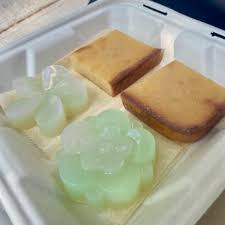
The bakery combines Vietnamese ingredients and dessert traditions with Hồ-Kane’s American upbringing and artistic background. Its products have included colorful agar jellies, pandan waffles, cakes, savory items, and distinctive butter cookies flavored with ingredients such as tamarind, sesame, coffee, and ube.
Bạn Bè describes itself as New York City’s first Việt American bakery. Its story shows how a business can preserve cultural traditions while still allowing its founder to experiment, reinterpret, and create something new.
A Bakery Built From Family Memory
Doris Hồ-Kane grew up in a Vietnamese refugee family that settled in Texas.
Her family arrived in the United States carrying relatively few material possessions. What remained available to them were memories, including memories of the foods and desserts that previous generations had prepared in Vietnam.
Ingredients used in Vietnamese cooking were not always easy to find in American grocery stores at the time. Her family adapted by using what was locally available while preserving recipes and techniques as closely as possible.
As Vietnamese communities became more established in the United States, ingredients such as agar, palm sugar, rice paper, and other specialty products became easier to obtain. Those ingredients allowed families to recreate foods that had previously existed mainly through memory.
Hồ-Kane later moved to New York, attended art school, and worked in fashion design and archival fields. Like her mother and grandmother, she found comfort in preparing the desserts she remembered from childhood.
That process eventually grew into a business idea.
Creating New York’s First Vietnamese American Bakery
Hồ-Kane began developing Bạn Bè after noticing that New York had many Vietnamese restaurants but very few businesses dedicated specifically to Vietnamese desserts.
Before the COVID-19 pandemic, she planned to open a physical bakery in Brooklyn. Problems with the original space and the uncertainty caused by the pandemic forced her to reconsider the launch.
Rather than abandon the idea, she changed the business model.
Bạn Bè began by selling Vietnamese American butter-cookie tins for delivery. The pivot allowed Hồ-Kane to introduce the brand, test customer interest, and operate without immediately depending on a conventional storefront.
The cookies attracted significant attention, eventually generating a waiting list reportedly numbering around 10,000 people. That response demonstrated that consumers were interested not only in Vietnamese savory food but also in the country’s less familiar baking and dessert traditions.
Bạn Bè’s official website identifies the business as established in 2019, while published profiles often connect its public bakery launch and cookie sales with 2020 or early 2021. The differences reflect the gradual way the business developed from an idea into an operating bakery rather than a single, conventional opening day.
Why the Name Bạn Bè Matters
“Bạn bè” is commonly translated as “friends,” “pals,” or “buddies” in Vietnamese.
The name reflects the social role food can play. Desserts are often shared during family visits, celebrations, holidays, community gatherings, and ordinary conversations between friends.
That sense of connection fits the bakery’s larger purpose.
Bạn Bè is not presented only as a place to purchase sweets. It functions as a cultural project where Vietnamese American history, identity, design, and food can meet.
For customers from Vietnamese backgrounds, the products may bring back flavors they remember from childhood. For customers who did not grow up with Vietnamese desserts, the bakery offers an introduction to a culinary tradition that is less visible in the United States than foods such as phở or bánh mì.
A memorable business name can communicate more than the category of product being sold. In Bạn Bè’s case, the name suggests that the business is intended to bring people together.
Turning the Familiar Butter-Cookie Tin Into Something Personal
One of Bạn Bè’s best-known products is its Vietnamese American butter-cookie tin.
Many families are familiar with the blue metal tins of Danish butter cookies that later become storage containers for sewing supplies, documents, photographs, or household items. Hồ-Kane drew from that familiar experience while changing the flavors inside.
Her cookies have incorporated ingredients associated with Vietnamese and broader Asian food traditions, including tamarind, sesame, ube, pandan, and Vietnamese coffee.
The result combines several layers of memory.
The tin recalls a familiar household object. The cookie format reflects Western-style baking. The flavors connect the products to Vietnamese and Vietnamese American experiences.
This combination helps explain why the product gained attention. It is visually distinctive, easy to share, suitable for gifts, and supported by a story that many immigrant families can recognize even when their specific cultural backgrounds differ.
Bạn Bè demonstrates that innovation does not always require rejecting familiar products. Entrepreneurs can begin with an object or experience customers already understand and then reinterpret it through their own culture and creative perspective.
Food as a Living Archive
Hồ-Kane’s background as an archivist is especially important to understanding Bạn Bè.
Archives traditionally preserve documents, photographs, objects, oral histories, and other materials that help future generations understand the past. Food can serve a similar purpose, although it must be prepared repeatedly to remain alive.
Each time a family recipe is cooked, taught, adjusted, or discussed, knowledge moves from one generation to another.
Hồ-Kane has described baking as a way to preserve Vietnamese culture and amplify stories that have often been overlooked. Her work connects desserts with migration, refugee history, family memory, femininity, art, and adaptation.
She is also associated with 17.21 WOMEN, an online archival project highlighting East and Southeast Asian women throughout history. That work reinforces the idea that Bạn Bè is part bakery and part cultural record.
The bakery does not preserve culture by freezing recipes in time. Hồ-Kane develops new combinations influenced by both Vietnamese traditions and her life in the United States.
That flexibility is important. Culture survives not only through exact repetition but also through the ability of each generation to find personal meaning within it.
Adapting Instead of Abandoning the Business
Bạn Bè’s launch offers a practical lesson in entrepreneurship.
Hồ-Kane’s original plan depended on opening a bakery in a particular physical space. When that plan became difficult during the pandemic, she did not treat the disruption as proof that the entire concept had failed.
She separated the central idea from the original delivery method.
The central idea was to create a Vietnamese American bakery and share overlooked desserts. A full storefront was one possible way to accomplish that goal, but it was not the only way.
Cookie tins, online orders, pickup services, limited releases, collaborations, and temporary offerings allowed the company to begin building an audience.
Small-business owners often become emotionally attached to the first version of a plan. Bạn Bè shows the value of protecting the mission while remaining flexible about operations.
A business can change how it serves customers without changing why it exists.
Connecting Business With Education
Bạn Bè’s work also has an educational dimension.
The bakery’s products introduce customers to ingredients, techniques, histories, and desserts that may be unfamiliar to them. A customer may initially purchase a cookie or cake because it looks appealing, then learn about pandan, agar jelly, Vietnamese coffee, refugee history, or the meaning behind the bakery’s name.
The business has also offered youth classes and camps focused on Vietnamese sweets, snacks, baking, art, archiving, and activism. Official listings have described hands-on programs in which children learn to make items such as butter cookies and pandan-based desserts.
This represents a broader view of education.
Learning does not occur only in schools or through textbooks. It can happen in bakeries, kitchens, museums, community centers, family homes, and small businesses.
When an entrepreneur teaches customers why a product matters, the business becomes part of cultural education. When children learn a recipe and its history, they gain practical skills while participating in cultural preservation.
Building a Business With a Distinct Identity
Bạn Bè operates in a crowded New York food market.
The business cannot compete solely by offering something sweet. New Yorkers already have access to countless bakeries, cafés, restaurants, and dessert shops.
Its advantage comes from having a clear identity.
Bạn Bè is specifically Vietnamese American rather than broadly “Asian-inspired.” Its products are connected to the founder’s family, artistic background, archival work, and interpretation of life between cultures.
That specificity gives the business a story customers can remember.
It also prevents the brand from feeling interchangeable with every other bakery. The colors, flavors, product names, packaging, educational activities, and founder narrative reinforce the same central purpose.
Businesses often fear that becoming too specific will reduce their potential audience. Bạn Bè suggests the opposite can happen.
A highly personal story can reach people from many backgrounds when it touches universal experiences such as family, migration, memory, friendship, childhood, and belonging.
What Entrepreneurs Can Learn From Bạn Bè
Bạn Bè demonstrates the value of identifying an overlooked market.
Vietnamese food was already present in New York, but Vietnamese desserts had far less visibility. Hồ-Kane did not need to invent an entirely new category. She recognized that an existing cultural tradition was not being fully represented.
The company also shows how personal experience can become a source of product development. Family recipes, childhood memories, archival interests, fashion design, and artistic training all contributed to the bakery’s identity.
Another lesson is the importance of adaptability. When a physical opening became difficult, the company shifted toward products that could be ordered, delivered, or collected through scheduled pickups.
Finally, Bạn Bè shows that education can strengthen a brand. Explaining ingredients, teaching classes, preserving stories, and sharing cultural history give customers more reasons to remember the business.
A product may attract someone’s attention. Meaning gives that person a reason to care.
Key Takeaways
Bạn Bè is a Vietnamese American-owned bakery in Brooklyn founded by Doris Hồ-Kane. The company describes itself as New York City’s first Việt American bakery and uses desserts to explore culture, family history, identity, and community.
The bakery began developing before the COVID-19 pandemic but adapted its launch when plans for a traditional storefront became difficult. Its Vietnamese American butter-cookie tins attracted substantial interest and helped the business build an audience.
Hồ-Kane draws inspiration from her family’s refugee history, her childhood experiences, and her professional work in art, fashion, and archives. Her desserts combine Vietnamese ingredients and traditions with American baking influences.
Bạn Bè also connects entrepreneurship with education through cultural storytelling and hands-on classes for young people.
Its story demonstrates how founders can turn overlooked traditions into distinctive businesses while preserving the flexibility to reinterpret those traditions for a new generation.
Frequently Asked Questions
Who owns Bạn Bè?
Bạn Bè was founded and is operated by Vietnamese American baker, designer, and archivist Doris Hồ-Kane.
What does Bạn Bè mean?
The Vietnamese phrase “bạn bè” means friends, pals, or buddies.
Is Bạn Bè a Vietnamese-owned business?
Yes. Bạn Bè is a Vietnamese American-owned business founded by Doris Hồ-Kane, whose family came to the United States from Vietnam as refugees.
What does Bạn Bè sell?
The bakery has offered Vietnamese American butter cookies, cakes, pandan waffles, agar-based jellies, savory foods, and other changing selections. Availability may vary, so customers should check the official website for current offerings.
Where is Bạn Bè located?
Bạn Bè is based in Carroll Gardens, Brooklyn. Its official website lists the business at 187 Sackett Street, Brooklyn, New York. Customers should confirm current hours, pickup procedures, and product availability before visiting.
Does Bạn Bè offer classes?
The bakery has offered educational programs for children focused on Vietnamese sweets, snacks, baking, art, archiving, and cultural learning. Current class availability should be confirmed through the company’s official website.
Final Thoughts
Bạn Bè shows that a bakery can preserve far more than recipes.
Through butter cookies, pandan desserts, agar jellies, classes, and storytelling, Doris Hồ-Kane has created a living archive of Vietnamese American experience.
Her business does not present culture as something fixed behind museum glass. It treats culture as something people can taste, adapt, teach, share, and carry forward.
Bạn Bè also offers a valuable lesson for aspiring entrepreneurs. The experiences that feel highly personal—a grandparent’s recipe, a childhood snack, a family migration story, or an object remembered from home—may connect with a much wider audience than expected.
The strongest cultural businesses do more than sell products inspired by heritage. They help people understand why that heritage matters.
Related Articles
Minority-Owned Business Spotlight: Nguyen Coffee Supply
Support New To Education
New To Education publishes educational resources, business spotlights, news coverage, and practical information for students, educators, families, professionals, and entrepreneurs.
Readers who value our work can support New To Education through the donation area below. Each contribution helps us continue publishing accessible content, expanding our platform, supporting educators and creators, and connecting education with business and opportunity.
Sources
Food & Wine — Find Bouncy Desserts, Butter Cookies, and Pure Joy at This Brooklyn Bakery
Eater New York — A New Vietnamese Bakery Called Bạn Bè Is Coming to Brooklyn
Vietcetera — Bạn Bè Is New York City’s First Vietnamese American Bakery




