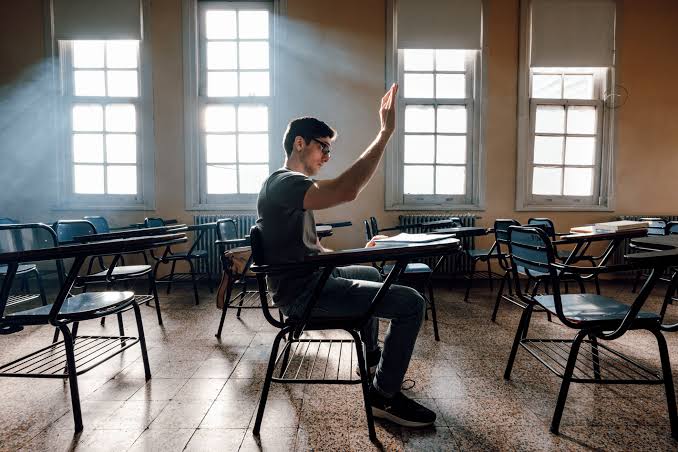



A student sits in a classroom, completing an assignment designed to prepare them for the future.
The structure is familiar.
The expectations are clear.
The outcome is predictable.
But the question is becoming harder to ignore:
What future are we actually preparing them for?
A System Built for a Different Era
Modern education systems were designed during a time when work was more stable and predictable.
- Careers followed linear paths
- Skills remained relevant for longer periods
- Industries changed gradually
That world still exists but it’s no longer the dominant reality.
Today, entire industries are being reshaped by automation, artificial intelligence, and rapid technological change.
Some roles are evolving.
Others are disappearing.
And new ones are being created faster than systems can adapt.

The Problem Isn’t What Students Learn It’s How
Students are still learning valuable subjects.
Math, science, language, and history all matter.
But the issue isn’t content.
It’s the structure around it.
Many students are still being trained to:
- Follow instructions
- Produce correct answers
- Complete predictable tasks
Those are exactly the types of activities that machines are increasingly able to handle.
The Future Doesn’t Reward Predictability
The workforce is shifting toward skills that are harder to automate.
These include:
- Critical thinking
- Communication
- Adaptability
- Problem-solving
These aren’t new ideas but they are becoming more important.
In many cases, they are what separates individuals from systems that can generate answers instantly.

A Changing Starting Point
Entry-level roles have traditionally been the bridge between education and employment.
But in some industries, that bridge is changing.
Tasks that once defined early-career positions are now being handled by automation or AI-supported systems.
This doesn’t eliminate opportunity.
But it does mean that students may need to enter the workforce with a different level of readiness than before.
What This Means for Education
If the nature of work is changing, education cannot remain static.
The focus must shift from:
- Memorization → Application
- Completion → Understanding
- Instruction → Exploration
Students need opportunities to:
- Think independently
- Solve unfamiliar problems
- Apply knowledge in new contexts
Because the future is unlikely to follow a script.

This Isn’t About Predicting the Future
No system can perfectly predict which jobs will exist in 10 or 20 years.
But education doesn’t need to predict exact roles.
It needs to prepare students for change itself.
That means building:
- Flexible thinking
- Lifelong learning habits
- The ability to adapt across different environments
The Bigger Question
The issue isn’t that education is failing.
It’s that it may still be aligned with a version of the world that is shifting.
And when alignment is off, preparation becomes uncertain.
Final Thought
We don’t know exactly what the future job market will look like.
But we do know this:
It will not look like the past.
So the question isn’t just what we teach.
It’s whether we’re preparing students to adapt when everything around them changes.
What do you think?
Is education keeping up with the future of work or falling behind?