


Editorial Note
This article is intended for educational and informational travel purposes only. Travel routes, transportation schedules, attraction hours, weather conditions, volcanic activity notices, ticket prices, accommodation rules, and local guidance can change. Visitors should confirm details with official tourism, transportation, hotel, and local government sources before traveling.
Hakone is one of Japan’s best travel destinations for people who want to step outside Tokyo without losing the convenience of a well-connected route.
Located in Kanagawa Prefecture, Hakone is known for hot springs, mountain scenery, Lake Ashi, views of Mount Fuji, traditional ryokan inns, museums, ropeways, and peaceful forested landscapes. It is close enough to Tokyo for a day trip, but it rewards travelers who stay overnight and slow down.
For first-time visitors, Hakone offers a softer side of Japan. Tokyo is electric, crowded, modern, and fast. Hakone feels more relaxed. The air changes. The pace changes. The landscape opens up. You can ride mountain trains, cross a lake by boat, walk near shrines, soak in an onsen, and catch a glimpse of Mount Fuji if the weather cooperates.
For returning travelers, Hakone is the kind of place that reminds you Japan is not only about big cities. It is also about quiet mountain towns, old roads, steam rising from volcanic valleys, small restaurants, and that wonderful feeling of finding a place where doing less somehow feels like doing more.
Why Visit Hakone?
Hakone works because it combines several different travel experiences into one compact area.
You can go for nature. You can go for hot springs. You can go for art. You can go for Mount Fuji views. You can go for a romantic ryokan stay. You can go as a family. You can go as a solo traveler who just needs a break from the city.
That flexibility is part of its appeal.
Some Japan destinations are best for one specific thing. Hakone gives visitors a full travel day with variety. You might start with a mountain railway, visit the Hakone Open-Air Museum, ride the ropeway over volcanic terrain, cross Lake Ashi by sightseeing cruise, visit Hakone Shrine, and end the evening soaking in a hot spring bath.
It is not a hidden destination, but it still feels refreshing because the experience is built around movement through nature.
Lake Ashi and the Mount Fuji View
Lake Ashi is one of Hakone’s most famous sights.
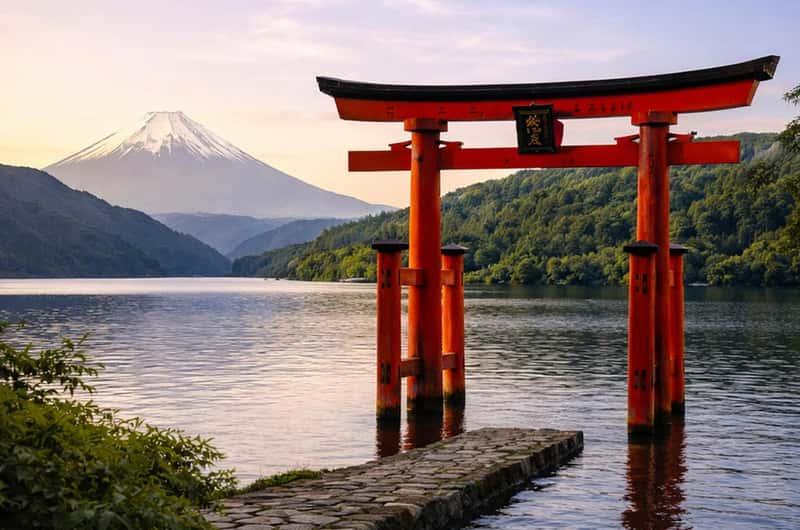
On a clear day, visitors can see Mount Fuji rising beyond the lake, creating one of the classic postcard views of Japan. The red torii gate of Hakone Shrine near the water adds another layer of beauty, especially when the lake is calm and the surrounding mountains are visible.
The important thing to understand is that Mount Fuji views are never guaranteed. Clouds, rain, haze, and seasonal weather can hide the mountain completely. This is not a reason to skip Hakone. It is just a reason to travel with realistic expectations.
Hakone is still beautiful even when Fuji stays hidden. The lake, forest, shrine, boats, and mountain atmosphere are worth the trip on their own.
Hakone Shrine and the Lakeside Torii
Hakone Shrine is one of the area’s most recognizable cultural stops.
The shrine sits near Lake Ashi, surrounded by tall trees and a quiet atmosphere. Its famous lakeside torii gate is one of the most photographed spots in Hakone, especially when visitors can frame it with the lake and Mount Fuji in the background.
This is also where travelers should slow down. It can be tempting to rush to the gate, take the photo, and leave. But the shrine area is more meaningful when you walk carefully, notice the trees, and treat it as a sacred space rather than only a photo location.
Hakone works best when visitors balance sightseeing with respect.
Owakudani and the Volcanic Landscape
Owakudani is another major Hakone highlight.
This volcanic valley is known for steam vents, sulfur smells, dramatic mountain views, and the famous black eggs cooked in naturally hot volcanic water. The area gives visitors a visible reminder that Japan is shaped by powerful geological forces.
Owakudani can be fascinating, but it also requires common sense. Weather, volcanic gas levels, ropeway operations, and safety notices can affect access. People with respiratory conditions, small children, or health concerns should pay close attention to official guidance before visiting.
When conditions are good, Owakudani adds a completely different texture to a Hakone trip. It feels less like a normal tourist stop and more like walking near the edge of the earth’s engine room.
The Hakone Open-Air Museum
Hakone is not only about nature. It is also one of Japan’s better art destinations.
The Hakone Open-Air Museum is especially popular because it combines sculpture, landscape, walking paths, indoor galleries, and outdoor installations. It is a strong option for families, couples, and travelers who usually do not want to spend hours inside a traditional museum.
That is the charm. The art is spread through open space. Visitors can walk, pause, explore, and enjoy mountain views while moving through the exhibits. It feels less formal than many museums, which makes it easier for children and casual travelers to enjoy.
On rainy or cloudy days, the museum can still be a good stop because Hakone does not need perfect weather to be memorable.
Onsen Culture in Hakone
Hakone is one of Japan’s classic hot spring destinations.
For many visitors, staying in a ryokan with onsen access is the highlight of the trip. A ryokan is a traditional Japanese inn, often with tatami rooms, futon bedding, seasonal meals, and baths fed by natural hot spring water.
This is where Hakone becomes more than sightseeing. It becomes rest.
After a long day of walking, riding trains, taking photos, and moving through the mountains, sitting quietly in a hot spring bath can be one of the most memorable parts of the journey.
Travelers should review onsen etiquette before going. Wash before entering the bath. Do not put towels in the water. Be quiet and respectful. Check tattoo policies if needed. Follow the rules of the specific facility.
A good onsen experience is not complicated, but it does require respect for local customs.
Day Trip or Overnight Stay?
Hakone can be done as a day trip from Tokyo, but an overnight stay is usually better.
A day trip works if you start early, choose a simple route, and accept that you cannot see everything. It is useful for travelers with limited time who want a taste of mountain scenery and hot springs.
An overnight stay gives Hakone room to breathe. You can enjoy a ryokan dinner, soak in an evening bath, wake up slowly, and visit attractions before or after the day-trip crowds arrive. You also have a better chance of catching Mount Fuji views if the weather changes between afternoon and morning.
If your Japan itinerary is already packed, one day in Hakone is still worth considering. If you can spare the night, Hakone becomes much more relaxing.
How to Get Around Hakone
Hakone is famous for its sightseeing loop, which can include trains, buses, cable cars, ropeways, and lake cruises.
That sounds complicated, but it is part of the fun. The transportation system is not just a way to move between attractions. It is part of the Hakone experience itself.
The Hakone Tozan Railway is known for mountain scenery and a winding route through the landscape. The ropeway offers dramatic views when the weather is clear. The Lake Ashi cruise gives visitors a different view of the mountains and shoreline.
Travelers should still plan carefully. Hakone has many moving parts, and transportation schedules matter. It is better to build a realistic route than to rush through every famous stop.
A Simple One-Day Hakone Plan
A strong one-day Hakone plan starts early from Tokyo.
Begin with transportation to Hakone-Yumoto, then move toward Gora and the Hakone Open-Air Museum. From there, continue by cable car and ropeway toward Owakudani if conditions allow. After that, head toward Lake Ashi for a sightseeing cruise and visit Hakone Shrine before returning.
This is a full day, and it can feel rushed if you start late.
Travelers who want a slower trip should cut one major stop. For example, choose either the museum or Owakudani as the main focus instead of trying to do everything. Hakone is more enjoyable when you do not treat it like a checklist.
A Better Overnight Hakone Plan
For an overnight trip, arrive in Hakone around late morning or early afternoon.
Spend the first day visiting the Hakone Open-Air Museum, Gora, or a local café. Check into a ryokan in the afternoon, enjoy the bath, have dinner, and let the evening be quiet.
On the second day, visit Owakudani, Lake Ashi, Hakone Shrine, and the old checkpoint area if time allows. This route feels much better because you are not forcing the entire region into one day.
Hakone is not a place that needs to be conquered. It is a place that should be absorbed.
When Is the Best Time to Visit Hakone?
Hakone can be visited year-round.
Spring brings fresh greenery and comfortable walking weather. Summer can be lush but humid, with clouds sometimes blocking Mount Fuji. Autumn is one of the most beautiful seasons, especially when the mountains begin changing color. Winter can offer clearer Fuji views and a cozy onsen atmosphere.
Rainy days are common, especially during Japan’s rainy season. But Hakone handles imperfect weather better than many destinations because it has museums, hot springs, cafés, ryokan stays, and atmospheric mountain scenery.
The best time depends on what you want. For Fuji views, winter often gives clearer skies. For greenery and flowers, spring and early summer can be lovely. For color, autumn is hard to beat.
What to Eat in Hakone
Hakone is not as famous for food as Tokyo, Osaka, or Kyoto, but it still has enjoyable local experiences.
Many travelers try black eggs from Owakudani. They are boiled in volcanic hot spring water, turning the shells dark. The legend says eating one may add years to your life, though visitors should treat that as folklore rather than health advice.
Ryokan meals are another highlight. Many inns serve multi-course Japanese dinners with seasonal ingredients. These meals can be a major part of the overnight experience.
You can also find soba, curry, cafés, sweets, and simple mountain-town comfort food around popular areas. The key is not expecting late-night city dining. Hakone is quieter, and many places close earlier than restaurants in Tokyo.
Who Should Visit Hakone?
Hakone is a good fit for many travelers.
Couples will enjoy ryokan stays, lake views, and onsen. Families can enjoy the Open-Air Museum, lake cruises, trains, and ropeways. Solo travelers can use Hakone as a peaceful reset. First-time visitors can see a different side of Japan without traveling too far from Tokyo.
Hakone may not be ideal for travelers who dislike transfers, hills, variable weather, or early closing times. It is also not the place to go if you want nightlife.
But if you want scenery, rest, tradition, and a mountain-town atmosphere, Hakone is one of Japan’s most rewarding short trips.
Travel Tips for Hakone
The best Hakone trip starts with realistic planning.
Check transportation updates before traveling. Confirm attraction hours. Watch the weather. Give yourself buffer time. Pack comfortable shoes. Bring a small towel if you plan to use foot baths or onsen. Keep luggage light if you are moving through the sightseeing loop.
Most importantly, do not make Mount Fuji the only reason you go. Fuji is a bonus. Hakone itself is the destination.
That mindset will make the trip much better.
Why Hakone Belongs on a Japan Itinerary
Hakone belongs on a Japan itinerary because it offers contrast.
A strong Japan trip should not be only big cities. Tokyo gives energy. Kyoto gives temples and tradition. Osaka gives food and nightlife. Hakone gives mountains, water, hot springs, and quiet.
That contrast matters. It helps travelers understand Japan as more than a list of famous urban landmarks. It shows how quickly the country can shift from train stations and neon streets to cedar forests, lake views, volcanic steam, and hot spring inns.
For visitors who want a slower, softer, more scenic side of Japan, Hakone is an easy choice.
Key Takeaways
Hakone is one of Japan’s best short-trip destinations for travelers who want hot springs, Mount Fuji views, Lake Ashi, museums, ryokan stays, and mountain scenery within reach of Tokyo.
A day trip is possible, but an overnight stay is better for travelers who want a calmer experience. Major highlights include Lake Ashi, Hakone Shrine, Owakudani, the Hakone Open-Air Museum, the Hakone Tozan Railway, and traditional onsen inns.
The most important travel advice is simple: do not rush Hakone. The destination works best when visitors leave time for weather, walking, soaking, and quiet.
FAQ
Is Hakone worth visiting from Tokyo?
Yes. Hakone is one of the best short trips from Tokyo because it offers mountains, hot springs, Lake Ashi, museums, and possible Mount Fuji views.
Can you visit Hakone as a day trip?
Yes, but it is a full day. Start early and choose your main stops carefully. An overnight stay is better if you want a slower trip.
Can you see Mount Fuji from Hakone?
Sometimes. Hakone offers famous Mount Fuji views, especially around Lake Ashi, but visibility depends heavily on weather and cloud cover.
What is Hakone best known for?
Hakone is best known for onsen hot springs, Lake Ashi, Hakone Shrine, Mount Fuji views, the Hakone Open-Air Museum, Owakudani, and ryokan stays.
Is Hakone good for families?
Yes. Families often enjoy the trains, ropeway, lake cruise, Open-Air Museum, and scenic outdoor areas. Families should still check transportation, weather, and safety notices before traveling.
Related Articles
Hakone in June: How to Plan a Rainy-Season Trip That Still Feels Worth It
https://www.newtoeducation.com/view-blog/hakone-in-june-how-to-plan-a-rainy-season-trip-that-still-feels-worth-it-6a39ab8611f58
Japan Travel 2026: Smarter Ways to See More Than Tokyo and Kyoto
https://www.newtoeducation.com/view-blog/japan-travel-2026-smarter-ways-to-see-more-than-tokyo-and-kyoto-6a336fd320370
Sources
Hakone Tourist Association — Hakone Japan Official Travel Guide
Hakone Tourist Association — Plan Your Trip
Hakone Navi — Official Hakone Travel Website