





Editorial Note
Minority-Owned Business Spotlight is a recurring New To Education series highlighting businesses with publicly reported minority, immigrant, veteran, women, or historically underrepresented founder stories. This article is intended for educational and informational purposes only. Inclusion in this series does not constitute an endorsement, sponsorship, paid promotion, certification claim, or recommendation of any company, product, or service. Business details may change over time, so readers should consult official company sources for the most current information.
In San Jose, California, Saapaaduu is showing how food can become more than a meal. It can become memory, culture, identity, and community.
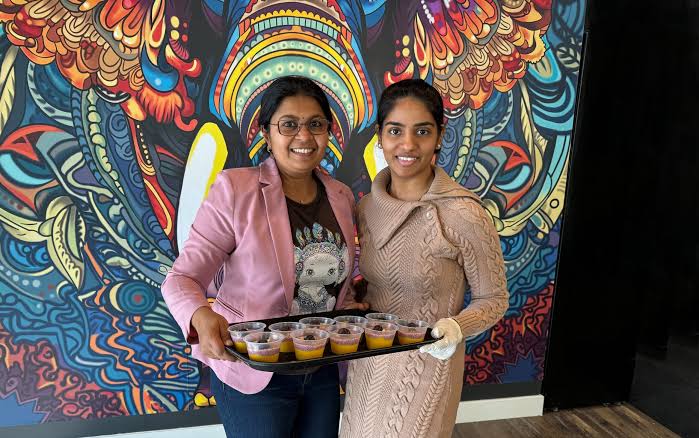
Saapaaduu is a South Indian restaurant located in San Jose, with a focus on homestyle dishes inspired by the food traditions of Tamil Nadu and southern India. The restaurant is publicly described as a women-owned business, and local coverage identifies Rukmani Srinivasan and Purnima Arunsankar as co-owners.
That matters because minority-owned and women-owned businesses often do more than serve customers. They carry stories. They preserve culture. They create jobs. They introduce communities to traditions that may be underrepresented in mainstream business spaces.
Saapaaduu is a strong example of that. It does not simply present Indian food as one broad category. It highlights a more specific regional identity, helping customers experience South Indian flavors, ingredients, and cooking traditions that are sometimes overshadowed by more familiar Indian restaurant menus in the United States.
A South Indian Restaurant With a Clear Identity
Indian cuisine is incredibly diverse. There is no single “Indian food” experience.
The food of northern India, southern India, western India, eastern India, and India’s many states, languages, religions, and communities can vary greatly. Dishes, spices, cooking techniques, grains, breads, oils, vegetables, and meal structures can all shift by region.
Saapaaduu’s value comes from its regional focus. Its menu and public identity center South Indian homestyle cooking, especially Tamil-inspired dishes. That gives the restaurant a clearer cultural voice.
For many customers, this may be an introduction to foods beyond the more commonly recognized Indian restaurant staples. Dosa, idly, kothu parotta, chatti choru, and other South Indian dishes offer a different understanding of what Indian cuisine can be.
That kind of representation matters. Food is one of the easiest ways for people to learn about culture, but it is also one of the easiest places for culture to be simplified. Saapaaduu helps push against that by giving South Indian food room to stand on its own.
Women-Owned and Community-Focused
Saapaaduu’s official website describes the restaurant as women-owned and emphasizes care, quality, and homestyle cooking. The restaurant says it avoids artificial colors, MSG, and industrial oils, focusing instead on ingredients and preparation that reflect comfort and care.
That language is important because it frames the business around nourishment, not just sales.
A restaurant can be successful because of food quality, but long-term community loyalty often comes from something deeper. Customers return when a place feels sincere. They return when the food feels connected to a story. They return when the people behind the business are clearly invested in what they are building.
For women entrepreneurs, especially immigrant or minority women in the restaurant industry, that kind of business-building can require persistence. Restaurants are difficult businesses. They involve long hours, rising costs, staffing challenges, customer expectations, food consistency, marketing, rent, and competition.
When a women-owned restaurant gains attention in a major food market like the Bay Area, it is worth noticing.
Why Saapaaduu Fits Silicon Valley
San Jose is part of Silicon Valley, one of the most diverse and globally connected regions in the United States. The area has a large South Asian and Indian American population, and food businesses often play an important role in community life.
For Indian American families, restaurants like Saapaaduu can provide a taste of home. For non-Indian customers, they offer a chance to learn through food in a welcoming way. For younger generations, they can become a bridge between family heritage and American life.
This is especially meaningful in Silicon Valley because the region is often discussed through technology, startups, investment, and engineering talent. But the communities that power Silicon Valley also need cultural spaces. Restaurants, grocery stores, temples, community centers, language schools, and small businesses help make the region feel livable and connected.
Saapaaduu belongs in that broader story.
It is not only part of the food scene. It is part of the cultural ecosystem.
Regional Cuisine as Cultural Education
One reason Saapaaduu makes a strong Minority-Owned Business Spotlight is that its food can educate.
Many people in the United States are familiar with a limited version of Indian cuisine. They may know butter chicken, naan, tikka masala, samosas, or biryani. Those dishes can be wonderful, but they do not represent the full range of Indian food traditions.
South Indian cuisine often places greater emphasis on rice, lentils, fermented batters, coconut, curry leaves, tamarind, pepper, mustard seeds, and regional spice combinations. Tamil Nadu-style food has its own rhythms and textures, from crispy dosas to comforting rice-based meals.
When a restaurant highlights those traditions, it helps expand public understanding.
That is education outside a classroom. A customer may walk in simply wanting lunch and walk out with a better understanding of India’s regional diversity.
The Power of Homestyle Food
The word “homestyle” matters.
Homestyle food is not only about taste. It is about feeling. It suggests recipes connected to family kitchens, daily meals, memory, and care. It does not always chase trendiness. It often values comfort, tradition, and consistency.
Saapaaduu’s public messaging leans into that idea. The restaurant describes its food as traditional, authentic, and rooted in recipes passed down through generations.
For immigrant and diaspora communities, homestyle food can be especially powerful. It can remind people of parents, grandparents, hometowns, festivals, school lunches, family gatherings, and childhood routines. It can also help preserve culture for younger generations who may be growing up far from their ancestral home.
That is why restaurants like Saapaaduu matter beyond the plate.
They help culture remain visible.
Local Recognition and Growing Attention
Saapaaduu has also received attention from local and regional food media.
San José Spotlight featured the restaurant in its Biz Beat coverage, identifying Rukmani Srinivasan and Purnima Arunsankar as co-owners. More recently, the San Francisco Chronicle highlighted Saapaaduu as a standout Indian restaurant in California, noting its Tamil Nadu-focused menu and growing reputation.
This kind of recognition can be important for small businesses. Local media coverage can introduce new customers, validate years of work, and help regional restaurants reach audiences beyond their immediate neighborhood.
It can also help correct a common problem in food coverage: treating immigrant cuisines as casual, cheap, or one-dimensional. Restaurants that preserve regional food traditions deserve serious attention, not just quick mentions.
Saapaaduu’s recognition shows how a focused, culturally grounded restaurant can stand out even in a crowded dining market.
Why Minority-Owned Businesses Matter
Minority-owned businesses contribute to communities in many ways.
They create jobs. They circulate money locally. They bring new ideas to the market. They preserve cultural traditions. They help neighborhoods feel more diverse, welcoming, and vibrant. They also give younger people examples of entrepreneurship that reflect their own backgrounds.
For Indian American and South Asian communities, businesses like Saapaaduu can help make cultural identity visible in everyday life. That matters in a country where immigrant communities often have to balance adaptation with preservation.
A restaurant may seem like a simple business, but it can carry a much larger message: our food belongs here, our stories belong here, and our community has something valuable to share.
Lessons for Entrepreneurs
Saapaaduu offers several useful lessons for entrepreneurs.
First, specificity can be powerful. Instead of trying to represent all Indian food, Saapaaduu leans into South Indian and Tamil-inspired cooking. That gives the restaurant a stronger identity.
Second, authenticity should be treated carefully. For a business like Saapaaduu, authenticity is not only a marketing word. It is tied to memory, region, recipes, and personal experience.
Third, community matters. Restaurants succeed when customers feel connected to the people and story behind the food.
Fourth, quality and values can become part of a brand. Saapaaduu’s messaging around care, ingredients, and avoiding artificial colors, MSG, and industrial oils gives customers a clearer sense of what the restaurant stands for.
Small businesses do not need to be everything to everyone. Sometimes the strongest business strategy is knowing exactly who you are.
Why This Story Matters for New To Education Readers
This story matters because business education should include real examples of culture, identity, and entrepreneurship.
Saapaaduu is not just a restaurant in San Jose. It is an example of how minority-owned and women-owned businesses can bring regional culture into the marketplace. It shows how food can become a form of education. It also shows how small businesses can help communities feel seen.
For students, this story can open conversations about entrepreneurship, immigration, cultural representation, food history, and local economies. For families, it is a reminder to support small businesses that preserve culture and create community. For entrepreneurs, it is a reminder that a clear identity can become a strength.
Saapaaduu’s story is ultimately about more than South Indian food.
It is about building a business that feels rooted.
Key Takeaways
Saapaaduu is a women-owned South Indian restaurant in San Jose, California, with a focus on homestyle dishes inspired by Tamil Nadu and southern India. Local coverage identifies Rukmani Srinivasan and Purnima Arunsankar as co-owners.
The restaurant stands out because it highlights regional Indian cuisine, not just a broad version of Indian food. Its focus on homestyle cooking, cultural memory, and community connection makes it a strong fit for New To Education’s Minority-Owned Business Spotlight series.
Saapaaduu’s story reminds us that small businesses can educate, represent, and preserve culture while serving their communities.
FAQ
What is Saapaaduu?
Saapaaduu is a South Indian restaurant in San Jose, California, focused on homestyle dishes inspired by Tamil Nadu and southern Indian food traditions.
Is Saapaaduu women-owned?
Saapaaduu’s official website publicly describes the restaurant as a women-owned business.
Who owns Saapaaduu?
San José Spotlight identifies Rukmani Srinivasan and Purnima Arunsankar as co-owners of Saapaaduu.
Why is Saapaaduu a good Minority-Owned Business Spotlight?
Saapaaduu is a strong spotlight because it highlights Indian and South Indian cultural representation, women entrepreneurship, regional cuisine, and community-centered small business ownership in California.
What kind of food does Saapaaduu serve?
Saapaaduu serves South Indian dishes, including items connected to Tamil Nadu-style cooking, homestyle meals, dosas, idly, kothu parotta, chatti choru, and other regional specialties.
Related Articles
10 Ways New To Education Can Help Your Business Grow
What You Can Do on New To Education
Sources
San José Spotlight — The Biz Beat: San Jose Restaurant Serves Dishes from Southern India




