




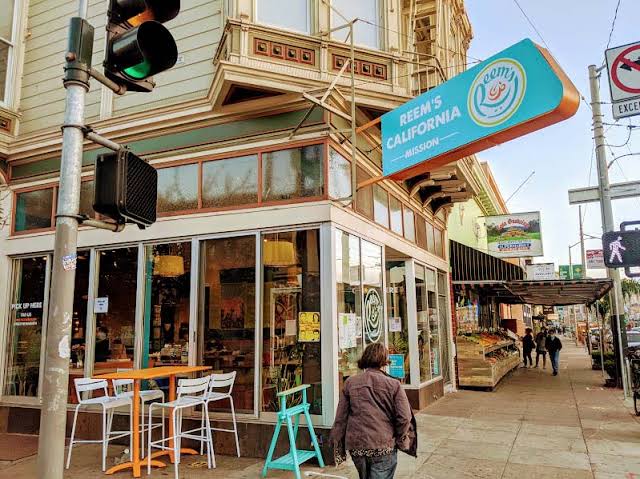

Editorial Note
Minority-Owned Business Spotlight is a recurring New To Education series highlighting businesses with publicly reported minority, immigrant, veteran, women, or historically underrepresented founder stories. This article is intended for educational and informational purposes only. Inclusion in this series does not constitute an endorsement, sponsorship, paid promotion, certification claim, or recommendation of any company, product, or service. Business details may change over time, so readers should consult official company sources for the most current information.
In Oakland, California, Reem’s California has built more than a bakery. It has built a story around Arab hospitality, cultural memory, community, and food as a bridge between people.
Founded by chef Reem Assil, Reem’s California is known for bringing Arab bakery culture into a modern California setting. Assil is publicly described as a Palestinian-Syrian chef based in Oakland, and her work draws from Arab foodways, community organizing, and the belief that food can be a vehicle for connection.
That makes Reem’s California a strong fit for New To Education’s Minority-Owned Business Spotlight series. It is not simply a restaurant story. It is a story about immigrant heritage, Middle Eastern food traditions, community-centered entrepreneurship, and the way small businesses can help culture remain visible in American cities.
In June 2026, Reem’s returned to Oakland with a new Jack London Square location. The reopening marked a homecoming for a business that first grew roots in Oakland’s Fruitvale neighborhood and became known for its Arab-Californian bakery identity.
A Business Rooted in Arab Bakery Culture
Reem’s California is inspired by Arab street-corner bakeries, the kind of places where bread, conversation, family, and community naturally come together.
That inspiration matters because bakeries are often more than places to buy food. In many cultures, they are gathering spaces. They are where people stop before work, pick up food for family, talk with neighbors, and stay connected to tradition.
Reem’s brings that idea into California through fresh baked bread, Arab flavors, local ingredients, and a welcoming restaurant environment. Jack London Square describes Reem’s as offering the warmth of Arab hospitality through the flavors, aromas, and techniques of the modern Arab street-corner bakery.
That is a clear cultural identity. Reem’s is not trying to flatten Middle Eastern food into something generic. It is presenting Arab food as specific, warm, regional, and deeply connected to community.
Reem Assil’s Founder Story
Reem Assil’s story is central to the business.
Her personal website describes her as an award-winning Palestinian-Syrian chef, speaker, author, and community-builder based in Oakland. It also identifies her as the founder of Reem’s California and describes the restaurant as inspired by Arab street-corner bakeries and the communities around them.
That founder story gives the business its emotional depth. Reem’s is connected to food, but also to heritage, migration, memory, and identity. Assil’s work has often been discussed through the lens of Arab foodways and social justice, showing how restaurants can become cultural spaces as well as commercial spaces.
For many entrepreneurs, the most powerful business ideas come from lived experience. Reem’s reflects that. It is not only selling bread and meals. It is sharing a worldview about hospitality, belonging, and the power of food to bring people together.
Why Reem’s Return to Oakland Matters
Reem’s return to Oakland matters because Oakland is part of the business’s origin story.
Reem’s first gained attention in Oakland’s Fruitvale neighborhood before expanding its presence in the Bay Area. In 2026, the business returned to Oakland with a new location in Jack London Square, giving the brand a renewed physical presence in the city where much of its reputation began.
According to San Francisco Chronicle coverage, the new Oakland location opened on June 26, 2026, in Jack London Square. The Chronicle described it as a celebrated Arab Californian bakery returning to Oakland after five years away.
That return is meaningful. Small businesses often change location, close, reopen, adapt, and rebuild. When a culturally significant business returns to a city, it can feel like more than a new storefront. It can feel like a community space coming back.
A Worker-Owned Café Model
One of the most interesting parts of Reem’s Oakland return is its worker-owned café model.
Recent coverage described the Jack London Square location as Reem’s first worker-owned café. The model places longtime staff into a deeper ownership role and reflects a broader vision of shared entrepreneurship.
That matters because ownership shapes opportunity.
In many restaurants, workers provide the daily labor that makes the business function but rarely share in ownership or long-term decision-making. A worker-owned model can create a different kind of business structure, one where employees have a stronger stake in the future of the café.
For New To Education readers, this is an important entrepreneurship lesson. Business ownership does not have to follow only one model. Some businesses are solo-owned. Some are family-owned. Some are investor-backed. Some are cooperatives. Some experiment with shared ownership.
Reem’s Oakland model gives readers a chance to think about how business can be built around both culture and economic participation.
Food as Cultural Education
Food can teach.
A customer may walk into Reem’s for bread, pastries, coffee, or a wrap, but they may also leave with a better understanding of Arab food culture. Dishes, spices, bread-making techniques, and hospitality traditions all carry history.
Arab cuisine is diverse. It includes many regions, languages, religious communities, family traditions, and local variations. For many Americans, Middle Eastern food is often simplified into a few familiar dishes. Businesses like Reem’s help broaden that understanding.
When a bakery introduces people to Arab flatbreads, spreads, pastries, spices, and street-food traditions, it becomes part of cultural education.
That kind of education does not always happen through lectures or textbooks. Sometimes it happens through taste, smell, conversation, and shared meals.
Why Minority-Owned Business Spotlights Matter
Minority-owned and immigrant-founded businesses play an important role in local economies.
They create jobs. They preserve culture. They introduce new ideas. They build neighborhood identity. They help communities feel represented. They also show younger people that entrepreneurship can reflect who they are, where they come from, and what they value.
A business like Reem’s California gives readers a real-world example of how culture can become a business strength. Its Arab bakery identity is not hidden. It is central to the brand.
That matters because minority entrepreneurs are sometimes pressured to make their businesses more generic in order to appeal to broader markets. Reem’s shows the opposite approach. It leans into identity, heritage, and community.
Specificity can be powerful.
Oakland as a Community Business Landscape
Oakland has a long history of cultural diversity, activism, food entrepreneurship, and community-rooted small businesses.
That makes it a fitting home for Reem’s. The city has often supported businesses that do more than simply sell products. Many Oakland businesses are connected to identity, neighborhood history, organizing, art, and community care.
Reem’s fits that landscape well. Its public story connects food with social meaning. Its return to Oakland’s waterfront gives the business a new stage while still keeping it tied to the Bay Area communities that helped shape it.
For visitors, Reem’s offers a food experience. For locals, it may represent something deeper: a business with roots, values, and a sense of place.
Lessons for Entrepreneurs
Reem’s California offers several lessons for entrepreneurs.
First, a clear cultural identity can become a business advantage. Reem’s does not present itself as a generic bakery. It presents itself through Arab hospitality and Arab bakery culture.
Second, founder stories matter. Customers often connect more deeply with businesses when they understand the people and values behind them.
Third, community can be part of the business model. Reem’s has built its reputation not only through food, but through a sense of gathering and belonging.
Fourth, ownership structures can evolve. The worker-owned café model shows that entrepreneurs can think creatively about who benefits from business growth.
Finally, returning to a community can be powerful. Reem’s Oakland reopening shows that a business story does not always move in a straight line. Sometimes growth means coming back.
Why This Story Matters for New To Education Readers
This story matters because business education should include cultural and community context.
Students and young entrepreneurs often learn about profit, branding, marketing, and operations. Those lessons matter. But businesses are also shaped by identity, place, history, and values.
Reem’s California gives readers a strong example of that bigger picture. It shows how a Middle Eastern founder story, Arab food traditions, worker ownership, and Oakland community life can come together in one business.
For students, this can open conversations about entrepreneurship, immigration, cultural representation, food history, labor models, and local economies. For families, it is a reminder that small businesses often carry stories worth learning. For entrepreneurs, it is a reminder that a business can be both practical and deeply personal.
Reem’s California is not just serving food. It is helping tell a story of Arab culture, community, and belonging in California.
Key Takeaways
Reem’s California is an Arab-Californian bakery and restaurant founded by Reem Assil, a Palestinian-Syrian chef based in Oakland. The business is inspired by Arab street-corner bakeries and the community spaces that surround them.
In June 2026, Reem’s returned to Oakland with a new Jack London Square location. Recent coverage described the new location as a worker-owned café model, adding another layer to the business’s entrepreneurship story.
For New To Education’s Minority-Owned Business Spotlight series, Reem’s California stands out because it connects Middle Eastern cultural representation, food entrepreneurship, worker ownership, and community-centered business building.
FAQ
What is Reem’s California?
Reem’s California is an Arab-Californian bakery and restaurant founded by chef Reem Assil. It is known for Arab bakery culture, fresh bread, Middle Eastern flavors, and community-centered food.
Where is Reem’s California located?
Reem’s has a location in Oakland’s Jack London Square, California. The business has also operated in other Bay Area locations over time.
Who founded Reem’s California?
Reem’s California was founded by Reem Assil, a Palestinian-Syrian chef, author, speaker, and community-builder based in Oakland.
Why is Reem’s California a good Minority-Owned Business Spotlight?
Reem’s is a strong spotlight because it highlights Arab and Middle Eastern cultural representation, a Palestinian-Syrian founder story, food entrepreneurship, and a community-centered business model.
Is Reem’s California officially certified as minority-owned?
This article does not make a formal certification claim. It highlights publicly reported founder identity, cultural background, and business story for educational purposes.
Related Articles
10 Ways New To Education Can Help Your Business Grow
What You Can Do on New To Education
Sources
Reem’s California — Official Website
Oakland Voices — Reem’s California to Reopen in Oakland’s Jack London Square




