





Editorial Note
Minority-Owned Business Spotlight is a recurring New To Education series highlighting businesses with publicly reported minority, immigrant, veteran, women, or historically underrepresented founder stories. This article is intended for educational and informational purposes only. Inclusion in this series does not constitute an endorsement, sponsorship, paid promotion, certification claim, or recommendation of any company, product, or service. Business details may change over time, so readers should consult official company sources for the most current information.
Some businesses sell products. Others sell memory.
La Monarca Bakery & Cafe does both.
Founded in Los Angeles by Mexican entrepreneurs Ricardo Cervantes and Alfredo Livas, La Monarca Bakery was inspired by the pan dulce, pastries, and bakery traditions the founders grew up enjoying in Mexico. The company’s official story describes the brand as “Inspired by Mexico, Made in Los Angeles,” and its mission centers on sharing the “Sweet Flavor of Mexico” through baked goods, coffee, hot chocolate, cookies, and cafe experiences.
For a Minority-Owned Business Spotlight, La Monarca is a strong story because it is not only about food. It is about culture, memory, community, Latino entrepreneurship, and the challenge of turning something deeply personal into a scalable business.
A concha, a cookie, or a cup of cafe de olla may seem simple. But for many families, those flavors carry history. They bring back mornings with parents, visits to neighborhood panaderias, holidays, family gatherings, and the feeling of home.
La Monarca built a business around that feeling.
The Story Behind La Monarca Bakery
La Monarca Bakery was founded in 2006 by Ricardo Cervantes and Alfredo Livas. Both founders are from Monterrey, Mexico, and both later attended Stanford Graduate School of Business, where they met before building the company together.
Their idea was rooted in something familiar: the panaderias they remembered from Mexico.
According to La Monarca’s official story, the bakery was created from the pan dulce and pastries the founders grew up enjoying in their hometown in Mexico. The company focuses on fresh ingredients and says its products are made without preservatives, artificial colors, or artificial flavors.
That mission gave La Monarca a clear identity from the beginning. It was not trying to be just another coffee shop or bakery. It was trying to recreate and reimagine a Mexican bakery experience in Los Angeles.
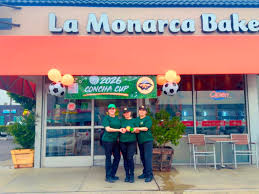
The first location opened in Huntington Park, California, a community with deep Latino roots. That choice mattered because La Monarca needed to earn trust from the very community whose food traditions it hoped to honor.
Why Pan Dulce Matters
Pan dulce is more than a sweet bread.
For many Mexican and Mexican American families, pan dulce is part of everyday life and special occasions. It can be breakfast, dessert, a coffee companion, a family treat, or something brought to someone’s home as a gesture of care.
It is also cultural language.
People may remember the sound of metal tongs against a tray, the smell of fresh bread, the look of colorful conchas, and the ritual of choosing pastries from a glass case. These details matter because food often holds memory better than words.
La Monarca’s business works because it understands that pan dulce is not just a product. It is emotional. It is cultural. It is tied to family, migration, belonging, and identity.
That is a powerful foundation for a Latino-owned business.
From Local Bakery to Los Angeles Brand
La Monarca did not remain a single bakery.
Over time, the company expanded into multiple Los Angeles-area locations and a wider packaged-food business. Stanford Graduate School of Business described La Monarca as a values-driven Mexican bakery chain and noted that by 2021 the company employed 220 people at 12 locations in the Los Angeles area, with $15 million in revenue.
That kind of growth shows how a culturally specific business can scale without losing its identity.
Growth can be difficult for food businesses because quality, consistency, staffing, training, supply chain, and customer experience all become harder as the company expands. A bakery must deliver the same feeling again and again. Customers may forgive one bad day, but they return because the experience feels reliable.
La Monarca’s growth suggests that the founders were not only focused on culture. They also had to build systems.
That is an important business lesson. Passion may start a company, but operations help it survive.
A Bakery as a Community Space
La Monarca’s story also matters because panaderias often function as community spaces.
A bakery is not only where people buy food. It can be where neighbors meet, families gather, students study, workers take a break, and customers feel seen. In Latino communities, bakeries can become part of the daily rhythm of life.
La Monarca leaned into that idea by creating bakery-cafe spaces that felt inviting.
That matters because the founders were not simply selling packaged pastries. They were building places. They were creating environments where Mexican flavors could be enjoyed with coffee, conversation, and comfort.
In an era when many businesses focus mostly on speed and convenience, La Monarca’s cafe model reminds us that physical spaces still matter. People still need places where culture feels visible and welcoming.
Mexican Flavor in a Modern Business Model
One of the strengths of La Monarca is how it blends tradition with modern business strategy.
The company offers traditional Mexican bakery items while also expanding into products such as Mexican wedding cookies, cafe de olla, Mexican hot chocolate, and packaged goods sold beyond its local bakery locations. La Monarca’s own announcements note retail expansion into stores such as Albertsons, Vons, Pavilions, Walmart, and Costco Mexico.
That expansion is important because it shows how a local food brand can reach customers in different ways.
Some people experience La Monarca by walking into a bakery. Others may discover it through grocery stores, online ordering, or packaged products. That kind of multi-channel growth allows a culturally rooted brand to reach people who may not live near a Los Angeles location.
It also shows students and entrepreneurs that a business can evolve. A bakery can become a cafe. A cafe can become a packaged-food brand. A local story can become a broader retail story.
The Latino Entrepreneurship Angle
La Monarca is a strong example of Latino entrepreneurship because it shows how culture can become a business advantage.
Too often, minority entrepreneurs are pressured to make their products more “mainstream” by reducing the cultural specificity that makes them meaningful. La Monarca’s story goes in the opposite direction. It builds around Mexican memory, Mexican ingredients, Mexican bakery traditions, and Mexican flavors.
That matters because cultural authenticity can be powerful when it is treated with care.
The founders did not need to hide the Mexican identity of the brand. They made it central.
That is a valuable lesson for minority-owned businesses. Identity does not have to be softened to be successful. In many cases, identity is what gives the business its strongest voice.
The Environmental Mission
La Monarca’s official story also notes that the company is a 1% for the Planet member and is committed to protecting and preserving the monarch butterfly, its namesake.
That adds another layer to the company’s identity.
The name “La Monarca” connects to the monarch butterfly, a symbol with strong ties to migration, Mexico, nature, and transformation. By connecting the brand to environmental care, the company gives the name more meaning than a logo.
This kind of mission can help a business connect with customers who care about sustainability and cultural symbolism.
For students, it is also a useful example of brand storytelling. A strong brand name can carry cultural, emotional, and environmental meaning at the same time.
Lessons for Students and Future Entrepreneurs
La Monarca offers several lessons for students and future entrepreneurs.
The first lesson is that business ideas can come from personal memory. The founders did not create something random. They built around flavors and experiences that mattered to them.
The second lesson is that culture can be a strength. La Monarca’s Mexican identity is not a side detail. It is the heart of the company.
The third lesson is that growth requires systems. Expanding from one bakery to multiple locations and retail distribution requires operations, training, quality control, supply chains, branding, and leadership.
The fourth lesson is that businesses can serve more than one purpose. La Monarca sells food, but it also creates gathering spaces, supports community identity, and connects customers to Mexican culture.
That is why this business works well as an educational spotlight. It helps readers see entrepreneurship as a mix of culture, strategy, service, and persistence.
Why Food Businesses Matter
Food businesses are often some of the most visible minority-owned businesses in a community.
Restaurants, bakeries, cafes, food trucks, catering companies, and packaged-food brands help preserve culture while also creating jobs and economic activity. They allow communities to share traditions with others and keep heritage alive across generations.
La Monarca’s story is a reminder that food entrepreneurship should not be dismissed as simple or small.
Running a bakery is complex. It involves product development, ingredients, equipment, production schedules, food safety, customer service, hiring, marketing, leases, pricing, and quality control. When a company grows into multiple locations and retail distribution, the complexity increases even more.
That makes food businesses valuable case studies for students.
They show business principles in a way people can taste, see, and understand.
Why This Story Matters for New To Education Readers
This story matters because New To Education focuses on learning, culture, opportunity, and real-world growth.
La Monarca Bakery shows how a Latino-owned business can turn cultural memory into a community-centered brand. It shows how immigrant and Mexican founder stories can shape entrepreneurship in the United States. It also shows how a business can grow while still honoring its roots.
For students, La Monarca is a lesson in business development. For families, it is a reminder that cultural traditions can carry economic and educational value. For future entrepreneurs, it is proof that personal experience can become a serious business foundation.
A bakery may look simple from the outside. But behind La Monarca are questions of identity, operations, culture, community, sustainability, and growth.
That is what makes it a strong Minority-Owned Business Spotlight.
La Monarca does not only sell the sweet flavor of Mexico. It shows how memory can become a mission.
Key Takeaways
La Monarca Bakery & Cafe was founded in 2006 by Mexican entrepreneurs Ricardo Cervantes and Alfredo Livas.
The company was inspired by the pan dulce and pastries the founders grew up enjoying in Mexico and was built around sharing the “Sweet Flavor of Mexico” in Los Angeles and beyond.
La Monarca has grown from a local bakery into a broader Mexican bakery-cafe and packaged-food brand, with multiple Los Angeles-area locations and retail expansion.
For New To Education readers, La Monarca is a strong example of Latino entrepreneurship, cultural preservation, community-building, and values-driven business growth.
FAQ
What is La Monarca Bakery?
La Monarca Bakery & Cafe is a Mexican bakery-cafe brand based in Los Angeles. It is known for pan dulce, cookies, cakes, Mexican coffee, hot chocolate, and other Mexican-inspired bakery products.
Who founded La Monarca Bakery?
La Monarca Bakery was founded by Ricardo Cervantes and Alfredo Livas, two entrepreneurs from Mexico who met while studying at Stanford Graduate School of Business.
Why is La Monarca a good Minority-Owned Business Spotlight?
La Monarca is a strong spotlight because it connects Latino entrepreneurship, Mexican cultural traditions, community spaces, food business growth, and cultural representation.
What makes La Monarca different?
La Monarca combines traditional Mexican bakery flavors with a modern bakery-cafe experience and packaged retail products. Its brand is built around the “Sweet Flavor of Mexico.”
Where did La Monarca Bakery begin?
The first La Monarca Bakery opened in Huntington Park, California, in 2006.
Related Articles
10 Ways New To Education Can Help Your Business Grow
What You Can Do on New To Education
Sources
La Monarca Bakery — Official Website
Stanford Graduate School of Business — Maker: La Monarca Bakery, the Smells and Flavors of Home
Stanford Graduate School of Business — La Monarca: Scaling a Values-Driven Mexican Bakery Chain
Eater LA — A Factory Tour of La Monarca, LA’s Busiest and Most Prolific Panadería Chain
LA Weekly — The Meteoric Metamorphosis of La Monarca Panaderia
NBC New York — How Two Grad School Friends Got Their Mexican Cookies Into Costco Stores
Axios — Spotlight: Ricardo Cervantes
New To Education — 10 Ways New To Education Can Help Your Business Grow




