



Editorial Note
Minority-Owned Business Spotlight is a recurring New To Education series highlighting businesses with publicly documented minority, immigrant, women, veteran, Indigenous, or historically underrepresented founder stories.
This article is intended for educational and informational purposes only. Inclusion does not constitute an endorsement, sponsorship, paid promotion, formal minority-business certification claim, or recommendation of any company, product, fragrance, or service.
New To Education is not affiliated with Harlem Candle Company, founder Teri Johnson, its retailers, fragrance partners, employees, or cultural institutions mentioned in this article.
Product availability, ingredients, retail partnerships, prices, and business operations may change. Candles should always be used according to the manufacturer’s safety instructions and should never be left burning unattended.
A candle can provide light, fragrance, and atmosphere.
In the hands of Harlem Candle Company founder Teri Johnson, it can also tell a story.
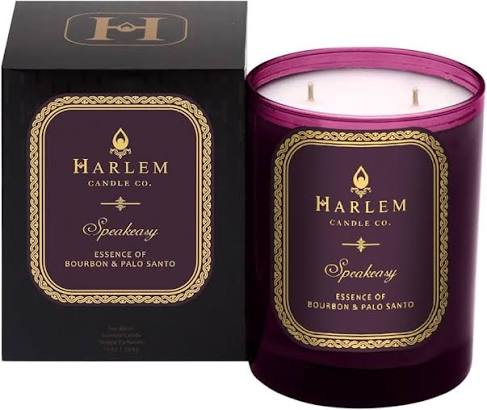
Founded in New York in 2014, Harlem Candle Company is a Black-owned luxury home-fragrance brand inspired by the art, music, literature, nightlife, and creative personalities associated with Harlem.
Its candles and fragrances draw inspiration from figures such as Billie Holiday, Langston Hughes, Josephine Baker, Duke Ellington, and other artists whose work helped shape Black American culture.
The company does not treat Harlem merely as a fashionable name.
Its identity is built around the neighborhood’s history, particularly the Harlem Renaissance and the generations of Black musicians, writers, performers, thinkers, and residents who made it one of the most important cultural centers in the United States.
What began with Johnson making candles in her Harlem kitchen developed into a nationally distributed fragrance business.
The company now offers candles, diffusers, room sprays, personal fragrance, body products, and gift collections while maintaining storytelling as one of the central features of the brand.
A Business Inspired by Harlem
Harlem is more than a neighborhood in northern Manhattan.
It has served as a major center of African American culture, politics, literature, music, religion, entrepreneurship, and community life.
During the Harlem Renaissance of the 1920s and 1930s, Black artists and intellectuals helped reshape American culture through poetry, novels, painting, journalism, theater, dance, and jazz.
The neighborhood later remained important to civil-rights organizing, Black political leadership, religious institutions, music, fashion, and business.
Johnson used this history as the foundation for Harlem Candle Company.
The company describes its fragrances as being inspired by specific places, moods, artists, and moments connected to Harlem.
One candle may evoke a jazz lounge. Another may reference a writer, performer, or historic residence.
This gives each product more than a scent profile.
It gives the customer a story to enter.
That combination of luxury fragrance and cultural history distinguishes Harlem Candle Company in an industry filled with products that may be visually attractive but emotionally interchangeable.
Teri Johnson’s Path to Entrepreneurship
Teri Johnson did not begin her professional life as a traditional fragrance-company executive.
She developed experience through travel, lifestyle media, television production, storytelling, and cultural exploration.
Her international travel exposed her to fragrance traditions, markets, ingredients, and the powerful connection between scent and memory.
Johnson has described making approximately 50 candles in her Harlem kitchen as Christmas gifts for friends and relatives.
The positive response encouraged her to consider whether the project could become a business.
She recognized that her interest in fragrance could be connected to the history and creative identity of Harlem.
Harlem Candle Company officially began in 2014.
Johnson’s path demonstrates that entrepreneurship does not always begin with a fully formed company plan.
Sometimes it begins with a personal interest, a small creative experiment, and the realization that other people value the result.
Why Fragrance Was the Right Medium
Scent is strongly connected to memory.
A familiar fragrance can bring back the feeling of a home, person, season, celebration, or city almost instantly.
Johnson used that emotional quality to connect customers with Harlem’s cultural history.
A book can explain the Harlem Renaissance through dates, biographies, and literary analysis.
A candle offers another entrance.
The customer may light a fragrance inspired by Billie Holiday while listening to her music, reading about her life, or imagining a Harlem jazz club.
This does not replace historical learning.
It can make someone curious enough to begin it.
Fragrance also provided Johnson with a product category that could combine design, storytelling, history, and everyday use.
The candles could function as home décor, personal ritual, gifts, and cultural objects at the same time.
That versatility helped create a brand larger than a single scent.
The Harlem Renaissance Became a Living Brand Foundation
Businesses sometimes borrow historical imagery because it looks elegant or creates nostalgia.
Harlem Candle Company takes a more developed approach by connecting individual products with specific Black cultural figures and stories.
The Harlem Renaissance was not only an artistic movement.
It was part of a larger effort by Black Americans to define themselves publicly rather than accept degrading stereotypes created by others.
Writers, musicians, visual artists, and performers used their work to express Black beauty, intelligence, complexity, humor, desire, pain, and political awareness.
A modern Black-owned company inspired by that period extends the same principle into commerce.
The business controls how the cultural story is presented and benefits economically from the products developed around it.
That ownership matters.
Black culture has frequently generated enormous commercial value while Black creators and communities received limited financial benefit.
Harlem Candle Company offers one example of cultural inspiration remaining connected to Black ownership and leadership.
Billie Holiday, Josephine Baker, and Other Cultural Figures
Several of the company’s best-known fragrances reference Black artists and cultural figures.
Billie Holiday, one of the most influential jazz singers of the twentieth century, has inspired products that connect fragrance with her voice, style, and emotional intensity.
Josephine Baker’s life provides another rich source of inspiration.
Baker became an internationally recognized performer, challenged racial boundaries, supported the French Resistance during World War II, and participated in the American civil-rights movement.
The company has also drawn from poets, musicians, locations, and artistic communities associated with Harlem.
Using historical figures within commercial products carries responsibility.
The person should not be reduced to attractive packaging while the difficult parts of their life disappear.
The strongest cultural products encourage customers to learn more rather than suggesting that a fragrance fully represents a human life.
Harlem Candle Company’s storytelling model creates that opportunity by naming its sources of inspiration and directing attention back toward Black cultural history.
Starting in a Kitchen Created an Authentic Origin Story
Many consumer-product businesses create polished founder stories after they become successful.
Harlem Candle Company’s early story is compelling because it is ordinary and recognizable.
Johnson began making products in her kitchen.
She tested scents, learned candle production, shared them with people she knew, and observed their reactions.
This is how many small businesses begin.
The founder starts with limited space, equipment, money, and knowledge. The home becomes a temporary workshop, storage area, office, and shipping department.
The kitchen origin should not be romanticized too heavily.
Turning a handmade product into a professional brand requires technical learning, safety standards, packaging, inventory control, insurance, customer service, and financial risk.
Still, the early handmade stage allowed Johnson to develop the business gradually.
She could test whether customers connected with the concept before investing in a larger operation.
Building a Luxury Brand Required More Than a Good Story
Cultural storytelling may attract initial attention, but luxury customers also expect product quality.
A candle must burn properly, distribute fragrance effectively, remain visually appealing, and perform consistently from one purchase to the next.
Packaging must feel intentional.
Fragrance combinations must be distinctive enough to justify the price while remaining appealing to customers who may have different preferences.
Harlem Candle Company therefore needed to compete on two levels.
Its cultural identity had to feel authentic, and its physical products had to meet the standards of the luxury home-fragrance market.
This is one reason the brand’s growth is important.
Customers may purchase once because they appreciate the Harlem story.
They return only when they also enjoy the fragrance and product experience.
Purpose may bring someone to a brand.
Performance helps keep them there.
Black Luxury Challenges a Persistent Market Assumption
Black-owned businesses are often expected to compete primarily through affordability or community obligation.
Luxury positioning challenges that assumption.
Harlem Candle Company presents Black history, art, and cultural identity as worthy of premium design and pricing.
This matters because mainstream luxury markets have often used European history, architecture, aristocracy, fashion, and art as symbols of refinement while treating Black culture as informal, urban, or mass-market.
Johnson’s company places Black musicians, poets, performers, and neighborhoods within a luxury framework.
The message is not that culture becomes valuable only when attached to a premium product.
The message is that Black history already possesses sophistication, beauty, romance, and artistic depth.
The business gives those qualities a commercial form that luxury retailers and consumers recognize.
Harlem Is a Place, Not Just an Aesthetic
Harlem’s cultural influence has made its name attractive to marketers.
However, Harlem is also a real community dealing with housing pressure, commercial change, tourism, displacement, and debates over who benefits from the neighborhood’s popularity.
A brand using Harlem’s name carries an obligation to understand that complexity.
Johnson’s connection to the neighborhood helps distinguish the company from outside businesses using Harlem as a fashionable theme.
She lived in Harlem, built the brand there, and developed its identity through an ongoing relationship with the area’s history.
Still, no single business can represent every Harlem resident or institution.
The neighborhood contains different generations, income levels, ethnic backgrounds, religions, political views, and experiences.
Harlem Candle Company’s work should therefore be understood as one founder’s interpretation of Harlem—not the complete definition of the community.
Storytelling Helps the Company Compete
Candles are widely available.
Customers can purchase inexpensive candles from supermarkets, large retailers, online marketplaces, luxury boutiques, and independent makers.
This creates a difficult business environment.
A small company cannot compete only by offering wax and fragrance.
It needs a reason for customers to remember the brand.
Harlem Candle Company uses narrative as that difference.
A product connected to a historical figure or cultural moment gives customers something to discuss, gift, display, and learn from.
Storytelling also gives the company material for product descriptions, social media, retail displays, interviews, events, and collaborations.
This does not mean the story is merely a marketing trick.
The best brand storytelling emerges from a real relationship between the founder and the subject.
Johnson’s long-standing interest in travel, fragrance, jazz, Harlem, and Black cultural history gives the company a consistent creative foundation.
Retail Partnerships Expanded the Company’s Reach
Independent brands often face a difficult decision.
Selling directly through a website provides greater control and potentially stronger margins.
Major retail partnerships can introduce the products to far more customers but may involve lower margins, production pressure, strict delivery requirements, and less control over presentation.
Harlem Candle Company developed relationships with prominent retailers, helping move the brand beyond a small local audience.
Retail placement can provide credibility in the luxury market because customers encounter the products alongside established fragrance and beauty companies.
It also exposes the business to customers who may not have searched specifically for a Black-owned company.
That broader reach is important.
A minority-owned brand should not have to depend only on customers who purchase primarily to support minority ownership.
The company should be able to compete for anyone seeking a strong fragrance, attractive design, or meaningful gift.
Expansion Into Personal Fragrance
Johnson later expanded her work beyond candles through Harlem Perfume Company.
The move from home fragrance to personal fragrance is logical but not automatic.
A candle helps shape a room.
Perfume becomes part of a person’s body, clothing, identity, and public presentation.
Customers may be far more particular about what they wear than what they burn at home.
Personal fragrance also involves different formulation, testing, packaging, distribution, and marketing considerations.
The expansion demonstrates that Johnson was building a larger fragrance enterprise rather than remaining limited to one successful candle concept.
It also gave the company additional ways to interpret Black cultural history through scent.
Johnson has discussed working with professional perfumers and gaining greater recognition as retailers and the fragrance industry became more willing to engage with diverse-owned brands.
Access to Capital Remains a Major Issue for Black Founders
Harlem Candle Company’s success should not hide the financial barriers surrounding Black entrepreneurship.
Black founders often have less access to inherited wealth, traditional financing, investor networks, and early-stage capital.
Consumer-product businesses can be especially expensive.
The founder may need to pay for product development, materials, manufacturing, testing, packaging, photography, shipping, marketing, and inventory before the products generate revenue.
Unsold inventory ties up money.
A large retail order may look exciting but still create a cash-flow problem if the company must finance production months before receiving payment.
Johnson reportedly invested substantial personal funds into developing the business, demonstrating both commitment and the financial risk founders may accept when outside capital is limited.
Her experience fits a broader pattern in which Black women entrepreneurs build rapidly growing businesses while remaining underrepresented in venture financing and institutional investment.
Representation Must Be Supported by Real Purchasing
Following the racial-justice protests of 2020, many retailers and corporations publicly promised to support Black-owned businesses.
Some created special sections, temporary promotions, and diversity commitments.
Black founders later reported that not all of these efforts produced substantial or lasting commercial support.
A company may feature a Black-owned brand in advertising while placing only a very small product order.
This creates visibility without enough revenue to support growth.
Johnson has discussed this tension within the beauty and fragrance industries, noting that some retailers developed genuine partnerships while others appeared more interested in public appearance than meaningful investment.
The lesson for consumers and corporations is clear.
Support cannot consist only of mentioning a company.
It requires purchasing, reordering, fair contracts, shelf placement, marketing investment, and long-term relationships.
A Black Woman Founder in the Fragrance Industry
Johnson’s position as a Black woman founder is important because fragrance and beauty leadership has historically lacked proportional Black representation.
Black consumers have long influenced beauty, fashion, music, and lifestyle markets.
Yet the brands generating revenue from those influences have not always been Black-owned.
Harlem Candle Company allows a Black woman founder to control the product development, history, visual language, and business strategy surrounding her brand.
That control affects which figures are celebrated, how stories are told, and where the economic benefit goes.
It also creates a visible example for younger entrepreneurs.
Seeing a Black woman operate within the luxury fragrance market can expand what students and aspiring founders imagine as possible.
Representation is not a substitute for capital, training, or opportunity.
It can, however, make those ambitions easier to picture.
The Business Turns Cultural Knowledge Into Intellectual Property
One of Harlem Candle Company’s most valuable assets is not physical inventory.
It is the company’s ability to connect fragrance with carefully developed historical storytelling.
That knowledge influences product names, packaging, copywriting, visual design, collaborations, and customer experience.
In business terms, this becomes intellectual property.
The company has developed a recognizable system for interpreting Harlem through scent.
Other companies can sell candles inspired by jazz or New York.
They cannot easily reproduce Johnson’s specific combination of founder perspective, brand history, product design, and audience trust.
This provides an important lesson for entrepreneurs.
Knowledge developed through culture, travel, education, family, community, or personal interests can become part of a defensible business model.
The strongest businesses do not always invent a completely new product category.
Sometimes they introduce a perspective that competitors cannot authentically copy.
Cultural Products Should Encourage Learning
A customer may first encounter Billie Holiday, Langston Hughes, or Josephine Baker through a candle description.
That may seem like an unusual educational pathway.
Learning often begins with curiosity rather than a classroom assignment.
A scent, song, meal, building, or object can lead someone toward a biography, documentary, museum, or book.
Harlem Candle Company’s products can therefore function as invitations.
The candle does not teach the entire history.
It gives the customer a name, mood, place, and starting point.
This approach can be useful for educators and families interested in making cultural history feel more immediate.
The important step is moving beyond the product.
Customers should learn about the person’s work, struggles, achievements, and historical environment rather than treating the name as decoration.
Candle Safety Is Part of Responsible Business
Candles create an open flame and must be treated carefully.
Consumers should keep them away from children, pets, curtains, paper, bedding, and other flammable materials.
They should be placed on stable, heat-resistant surfaces and never left unattended.
Wicks may need trimming according to the manufacturer’s instructions to reduce smoke and help the candle burn properly.
A candle should also be discontinued when only a small amount of wax remains if continued burning could overheat the container.
Fragrance sensitivity is another consideration.
Some people may experience headaches, irritation, or respiratory discomfort around scented products.
Opening windows, limiting burn time, or avoiding fragranced candles may be appropriate depending on personal needs.
Supporting a business does not require using a product that creates discomfort or risk.
Lessons for Other Minority-Owned Businesses
Harlem Candle Company offers several practical lessons.
The first is that cultural specificity can create a larger audience.
Johnson did not make the brand generic in order to appeal to more people. She built it around Harlem’s distinct history and trusted customers to find value in that specificity.
The second lesson is that storytelling must be supported by product quality.
A meaningful founder story may earn attention, but performance earns repeat customers.
The third lesson is that small experiments can reveal larger opportunities.
The business began with candles made as gifts rather than a national launch.
The fourth lesson is that entrepreneurs can build businesses from knowledge gained outside traditional corporate paths.
Travel, media, history, design, and cultural curiosity all contributed to Johnson’s approach.
Finally, growth should be measured through durable relationships rather than publicity alone.
Retailers, investors, and customers provide meaningful support when they purchase consistently and allow the company to plan beyond one promotional moment.
How Customers Can Support Black-Owned Businesses
Supporting Black-owned businesses begins with verifying ownership and purchasing products that genuinely meet a need or interest.
Customers can buy directly from the business, recommend it, give fair reviews, subscribe to newsletters, attend events, and purchase from retail partners that maintain meaningful relationships with Black-owned brands.
Support should not be limited to Black History Month or periods of national protest.
Businesses require steady revenue throughout the year.
Customers should also avoid expecting Black-owned companies to be perfect merely because their ownership carries social significance.
They should be evaluated fairly on product quality, service, price, transparency, employee treatment, and customer experience.
Meaningful support combines cultural awareness with ordinary commercial respect.
Key Takeaways
Harlem Candle Company is a Black-owned luxury fragrance company founded by Teri Johnson in New York in 2014.
The company began after Johnson created candles in her Harlem kitchen as gifts for friends and family.
Its products are inspired by Harlem’s art, music, literature, nightlife, and cultural history.
The Harlem Renaissance serves as one of the company’s central creative foundations.
Products reference influential Black figures and cultural traditions, including jazz singers, writers, performers, and artists.
The company expanded from candles into diffusers, room sprays, body products, and personal fragrance.
Johnson’s background in travel, media, lifestyle storytelling, and culture helped shape the brand.
Harlem Candle Company demonstrates how Black history can be presented through contemporary luxury without separating cultural value from Black ownership.
Its success also highlights the importance of product quality, retail partnerships, access to capital, and long-term support for Black-owned brands.
Consumers should follow candle-safety instructions and consider fragrance sensitivities when using scented products.
This article is informational and does not constitute an endorsement, paid promotion, sponsorship, or formal certification claim.
FAQ
Is Harlem Candle Company Black-owned?
Yes. It was founded by Black entrepreneur Teri Johnson and is widely identified as a Black-owned fragrance company.
When was Harlem Candle Company founded?
The company was founded in 2014.
Who is Teri Johnson?
Teri Johnson is a fragrance entrepreneur, travel and lifestyle expert, storyteller, and the founder of Harlem Candle Company and Harlem Perfume Company.
Why is the company named after Harlem?
Its products and identity are inspired by Harlem’s cultural history, especially the Harlem Renaissance, jazz, literature, art, nightlife, and influential Black residents.
What does Harlem Candle Company sell?
The company sells luxury candles, home-fragrance products, diffusers, room sprays, body products, gifts, and related fragrance items.
Are its products based on real historical figures?
Several collections and fragrances draw inspiration from musicians, writers, performers, and cultural figures connected to Black history and Harlem.
Did the business really begin in a kitchen?
Yes. Johnson has described making approximately 50 candles in her Harlem kitchen as gifts before developing the idea into a company.
Does the company sell perfume?
Johnson expanded into personal fragrance through Harlem Perfume Company.
Are scented candles safe for everyone?
Not necessarily. Some people are sensitive to fragrance or smoke. Candles also create an open flame and should be used only according to safety instructions.
Is this article an endorsement?
No. It is an educational minority-owned business spotlight and does not constitute an endorsement, paid promotion, sponsorship, or certification claim.
Final Thoughts
Harlem Candle Company proves that history does not need to remain behind museum glass.
It can enter everyday life through scent, design, music, storytelling, and objects people use in their homes.
Teri Johnson recognized that Harlem’s cultural legacy could inspire a luxury fragrance company without being reduced to a logo or visual trend.
Her business celebrates artists and communities that helped shape American culture while placing a Black woman entrepreneur at the center of the commercial story.
That position matters.
Black culture has often been copied, sold, and celebrated while Black ownership remained limited.
Harlem Candle Company offers a different model.
The history inspires the product, and a Black-owned business controls the brand built around it.
The company’s rise from a Harlem kitchen to wider retail distribution also demonstrates what can happen when a founder connects a personal passion with a clearly defined audience.
Johnson did not invent candles.
She created a reason for her candles to exist.
Each fragrance asks customers to experience Harlem not only as a location, but as a collection of voices, rooms, songs, memories, and possibilities.
That is what gives the company its strongest competitive advantage.
Its products may fill a room with fragrance.
Its stories can fill that room with history.
Related Articles
Minority-Owned Business Spotlight: African American Expressions
https://www.newtoeducation.com/view-blog/minority-owned-business-spotlight-african-american-expressions-6a4cd60cbfc34
Minority-Owned Business Spotlight: Partake Foods Makes Allergy-Friendly Snacks More Inclusive
https://www.newtoeducation.com/view-blog/minority-owned-business-spotlight-partake-foods-makes-allergy-friendly-snacks-more-inclusive-6a4f52aa61a7c
Sources
Harlem Candle Company — About Us
Harlem Candle Company — Official Website
ABC7 New York — Harlem Candle Company Founder Brings Harlem Renaissance History to Life
Shopify — From Kitchen Side Hustle to Sephora: How Harlem Candle Company Found Its Scent of Success
Essence — Teri Johnson Celebrates Black Icons Through Fragrance
Bluemercury — The Founders Series: Teri Johnson
InStyle — Black Beauty Founders on the Change They Are Still Waiting to See