





Editorial Note
Minority-Owned Business Spotlight is a recurring New To Education series highlighting businesses with publicly reported minority, immigrant, veteran, women, or historically underrepresented founder stories. This article is intended for educational and informational purposes only. Inclusion in this series does not constitute an endorsement, sponsorship, paid promotion, certification claim, or recommendation of any company, product, or service. Business details may change over time, so readers should consult official company sources for the most current information.
Some businesses are born from opportunity. Others are born from necessity.
Partake Foods is one of those stories.
Founded by Denise Woodard, Partake Foods began after Woodard’s daughter, Vivienne, was diagnosed with serious food allergies. Like many parents, Woodard wanted her child to be able to enjoy snacks safely without feeling excluded from birthday parties, school events, sleepovers, or everyday treats. When she struggled to find allergy-friendly snacks that met her standards for taste and ingredients, she decided to create her own.
That decision became Partake Foods, a snack company built around a simple but powerful mission: making delicious snacks more inclusive for people with dietary restrictions and for families who want better options.
For a Minority-Owned Business Spotlight, Partake is a strong story because it connects African American entrepreneurship, motherhood, food allergy awareness, consumer packaged goods, funding barriers, representation, and the courage to build a company from a deeply personal need.
The Story Behind Partake Foods
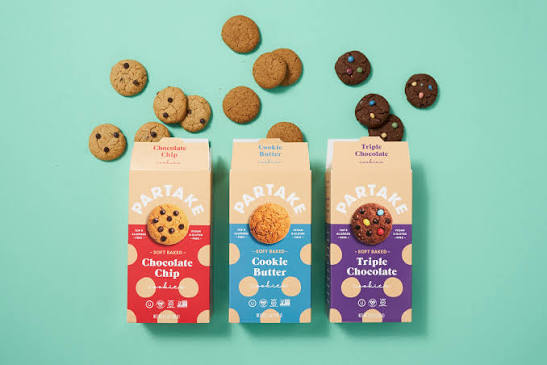
Partake Foods was founded in 2016 after Denise Woodard’s daughter was diagnosed with life-threatening food allergies. According to the company’s official story, Partake was born from “love, necessity, and a big idea” centered on safe snacks for all.
That emotional beginning matters.
Many successful businesses start when someone experiences a problem personally and realizes that many other people may be facing the same challenge. For Woodard, the problem was not abstract. It was her child. She wanted Vivienne to enjoy snacks without fear and without feeling left out.
That is what makes Partake’s mission easy to understand.
The brand focuses on snacks that are free from the top nine allergens. Its official website describes Partake products as made to give “delicious peace of mind” to people with dietary restrictions while still being enjoyable for everyone.
That balance is important. Partake is not only for people with allergies. It is also trying to make allergy-friendly food taste good enough that anyone can enjoy it.
Why Food Allergies Matter
Food allergies can affect more than what someone eats.
For children, allergies can affect school, friendships, parties, travel, sports, sleepovers, and family routines. A snack that seems simple to one child may be dangerous for another. Parents may have to read labels carefully, ask questions constantly, and worry about cross-contact or hidden ingredients.
That kind of stress can make children feel different or excluded.
Partake’s story matters because it recognizes that food inclusion is not just a health issue. It is also a social issue. Children want to participate. They want to eat what their friends are eating. They want to be part of the moment.
A cookie can seem small, but for a child with allergies, a safe cookie can mean being included.
That is the deeper meaning behind Partake’s product line.
Denise Woodard’s Founder Journey
Denise Woodard’s founder journey is one of the strongest parts of the Partake story.
Before launching Partake, Woodard worked in consumer packaged goods and sales, including leadership experience with Coca-Cola’s Venturing and Emerging Brands group. That background gave her useful industry experience, but it did not make building Partake easy.
Like many Black women founders, Woodard faced major barriers while trying to raise money and grow the company. Partake’s official story says she received 86 rejections before getting a major yes from Marcy Venture Partners, which invested $1 million and led the company’s seed round.
That part of the story is important because it shows how persistence can matter as much as the original idea.
A good product does not automatically open doors. Founders still have to pitch, prove demand, face rejection, improve, and keep going. For minority founders, especially Black women founders, access to capital has historically been much harder.
Woodard’s journey makes Partake more than a snack company. It makes it a case study in resilience.
A Historic Fundraising Milestone
Partake’s fundraising story has received attention because Woodard made history in consumer packaged goods.
Partake’s official website says Denise became the first Black woman to raise more than $1 million for a packaged food company. Other business profiles have also highlighted the significance of that milestone.
That achievement matters because it points to a larger issue in entrepreneurship: funding access.
Black women are among the most entrepreneurial groups in the United States, but they often receive a very small share of venture capital. When a founder like Woodard breaks through that barrier, it is meaningful not only for her company but also for future founders watching the path.
Representation matters in business because people need to see what is possible.
Woodard’s story tells future entrepreneurs that rejection is real, but it does not have to be the end of the story.
Building a Brand Around Inclusion
Partake’s brand is built around inclusion.
That word can sometimes be overused, but in Partake’s case, it is practical. The company makes products free from the top nine allergens, which include common ingredients that can cause serious reactions for many people. The goal is not only to sell snacks but to make snack time safer and more welcoming.
This is a useful lesson for students and entrepreneurs.
Inclusion is not only a slogan. It can be designed into a product.
A company can ask: Who is being left out? What problem do they face? How can we design something that allows more people to participate?
Partake answered those questions through food.
That is why the company’s mission is easy for families to understand. It is not trying to solve every food problem, but it is addressing a real need in a practical way.
Growth Into National Retail
Partake has grown far beyond its early days.
Public profiles report that the company’s products have expanded into thousands of retail stores, including major retailers such as Target and Whole Foods. Arizona State University’s W. P. Carey School of Business reported that Partake products are available in more than 17,000 retailers, while more recent profiles have cited even wider distribution.
That kind of growth is significant for a consumer packaged goods brand.
Getting onto shelves is difficult. Staying on shelves is even harder. A product has to perform. Customers have to buy it again. Retailers have to believe it deserves space. Supply chains have to work. Packaging, pricing, marketing, and inventory all have to line up.
Partake’s growth shows that a mission-driven brand still has to compete in the real marketplace.
That makes it a strong business education example.
The Role of Representation
Partake is also important because of representation.
Denise Woodard is a Black and Korean American woman founder in a food industry where leadership, funding, and ownership have not always reflected the diversity of consumers. In a Bristol Farms founder profile, Woodard described being intentional about how she built Partake, including the team, brand promise, and investors.
That matters because who builds a company can shape what the company notices.
Woodard noticed the gap in allergy-friendly snacks because it affected her family directly. She also understood that food should bring people together, not separate them.
Representation in business is not only about identity. It is about perspective. Different founders see different problems, understand different communities, and build different solutions.
Partake exists because Woodard saw a need that the market had not fully answered.
The Black Futures Fellowship
Partake’s impact also extends beyond products.
Woodard created the Black Futures Fellowship to support historically underrepresented students and early-career professionals interested in the food and beverage industry. This kind of initiative matters because access to careers often depends on mentorship, networks, internships, and visibility.
Many students may not realize how many career paths exist inside the food industry. There are roles in product development, supply chain, marketing, sales, retail strategy, food science, operations, finance, design, packaging, and entrepreneurship.
A fellowship can help students see those possibilities earlier.
That makes Partake especially relevant for New To Education readers. The company is not only selling snacks. It is also helping open doors for future professionals in an industry where representation matters.
Lessons for Minority Entrepreneurs
Partake offers several lessons for minority entrepreneurs.
The first lesson is to solve a real problem. Partake began because Woodard could not find safe, delicious snacks for her daughter. That gave the company a clear purpose.
The second lesson is to keep going through rejection. Eighty-six investor rejections could have ended the journey. Instead, Woodard continued until she found support.
The third lesson is to build around a mission customers understand. “Safe snacks for all” is simple, human, and practical.
The fourth lesson is to know your industry. Woodard’s background in consumer packaged goods helped her understand the retail world, even though the founder journey still came with major challenges.
The fifth lesson is to create opportunity for others. The Black Futures Fellowship shows how a company can use its platform to support the next generation.
Lessons for Students and Families
Students can learn a lot from Partake Foods.
The company shows that entrepreneurship can start with a family problem. It also shows that businesses can be built around empathy. Woodard did not only ask what product she could sell. She asked what families needed.
Students interested in business, food science, marketing, health, design, or social impact can all find something to study in this story. Partake involves product development, food safety, branding, retail distribution, fundraising, customer trust, and mission-driven growth.
Families can also connect with this story because it shows how personal challenges can lead to broader solutions. A parent’s concern for one child became a company serving many families.
That is powerful.
It reminds readers that business ideas do not always begin in boardrooms. Sometimes they begin at the kitchen table.
Why African American-Owned Businesses Matter
African American-owned businesses matter because they contribute to culture, jobs, innovation, community strength, and representation.
They also exist in a business environment where access to capital, networks, and visibility has not always been equal. When Black founders build companies that grow nationally, their stories can inspire future entrepreneurs and challenge outdated assumptions about who gets to lead.
Partake’s story is especially meaningful because it sits at the intersection of several important issues: Black women’s entrepreneurship, food inclusion, family health needs, fundraising access, and consumer products.
That makes it more than a business profile.
It is a story about turning a personal challenge into a platform for wider impact.
Why This Story Matters for New To Education Readers
This story matters because New To Education focuses on learning, opportunity, growth, and real-world problem-solving.
Partake Foods shows how education can happen through entrepreneurship. Woodard had to learn, adapt, pitch, produce, sell, raise money, lead a team, and grow a brand. That is real-world learning in motion.
For students, Partake is a lesson in persistence. For families, it is a story about inclusion and care. For future entrepreneurs, it shows how a personal problem can become a market solution. For communities, it shows why representation in business matters.
Partake’s success also reminds us that inclusion can be practical. It can look like a product that allows more children to safely enjoy snack time. It can look like a fellowship that creates access for future food-industry leaders. It can look like a founder refusing to stop after dozens of rejections.
Partake Foods is not just about cookies.
It is about making room for more people at the table.
Key Takeaways
Partake Foods was founded by Denise Woodard in 2016 after her daughter Vivienne was diagnosed with serious food allergies.
The company makes allergy-friendly snacks that are free from the top nine allergens and designed to be enjoyed by people with and without dietary restrictions.
Woodard faced 86 investor rejections before Partake received a major seed investment. The company says she became the first Black woman to raise more than $1 million for a packaged food company.
Partake has grown into a nationally recognized snack brand with products available through thousands of retailers.
For New To Education readers, Partake is a strong African American-owned business spotlight because it connects family, inclusion, food entrepreneurship, representation, resilience, and real-world learning.
FAQ
What is Partake Foods?
Partake Foods is an allergy-friendly snack company that makes products designed for people with and without dietary restrictions.
Who founded Partake Foods?
Partake Foods was founded by Denise Woodard, a Black and Korean American entrepreneur.
Why did Denise Woodard start Partake?
Woodard started Partake after her daughter Vivienne was diagnosed with serious food allergies and she struggled to find safe, delicious snacks.
Why is Partake a good Minority-Owned Business Spotlight?
Partake connects African American entrepreneurship, Black women’s business leadership, food allergy awareness, inclusive product design, and national retail growth.
What can students learn from Partake Foods?
Students can learn that entrepreneurship often begins by solving a real problem. Partake also teaches lessons about persistence, branding, food production, fundraising, and social impact.
Related Articles
10 Ways New To Education Can Help Your Business Grow
What You Can Do on New To Education
Sources
Partake Foods — Interview With the Founder: Meet Denise
Partake Foods — Partake Turns 10: Q&A With Founder Denise Woodard
Forbes — Black Korean Female Founder Overcomes VC Bias to Disrupt CPG Industry
Forbes — Black Female-Founded Partake Foods Raises $4.8 Million
Bristol Farms — Meet the Founder: Denise Woodard of Partake Foods
Inc. — A Business-Minded Mom Makes Sweet Treats Safe for Everyone
AfroTech — Denise Woodard and Partake Foods
New To Education — 10 Ways New To Education Can Help Your Business Grow




