





Editorial Note
Minority-Owned Business Spotlight is a recurring New To Education series highlighting businesses with publicly documented minority, immigrant, veteran, women, Indigenous, or historically underrepresented ownership stories.
This article is intended for educational and informational purposes only. Inclusion does not constitute an endorsement, sponsorship, paid promotion, formal minority-business certification claim, or recommendation of any company, restaurant, food product, or service.
New To Education is not affiliated with The Boiling Crab, its founders, employees, franchise operators, suppliers, or restaurant partners. Ownership structures, menus, prices, locations, hours, and operating details may change.
Seafood allergies can cause severe reactions. Customers should contact the restaurant directly regarding ingredients, preparation methods, and possible cross-contact before ordering.
Some restaurant concepts are built through market research and carefully designed focus groups.
The Boiling Crab grew from family fishing history, Vietnamese American entrepreneurship, and a love of gathering around a table covered in seafood, sauce, and butcher paper.
Vietnamese American couple Dada Ngo and Sinh Nguyen opened the first Boiling Crab restaurant in Garden Grove, California, in 2004.
The location placed the business in the heart of Orange County’s Little Saigon, one of the largest and most influential Vietnamese communities outside Vietnam.
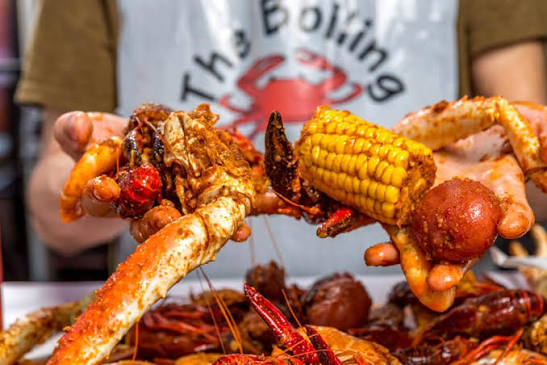
The restaurant offered a casual seafood-boil experience in which customers could select shellfish, choose a sauce and spice level, and eat with their hands from bags placed directly on paper-covered tables.
Its signature approach combined Louisiana-inspired Cajun seafood traditions with the intense garlic, chile, butter, citrus, and seasoning preferences familiar to many Vietnamese American diners.
The concept spread quickly through Southern California.
What began as a single family restaurant developed into a larger brand with locations across California, other U.S. states, and international markets.
The Boiling Crab’s story is not simply about seafood.
It reflects migration, fishing communities, cultural adaptation, restaurant innovation, and the way immigrant entrepreneurs can transform regional traditions into something distinctly American.
A Vietnamese American Business Founded in Garden Grove
Dada Ngo and Sinh Nguyen opened the first Boiling Crab in Garden Grove in 2004.
Garden Grove sits within Orange County’s Little Saigon, a major center of Vietnamese American business, politics, food, media, and community life.
Opening there gave the restaurant access to customers already familiar with seafood, strong seasonings, communal meals, and the experience of eating with family and friends.
It also placed the business inside a competitive restaurant environment.
Little Saigon contains established Vietnamese restaurants, bakeries, cafés, markets, and food businesses serving customers with high expectations and many choices.
A new restaurant needed to offer something recognizable enough to attract diners but distinctive enough to stand apart.
The Boiling Crab found that balance through Louisiana-style seafood boils presented through a Vietnamese American family perspective.
Sinh Nguyen’s Family Had Deep Connections to Fishing
The business’s seafood identity was connected to Sinh Nguyen’s family history.
Public accounts describe generations of his family working as fishermen and crabbers, including family members connected to the Gulf Coast community of Seadrift, Texas.
Seadrift became home to Vietnamese refugees and fishing families after the Vietnam War, although the community also experienced serious racial conflict, economic competition, and violence during the late 1970s and early 1980s.
For many Vietnamese families, fishing was both familiar work and a way to rebuild life in the United States.
The Gulf Coast offered shrimping, crabbing, and other commercial opportunities connected to skills some refugees had used in Vietnam.
Sinh’s experience with fishing culture helped give The Boiling Crab a background that was more personal than simply copying a popular restaurant trend.
Seafood was connected to family labor, migration, and the communities in which Vietnamese Americans rebuilt their lives.
The restaurant’s official storytelling continues to emphasize crabbers, captains, family gatherings, fresh catch, and experimenting with spices at home.
Dada Ngo Helped Turn Hospitality Into a Business
The restaurant’s story also centers Dada Ngo.
Official company materials describe the founders through the playful characters “Yo’Mama” and “Yo’Daddy,” emphasizing Dada’s love of hosting family and friends around large amounts of food.
That hospitality became part of the restaurant model.
The Boiling Crab was not designed as a formal seafood restaurant where diners carefully used specialized utensils in a quiet setting.
It encouraged noise, mess, conversation, spice, and participation.
Customers wore bibs, cracked shells, shared food, and ate directly from the table covering.
Dada’s role demonstrates that restaurant entrepreneurship involves more than recipes.
The atmosphere, service style, customer experience, and emotional feeling of a meal can become just as important as the ingredients.
A restaurant can sell seafood while also selling the feeling of a family gathering.
That distinction helped The Boiling Crab create an experience customers could remember and describe to other people.
The Restaurant Combined Louisiana and Vietnamese Influences
The Boiling Crab is commonly associated with the Vietnamese-Cajun, or Viet-Cajun, style of seafood.
Traditional Louisiana seafood boils may season the water in which shellfish, corn, sausage, and potatoes are cooked.
Many Vietnamese American seafood restaurants developed a different approach by adding highly seasoned sauces after cooking.
Garlic, butter, lemon pepper, chile, and Cajun-inspired spices coat the shellfish more directly.
This creates a powerful flavor that customers experience while cracking shells and eating with their hands.
The Boiling Crab offers sauces including Rajun Cajun, Lemon Pepper, Garlic Butter, and its signature Whole Sha-Bang, which combines several flavor profiles.
Customers can also choose different spice levels.
The style is not purely Vietnamese or purely Louisiana Cajun.
It developed through migration, adaptation, and the meeting of communities around the Gulf Coast and Southern California.
That makes it an example of American food culture being created through exchange rather than simple imitation.
Why Little Saigon Was the Right Place for the Concept
Orange County’s Little Saigon offered a customer base that understood both seafood and bold flavors.
Many Vietnamese dishes use fish sauce, garlic, chile, herbs, citrus, fermented ingredients, and complex combinations of salty, sweet, sour, and spicy flavors.
Seafood also holds an important place in Vietnamese regional cooking.
Customers did not necessarily need extensive persuasion to accept shellfish covered in a strongly seasoned sauce.
At the same time, the restaurant offered something different from traditional Vietnamese dining.
The Louisiana-inspired format gave younger Vietnamese Americans and customers from other backgrounds a shared experience that felt contemporary and informal.
Little Saigon also provided the business with cultural credibility.
The founders were not using Vietnamese identity as distant branding. They were opening within a community shaped by Vietnamese refugees, families, workers, and entrepreneurs.
As the restaurant attracted broader audiences, Little Saigon became the starting point from which the concept expanded.
Eating With Your Hands Became Part of the Attraction
The physical experience of eating at The Boiling Crab helped distinguish the business.
Tables are covered with paper, seafood arrives in plastic bags, and diners are encouraged to eat with their hands.
Bibs and gloves may be offered, but the meal remains intentionally messy.
This turns eating into an activity.
Customers do not simply wait for a plated dish. They open bags, mix sauces, crack shells, peel shrimp, share sides, and compare spice levels.
That interaction can make the meal more social.
It can also lower some of the formality that prevents people from relaxing in certain restaurant settings.
The mess becomes part of the entertainment.
From a business perspective, the format is memorable and visually distinctive.
Customers can easily describe the experience to friends, photograph the table, and associate the brand with a specific style of gathering.
The model demonstrates that restaurant success can depend on designing participation rather than only designing food.
The Whole Sha-Bang Became a Signature Product
Restaurants often become recognizable through one dish, ingredient, or sauce.
For The Boiling Crab, the Whole Sha-Bang became a central part of the brand.
The sauce combines Cajun seasoning, lemon pepper, and garlic butter, creating a flavor that is rich, salty, spicy, aromatic, and highly recognizable.
A signature sauce provides several business advantages.
It gives customers something they cannot easily compare with a generic seafood restaurant. It also creates a reason to return when people begin craving the exact combination rather than seafood in general.
The name itself reinforces the company’s playful style.
Instead of presenting the sauce through formal culinary language, the brand makes it sound abundant, casual, and slightly excessive.
That fits the restaurant’s larger identity.
The Boiling Crab is not built around restraint.
It is built around a table covered in food and people willing to get sauce on their hands.
The Business Helped Popularize a Wider Restaurant Trend
The Boiling Crab was not the only restaurant connected to Vietnamese-Cajun seafood, but its growth helped make the format highly visible in California.
After its early success, similar seafood-boil restaurants appeared throughout Southern California and other parts of the country.
Some copied the plastic-bag presentation, paper-covered tables, sauce combinations, nautical decoration, and customizable spice levels.
Imitation can be frustrating for founders, but it also demonstrates that a concept has influenced the market.
The Boiling Crab showed that an experience developed within Vietnamese American and Gulf Coast communities could attract a broad customer base.
The restaurant’s popularity contributed to greater mainstream awareness of Viet-Cajun cooking, even though the style’s broader history includes many families, restaurants, fishermen, and communities beyond one brand.
Growth Required More Than a Popular Recipe
A successful first restaurant does not automatically create a successful chain.
Expansion requires systems.
The company needed consistent ingredient sourcing, food-safety procedures, staff training, kitchen timing, quality control, customer service, location selection, and management.
Seafood creates additional operational challenges.
Prices fluctuate, quality can vary, products are highly perishable, and allergy risks must be handled carefully.
A sauce that tastes consistent in one kitchen must be reproduced across many locations.
The dining experience must also remain recognizable even when the founders are not physically present.
The Boiling Crab expanded across California and into other U.S. and international markets, showing that the company developed systems capable of carrying the concept beyond Garden Grove.
Its current website lists restaurant locations and menus for customers in multiple markets, while outside reporting has documented a substantial concentration of locations in California.
California Remains Central to the Brand
Although The Boiling Crab has expanded outside the state, California remains its strongest base.
The company operates restaurants in Southern California communities such as Garden Grove, Los Angeles, Rowland Heights, and other areas, as well as Northern California markets.
California offers several advantages for the brand.
The state contains large Vietnamese American and Asian American populations, strong seafood demand, diverse dining cultures, and customers familiar with food that crosses traditional culinary categories.
Southern California also has a long history of regional restaurant concepts becoming national trends.
A business can begin by serving a specific immigrant or ethnic community and eventually reach customers across many backgrounds.
The Boiling Crab’s California growth reflects this pattern.
It remained connected to Vietnamese American culture while becoming part of the wider identity of Southern California dining.
The Business Expanded Internationally
The Boiling Crab’s growth eventually extended beyond the United States.
Public reporting has identified locations or expansion in markets including Australia, China, Saudi Arabia, and other international destinations.
International expansion is especially significant for a concept already built through cultural exchange.
A restaurant created by Vietnamese American founders, inspired partly by Louisiana seafood traditions and developed in California, can be introduced to customers in several other countries.
Each new market may interpret the concept differently.
Customers may be familiar with seafood but not Cajun seasoning. They may understand communal dining but not the restaurant’s specific American presentation.
International operators may need to adjust supply chains, menus, pricing, marketing, and food regulations while preserving the identity that made the concept successful.
Expansion therefore requires a balance between consistency and local adaptation.
The Boiling Crab Reflects the Vietnamese Refugee Business Story
Vietnamese American entrepreneurship in California is closely connected to refugee resettlement after 1975.
Families arrived with different levels of English ability, education, money, professional recognition, and community support.
Many entered industries where they could rely on family labor, transferable skills, and networks of other Vietnamese immigrants.
Restaurants, bakeries, markets, fishing, nail salons, professional services, manufacturing, and technology all became important parts of Vietnamese American economic life.
Little Saigon grew through thousands of individual decisions to open businesses, serve community needs, hire relatives and neighbors, and create institutions that could support later generations.
The Boiling Crab emerged from this larger environment.
Its success belongs to the founders, but it also reflects the economic and cultural foundation built by Vietnamese refugees and Vietnamese Americans throughout Orange County.
Family Businesses Can Combine Several Histories
The Boiling Crab contains more than one migration story.
It connects Vietnamese heritage, refugee communities, Gulf Coast fishing, Texas seafood culture, California entrepreneurship, and Louisiana-inspired cooking.
That complexity is useful because minority-owned businesses are sometimes presented through oversimplified stories.
A Vietnamese American business does not need to offer only traditional Vietnamese food to express Vietnamese American identity.
Diaspora communities absorb influences from the places where they settle.
They combine family traditions with local ingredients, occupations, neighbors, and commercial opportunities.
The result can be something new without being culturally empty.
The Boiling Crab’s style is not an exact reproduction of a meal in Vietnam or Louisiana.
It is a product of Vietnamese American life in the United States.
Cultural Fusion Should Not Erase Its Sources
Fusion food can create exciting new traditions, but it can also blur where ideas originated.
The Boiling Crab’s concept draws from Louisiana seafood boils, Gulf Coast fishing communities, Vietnamese flavor preferences, and California dining culture.
Recognizing all of those sources provides a more accurate story than claiming that one restaurant invented every part of the experience.
Cultural exchange becomes more respectful when businesses and customers understand the communities that contributed.
That includes Cajun and Creole cooking traditions, Vietnamese refugee fishermen, Texas Gulf Coast communities, and Vietnamese American entrepreneurs in Southern California.
Food history is rarely a straight line.
Ingredients and methods travel with workers, refugees, merchants, families, and changing economies.
The Boiling Crab is important partly because it makes that cultural movement visible on the table.
Restaurant Work Depends on Employees
Founder stories receive attention, but restaurants operate through teams.
Cooks, servers, dishwashers, hosts, managers, buyers, cleaners, warehouse workers, and administrative employees all help maintain the customer experience.
As a restaurant company grows, its responsibility to employees grows as well.
Scheduling, training, workplace safety, advancement, communication, and fair treatment become essential parts of the business’s reputation.
Seafood restaurants can be physically demanding workplaces.
Employees handle hot equipment, sharp shells, heavy supplies, cleaning chemicals, slippery floors, and fast service periods.
A successful restaurant brand must therefore be evaluated not only by popularity but also by how effectively it builds safe and sustainable operations.
Public information does not provide a complete picture of every employee’s experience.
The broader lesson is that minority ownership and worker responsibility should be treated as connected rather than competing ideas.
Food Safety and Allergies Require Special Attention
Shellfish is one of the most serious food allergens.
Customers with allergies should not assume that ordering a non-shellfish item eliminates the possibility of cross-contact.
Shared kitchens, equipment, cooking surfaces, sauces, gloves, and preparation areas may expose food to allergens.
People with severe allergies should communicate directly with restaurant staff and make decisions based on medical guidance and the restaurant’s ability to accommodate them safely.
Seafood quality and temperature control are also important.
Restaurants must carefully receive, store, prepare, and serve highly perishable ingredients.
Growth places additional pressure on those systems because more locations and larger supply chains create more opportunities for inconsistency.
Food safety may not be the most glamorous part of a restaurant story, but it is one of the most important.
A memorable brand cannot survive without customer trust.
Restaurant Growth Can Affect Local Communities
A successful chain can create jobs, attract visitors, and increase commercial activity.
It can also influence neighborhood rents, traffic, competition, and the direction of local food culture.
In Little Saigon, restaurants serve both residents and customers traveling from outside the area.
That visibility can bring revenue while also changing how the community is presented.
Businesses have a responsibility not to reduce Little Saigon to an exotic dining destination.
It is a living Vietnamese American community shaped by refugee history, family networks, political participation, religious organizations, schools, media, and small businesses.
The Boiling Crab’s origin in Garden Grove gives the company an important connection to that community.
Maintaining that connection should involve more than using the location as part of a founder story.
Why Vietnamese-Owned Businesses Matter
Vietnamese-owned businesses contribute significantly to the economic and cultural life of California.
They create jobs, support suppliers, provide services, preserve language and food traditions, and help later generations see entrepreneurship as a realistic path.
Their success also challenges narrow assumptions about refugee communities.
Refugees are often discussed only as people receiving assistance.
Businesses such as The Boiling Crab demonstrate how refugee and immigrant families become employers, taxpayers, property owners, innovators, and builders of regional culture.
At the same time, successful examples should not be used to minimize the barriers many entrepreneurs still face.
Access to capital, commercial rent, language, discrimination, health costs, and economic disruptions can prevent good businesses from surviving.
Celebrating one company should encourage attention to the broader conditions that allow more minority-owned businesses to succeed.
Lessons for Other Minority-Owned Businesses
The Boiling Crab offers several useful lessons.
The first is that personal history can become a genuine business advantage.
Sinh Nguyen’s fishing background and the couple’s experience with communal seafood meals gave the restaurant a foundation that competitors could imitate visually but not reproduce exactly.
The second lesson is that customers remember experiences.
The bags, bibs, paper-covered tables, spice choices, and hands-on eating style became part of the brand.
The third lesson is that cultural fusion can expand a market.
The founders did not limit themselves to serving one traditional cuisine. They created a style reflecting several communities and regions.
The fourth lesson is that growth requires operational discipline.
A popular sauce may attract customers, but training, supply chains, food safety, and management allow a company to expand.
Finally, minority-owned businesses do not need to remain small to remain culturally meaningful.
Scale can increase visibility, employment, and influence when the company preserves the story and relationships that made it distinctive.
How Customers Can Support Vietnamese-Owned Businesses
Supporting Vietnamese-owned businesses can begin with purchasing directly, recommending them, and learning the specific founder story behind each company.
Customers should avoid treating all Vietnamese businesses as interchangeable.
A coffee roaster, bakery, technology firm, restaurant, fashion company, and professional-service provider may reflect very different regions, generations, and experiences.
Consumers can also explore independent businesses beyond the best-known brands.
Large success stories are valuable, but smaller family businesses may need customer support even more urgently.
Support should remain thoughtful rather than automatic.
Customers may still evaluate quality, service, price, employee treatment, and whether a product meets their needs.
The goal is not to replace ordinary judgment with identity.
It is to make sure Vietnamese American entrepreneurs receive fair visibility within the wider market.
Key Takeaways
The Boiling Crab is a Vietnamese American-founded seafood restaurant business that began in Garden Grove, California.
Dada Ngo and Sinh Nguyen opened the first location in 2004 in Orange County’s Little Saigon.
Sinh Nguyen’s family history included fishing and crabbing connected to the Gulf Coast community of Seadrift, Texas.
The restaurant combined Louisiana-inspired seafood-boil traditions with garlic, butter, chile, citrus, and seasoning preferences associated with Vietnamese American dining.
Customers select seafood, sauce, and spice levels and commonly eat with their hands from bags placed on paper-covered tables.
The signature Whole Sha-Bang sauce combines several of the restaurant’s major flavor profiles.
The Boiling Crab helped popularize Vietnamese-Cajun seafood-boil restaurants throughout Southern California and beyond.
The business expanded across California, other U.S. markets, and international locations.
Its story reflects Vietnamese refugee entrepreneurship, Gulf Coast fishing traditions, family hospitality, cultural adaptation, and operational growth.
The company’s success also demonstrates how a minority-owned business can influence mainstream American dining without abandoning its cultural roots.
This article is informational and does not constitute an endorsement, sponsorship, paid promotion, or food-safety assurance.
FAQ
Is The Boiling Crab Vietnamese-owned?
The company was founded by Vietnamese American husband-and-wife team Dada Ngo and Sinh Nguyen.
Where did The Boiling Crab begin?
The first restaurant opened in Garden Grove, California, in 2004.
Why is Garden Grove important to the company’s history?
Garden Grove is part of Orange County’s Little Saigon, one of the largest Vietnamese American communities outside Vietnam.
What type of food does The Boiling Crab serve?
It specializes in Louisiana-inspired seafood boils featuring shellfish, sauces, spice levels, and sides such as corn, potatoes, and sausage.
What is Vietnamese-Cajun seafood?
Vietnamese-Cajun seafood combines Gulf Coast and Louisiana seafood-boil traditions with Vietnamese American flavor preferences, often including garlic, butter, chile, citrus, and sauces added after cooking.
What is the Whole Sha-Bang?
It is The Boiling Crab’s signature sauce combining Cajun seasoning, lemon pepper, and garlic butter.
Do customers eat the seafood with their hands?
Yes. The restaurant is known for serving seafood in bags on paper-covered tables, with diners cracking and peeling it by hand.
Does The Boiling Crab have locations outside California?
Yes. The brand has expanded to other U.S. states and international markets. Customers should use the official location directory for current information.
Is the restaurant safe for someone with a shellfish allergy?
Shellfish allergies can be severe, and cross-contact may occur in seafood restaurants. Customers should speak directly with the restaurant and follow medical guidance before ordering.
Is this article an endorsement?
No. It is an educational minority-owned business spotlight and does not constitute an endorsement, paid promotion, sponsorship, or certification claim.
Final Thoughts
The Boiling Crab began with a combination that could only have developed through migration.
Vietnamese family experience met Gulf Coast fishing culture. Louisiana seafood traditions met Southern California’s Little Saigon. A backyard-style meal became a restaurant experience recognized across several countries.
That combination explains why The Boiling Crab is more than a seafood chain.
It represents the way immigrant communities change American culture—not by leaving their identity behind, but by combining it with the places and people they encounter.
Dada Ngo and Sinh Nguyen did not build the business by serving an abstract idea of fusion.
They built it through seafood they understood, flavors their customers loved, and a dining experience rooted in family hospitality.
Their success helped make Vietnamese-Cajun seafood part of California’s wider food identity.
The restaurant’s growth also offers an important lesson about minority entrepreneurship.
Cultural authenticity does not always mean preserving a tradition exactly as it once existed.
Sometimes authenticity means honestly reflecting the complicated life of a community that has crossed oceans, rebuilt in new places, and created something the world had not tasted before.
Related Articles
Minority-Owned Business Spotlight: Sugar Bowl Bakery Turns a Vietnamese Immigrant Family Story Into a California Success
https://www.newtoeducation.com/view-blog/minority-owned-business-spotlight-sugar-bowl-bakery-turns-a-vietnamese-immigrant-family-story-into-a-california-success-6a4f5434193a6
Minority-Owned Business Spotlight: Nguyen Coffee Supply
https://www.newtoeducation.com/view-blog/minority-owned-business-spotlight-nguyen-coffee-supply-6a4cd8aa77a60
Sources
The Boiling Crab — Official Website
Eater Los Angeles — The Whole Shebang: How The Boiling Crab Became a Southern California Phenomenon
California Lutheran University — Dada Ngo Entrepreneur Speaker Series
The Vietnamese With Kenneth Nguyen — Dada Ngo, Founder of The Boiling Crab




