





Editorial Note
Minority-Owned Business Spotlight is a recurring New To Education series highlighting businesses with publicly reported minority, immigrant, veteran, women, or historically underrepresented founder stories.
This article is intended for educational and informational purposes only. Inclusion in this series does not constitute an endorsement, sponsorship, paid promotion, formal minority-business certification claim, or recommendation of any company, product, or service.
Ownership, store locations, operating hours, product availability, and business operations may change. Readers should verify current information directly with the business before visiting or purchasing.
Some stores are remembered for what they sell.
Others become important because of what they represent.
Pearl River Mart has spent more than five decades doing both.
Founded in New York City in 1971, Pearl River Mart began as a Chinese American “friendship store” intended to introduce Chinese products and culture to American shoppers while also providing immigrants with familiar goods from home.
At the time, trade and political relations between the United States and China were limited. Chinese and other Asian products that are now common in American cities were considerably harder to find.
Pearl River Mart helped make those products more visible.
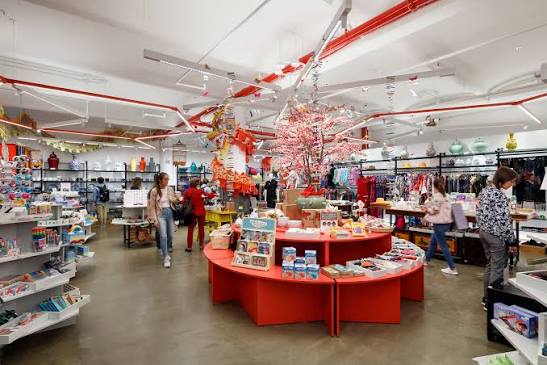
Over the years, the store developed into a New York institution carrying home décor, kitchenware, clothing, gifts, snacks, books, art, and products made or designed by Asian American entrepreneurs.
Today, it remains a family-run business with locations in SoHo and Chelsea Market, including a food-focused operation supporting established and emerging Asian and Asian American brands.
Its survival is not only a retail story.
It is a story about immigrant entrepreneurship, cultural exchange, commercial rent, generational leadership, and the ability of a minority-owned business to change without losing its original purpose.
A Store Created to Build Understanding
Pearl River Mart was founded during a complicated period in relations between the United States and China.
The business began as a friendship store designed to make Chinese culture feel more accessible to American customers.
According to the company’s history, the store opened only months before President Richard Nixon’s 1972 visit to China and meeting with Chairman Mao Zedong, an event that helped change relations between the two countries.
Pearl River Mart describes itself as the world’s first Chinese American department store.
Its shelves introduced customers to goods that were unfamiliar to much of the American public, including Chinese ceramics, slippers, decorations, foods, clothing, cookware, and household products.
The store also gave Chinese immigrants and other Asian New Yorkers access to items that connected them with home.
That dual role became central to its identity.
Pearl River Mart was not only selling imported goods. It was attempting to make one culture less mysterious to another.
The Founding Family
Public histories identify Ming Yi Chen and fellow student activists from China, Hong Kong, and Taiwan among Pearl River Mart’s founders.
Ching Yeh Chen also played an important role in operating and shaping the business over the decades.
The founders viewed the store as something larger than a commercial opportunity.
They wanted to introduce Chinese products to American consumers while building a place where immigrants could find familiarity and community.
In the early years, obtaining merchandise was difficult because normal trade channels were limited. Accounts of the store’s history describe Ming Yi Chen traveling long distances, including trips between New York and Toronto, to acquire products from China and Hong Kong.
That kind of persistence reflects a common reality in immigrant entrepreneurship.
Founders may see an unmet demand, but reaching customers often requires navigating language, regulation, supply chains, financing, and social barriers that established businesses do not face to the same degree.
From Chinese Products to a Broader Asian American Identity
Pearl River Mart’s original mission focused heavily on connecting shoppers with goods from China.
Over time, the company’s identity expanded.
The store now carries products imported from across Asia alongside merchandise designed by Asian American artists, food makers, entrepreneurs, and independent brands.
That evolution reflects changes in both New York and Asian American identity.
The business is still closely connected to its Chinese American origins, but its current retail model provides a wider platform for Asian and Asian American creativity.
Customers may encounter ceramics, clothing, home products, sauces, snacks, stationery, books, gifts, and modern designs that combine cultural traditions with contemporary American life.
This approach helps the store remain relevant to younger generations.
It also shows how a heritage business can respect its origin without remaining frozen in the decade when it opened.
Joanne Kwong and the Business’s Next Generation
Pearl River Mart entered a new chapter under the leadership of Joanne Kwong, the founders’ daughter-in-law and the company’s president.
Kwong had worked as an attorney, educator, and communications executive before taking a leading role in reviving and modernizing the business.
After a widely discussed closure in 2016, she helped reopen Pearl River Mart and reposition it for a new generation of customers.
Under her leadership, the company expanded its focus on Asian American identity, community events, art exhibitions, independent brands, and emerging entrepreneurs.
This generational transition is important.
Family businesses often struggle when leadership passes from founders to younger relatives. The next generation must decide which traditions should remain, which practices need to change, and how to attract new customers without alienating those who built the brand.
Pearl River Mart’s response was not to discard its history.
It used that history as the foundation for a broader cultural and commercial platform.
Surviving New York’s Commercial-Rent Pressure
Operating an independent retail business in New York City has never been simple.
Rent can become one of the greatest threats to long-standing neighborhood businesses, particularly when an area becomes more desirable and landlords seek substantially higher payments.
Pearl River Mart has experienced this pressure directly.
The business temporarily closed its large SoHo location in 2016 amid rent difficulties, prompting widespread concern that New York was losing another independent cultural institution.
It later returned in a new form.
The company continued adapting through new locations, smaller footprints, online sales, and different retail concepts.
Its current official information lists a SoHo flagship at 452 Broadway as well as operations in Chelsea Market.
The company’s survival illustrates an uncomfortable truth about urban development.
A neighborhood may celebrate the culture created by immigrant and minority-owned businesses while rising costs gradually force those same businesses out.
Preserving cultural identity therefore requires more than murals, festivals, or slogans.
It requires conditions that allow businesses to remain.
Pearl River Mart Foods Creates Space for Food Entrepreneurs
The company expanded its concept through Pearl River Mart Foods in Chelsea Market.
The food-focused location carries products from across Asia and showcases food created by Asian American chefs and brands.
According to the company, the collection changes over time and may include snacks, pantry items, sauces, tea, prepared food, and products from emerging businesses.
This makes the location more than a specialty grocery store.
It can function as an entry point for smaller brands that might struggle to secure visibility in major retail chains.
For a new food entrepreneur, access to an established store provides several advantages.
The brand can reach customers already interested in Asian food and culture. It can test products, build recognition, and gain feedback without immediately opening an independent physical location.
Pearl River Mart benefits as well.
Featuring smaller makers gives customers a reason to return and helps the store offer products that may not be widely available elsewhere.
Supporting Asian American Artists and Designers
Pearl River Mart also operates as a platform for art and design.
The company has hosted exhibitions, cultural programs, performances, and events connected to Asian and Asian American artists.
Its retail selection includes products from designers whose work reflects Asian American identity, humor, history, food, family, and contemporary city life.
This matters because artists from underrepresented backgrounds frequently face the same visibility problem as small businesses.
They may have strong work but limited access to galleries, media coverage, buyers, and established retail networks.
A store with cultural credibility can help bridge that gap.
Pearl River Mart’s art and events programming also creates a different relationship with shoppers.
Customers are not only purchasing objects.
They may be learning about the people, histories, and communities behind them.
A Retail Business Can Also Become a Community Institution
Pearl River Mart’s history demonstrates that a business can hold social value beyond employment and sales.
For immigrant customers, the store provided recognizable products and a sense of connection.
For non-Asian customers, it offered an accessible way to encounter Chinese and broader Asian culture.
For Asian American entrepreneurs and artists, it developed into a possible platform for visibility.
The business has also participated in community efforts.
During the pandemic period, Pearl River Mart was involved in efforts connected to protective equipment and initiatives intended to support Chinatown.
Its leaders helped promote projects such as Light Up Chinatown, which used lantern installations to encourage foot traffic, support local businesses, and create a greater sense of safety and energy in the neighborhood.
These activities do not turn a private business into a public charity.
They do show that locally rooted companies often possess relationships and cultural knowledge that larger corporations cannot easily reproduce.
Why Cultural Retail Still Matters in the Internet Age
Online shopping gives consumers access to products from almost anywhere.
At first glance, that might make a physical store like Pearl River Mart seem less necessary.
Yet cultural retail offers something online marketplaces frequently do not.
Customers can touch materials, compare products, discover unfamiliar foods, ask questions, and encounter items they were not already searching for.
The store can also provide context.
A product becomes more meaningful when shoppers understand how it is used, where it comes from, or which artist designed it.
Physical retail can also create trust.
Customers know they are entering a curated environment rather than sorting through thousands of anonymous marketplace listings with uncertain quality or origin.
Pearl River Mart combines physical retail with e-commerce, allowing it to serve local customers, tourists, and people who may never visit New York.
That blended model may be one reason the company has remained adaptable.
Tourism and Local Loyalty Must Coexist
Pearl River Mart attracts visitors looking for an unusual New York shopping experience.
Its products, history, and connection to Asian American culture make it a natural stop for tourists.
Tourism can provide important revenue, but cultural businesses cannot depend only on occasional visitors.
They also need local customers who return for household items, gifts, food, events, and seasonal traditions.
Pearl River Mart’s broad product range helps address both audiences.
A tourist may purchase a distinctive souvenir. A New Yorker may buy cookware, tea, stationery, food, or home décor.
That balance is valuable.
Businesses rooted in cultural neighborhoods can become hollow if they serve visitors but no longer meet the needs of residents.
Pearl River Mart’s ability to operate as both a destination and a practical retailer has helped preserve its connection to everyday life.
The Business Shows Why Representation in Retail Matters
Representation is often discussed in entertainment, education, and leadership.
Retail matters too.
The products displayed in stores communicate which cultures are considered normal, valuable, fashionable, or worthy of shelf space.
When Asian and Asian American products appear only in small ethnic sections, consumers may view them as peripheral.
A store such as Pearl River Mart places those products and creators at the center.
It allows Asian American shoppers to see cultural references reflected without explanation or apology.
It also allows customers from other backgrounds to encounter Asian culture through ordinary objects rather than stereotypes.
This form of representation is commercial, but it can still influence belonging.
People notice when their traditions, foods, and designs are treated as part of the wider American experience.
Lessons for Minority-Owned Businesses
Pearl River Mart’s story offers several practical lessons.
The first is that a clear mission can outlast individual products.
The company has changed its inventory, locations, leadership, and business model, but the central idea of cultural exchange remains recognizable.
The second lesson is that adaptation does not require abandoning identity.
Pearl River Mart modernized by emphasizing Asian American designers, food makers, events, online commerce, and new retail spaces.
Those changes strengthened rather than erased its cultural purpose.
The third lesson is that community relationships can become a form of resilience.
When the store faced closure, customers, journalists, artists, and community members understood that New York was at risk of losing more than a place to shop.
That kind of loyalty cannot be created quickly through advertising.
It develops through decades of consistency and connection.
Challenges Still Remain
Longevity does not eliminate risk.
Independent retail businesses continue facing high rent, labor costs, inventory expenses, supply-chain disruption, online competition, and changing consumer habits.
Cultural businesses may face an additional challenge: remaining authentic without being treated as static.
Customers may expect a heritage business to remain exactly as they remember it, even when the company must change to survive.
Pearl River Mart must balance affordability, quality, cultural responsibility, tourism, local needs, and commercial sustainability.
Its role in supporting smaller makers also requires careful selection.
Customers may reasonably expect the business to explain who created products and how those products connect to Asian or Asian American communities.
Transparency becomes especially important as cultural products gain wider popularity and larger corporations begin selling similar designs.
How Consumers Can Support Minority-Owned Businesses Responsibly
Supporting a minority-owned business should involve more than symbolic attention during one heritage month.
Customers can purchase directly, attend events, recommend the business, leave fair reviews, and introduce others to its history.
They should also avoid treating the business as a museum that must remain unchanged for their nostalgia.
Small and family-run companies need room to experiment, update products, change locations, and develop new revenue streams.
Support should remain thoughtful rather than automatic.
Customers should still evaluate quality, price, service, and whether a product fits their needs.
The purpose of a spotlight is not to suggest that identity should replace ordinary consumer judgment.
It is to ensure that businesses with meaningful stories and contributions are not overlooked.
Key Takeaways
Pearl River Mart is a Chinese American family-run business founded in New York City in 1971.
It began as a friendship store intended to introduce Chinese products and culture to American shoppers while providing familiar goods to immigrants.
The company describes itself as the world’s first Chinese American department store.
Its product selection has expanded to include goods imported from across Asia as well as work created by Asian American artists, designers, chefs, and entrepreneurs.
Joanne Kwong, the founders’ daughter-in-law, helped revive and modernize the business after its temporary closure in 2016.
The company currently operates in SoHo and Chelsea Market, including Pearl River Mart Foods.
The food-focused operation provides visibility for Asian and Asian American food makers and emerging brands.
Pearl River Mart has hosted art exhibitions, cultural programs, community events, and initiatives supporting Chinatown.
Its history demonstrates how minority-owned retail can support cultural exchange, entrepreneurship, representation, and community identity.
The company’s survival also highlights the pressure that high commercial rents place on long-standing independent businesses in New York City.
FAQ
What is Pearl River Mart?
Pearl River Mart is a family-run Asian American retailer selling home products, clothing, food, art, books, gifts, and other merchandise connected to Asian and Asian American culture.
Is Pearl River Mart Chinese owned?
The business was founded by Chinese and other Chinese-speaking student activists and remains a family-run Chinese American business under the leadership of the founding family and president Joanne Kwong.
When was Pearl River Mart founded?
It was founded in New York City in 1971.
Why was it called a friendship store?
Its founders wanted to introduce Chinese culture and products to American customers while creating greater cultural understanding during a period of limited relations between the United States and China.
Where is Pearl River Mart located?
The company’s official information lists operations in SoHo and Chelsea Market in New York City. Visitors should confirm current locations and hours before traveling.
What does the store sell?
Its products include home décor, ceramics, cookware, clothing, personal-care items, gifts, books, stationery, snacks, tea, sauces, and products created by Asian American designers and food makers.
What is Pearl River Mart Foods?
It is the company’s food-focused concept in Chelsea Market, featuring Asian food products and items from Asian American chefs, entrepreneurs, and brands.
Who is Joanne Kwong?
Joanne Kwong is Pearl River Mart’s president and the daughter-in-law of its founders. She helped reopen and modernize the business after its 2016 closure.
Is this article an endorsement?
No. This spotlight is provided for educational and informational purposes and does not constitute an endorsement, sponsorship, or certification claim.
Final Thoughts
Pearl River Mart’s story is not simply about a store that survived for more than 50 years.
It is about how commerce can create cultural familiarity.
The founders recognized that products could do more than fill shelves. They could make immigrants feel closer to home and help other Americans encounter Chinese culture through ordinary life.
That mission evolved as New York changed.
The business expanded from Chinese imports toward a broader celebration of Asian American creativity, entrepreneurship, food, and art.
It survived closures, rent pressure, generational transition, shifting neighborhoods, and changes in how people shop.
The result is a business that still carries its past without depending entirely on nostalgia.
Pearl River Mart demonstrates that minority-owned companies can become part of a city’s cultural infrastructure.
They create jobs and sell products, but they can also preserve memory, introduce new creators, and give communities a visible place in public life.
New York would be less interesting without businesses like it.
More importantly, it would be less connected to the immigrant and minority communities that helped build the city.
Related Articles
Minority-Owned Business Spotlight: Yingtao Brings Contemporary Chinese Fine Dining to New York City
https://www.newtoeducation.com/view-blog/minority-owned-business-spotlight-yingtao-brings-contemporary-chinese-fine-dining-to-new-york-city-6a4f421617e21
Minority-Owned Business Spotlight: Panda Restaurant Group
https://www.newtoeducation.com/view-blog/minority-owned-business-spotlight-panda-restaurant-group-6a4cd3fa752c0
Sources
Pearl River Mart — Official Store
Pearl River Mart — Pearl River Mart Foods
Pearl River Mart — Events and Specials
Asian American Writers’ Workshop — What’s Next for Pearl River Mart




